
Biodegradable drone made out of fungus and bacteria melts away when it crashes
Our team modeled, prototyped, and collaborated with Ecovative Designto grow a mycelium-based chassis for our biological drone. Below you'll find process photos, part designs, and links to open source model files for downloading and additively manufacturing your own biological or bio-inspired unmanned aerial vehicle. Finally, you can see images of the biological, biodegradable UAV that we built and flew!
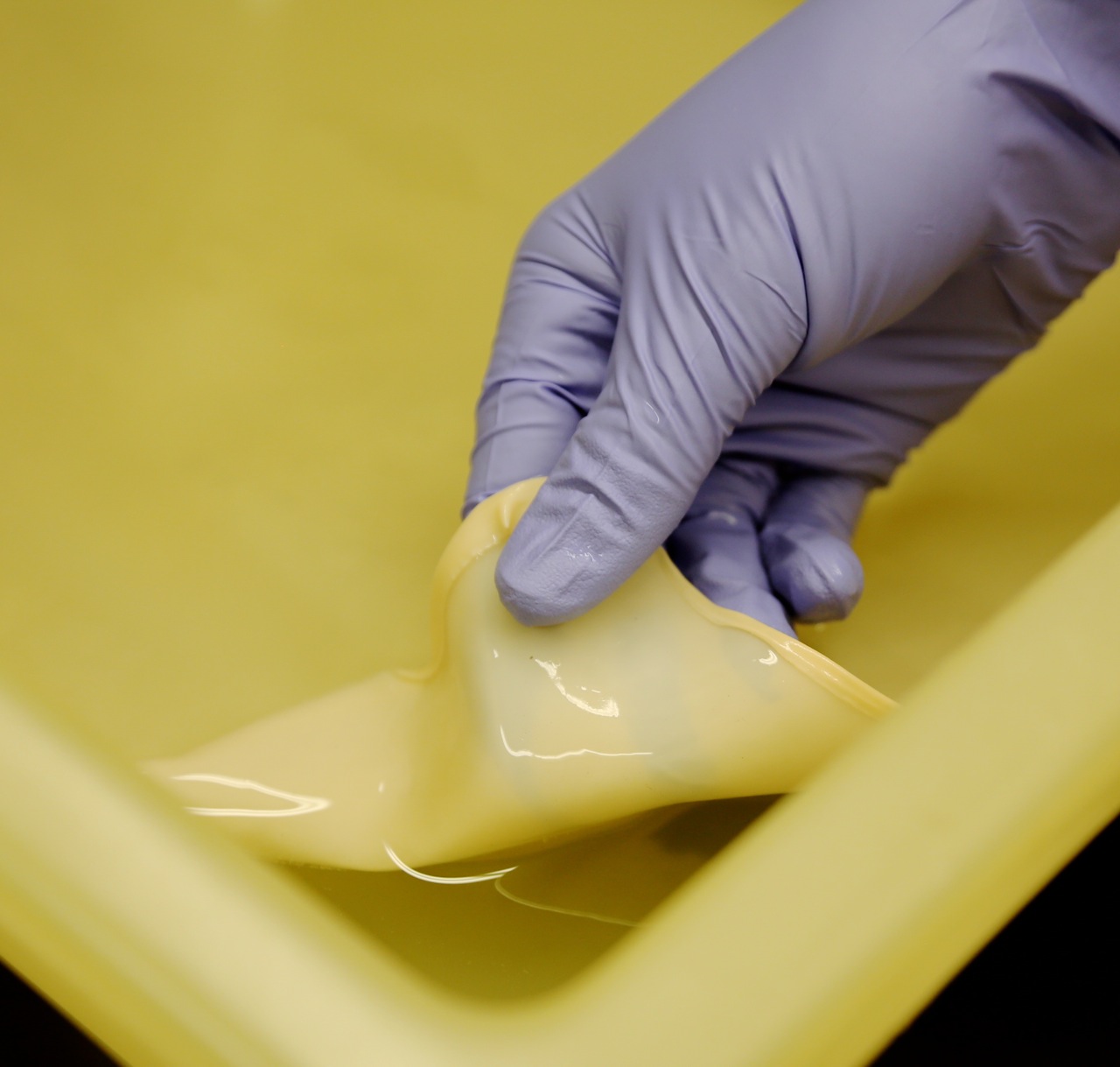
Harvesting a pure bacterial cellulose sheet.

Experimenting with cellulose material shape.
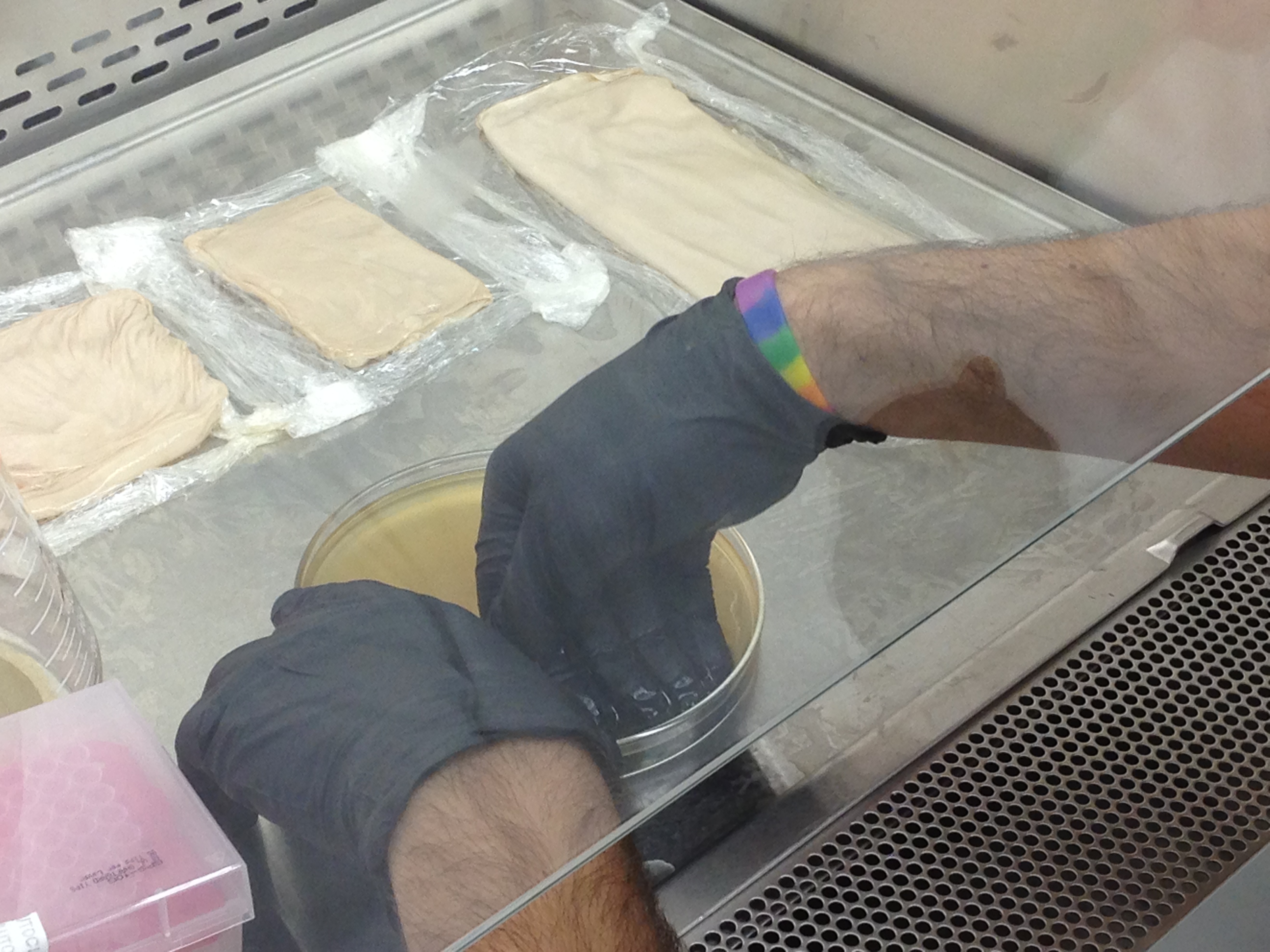
Layering cellulose to create thicker leather, see here at the back of the hood.
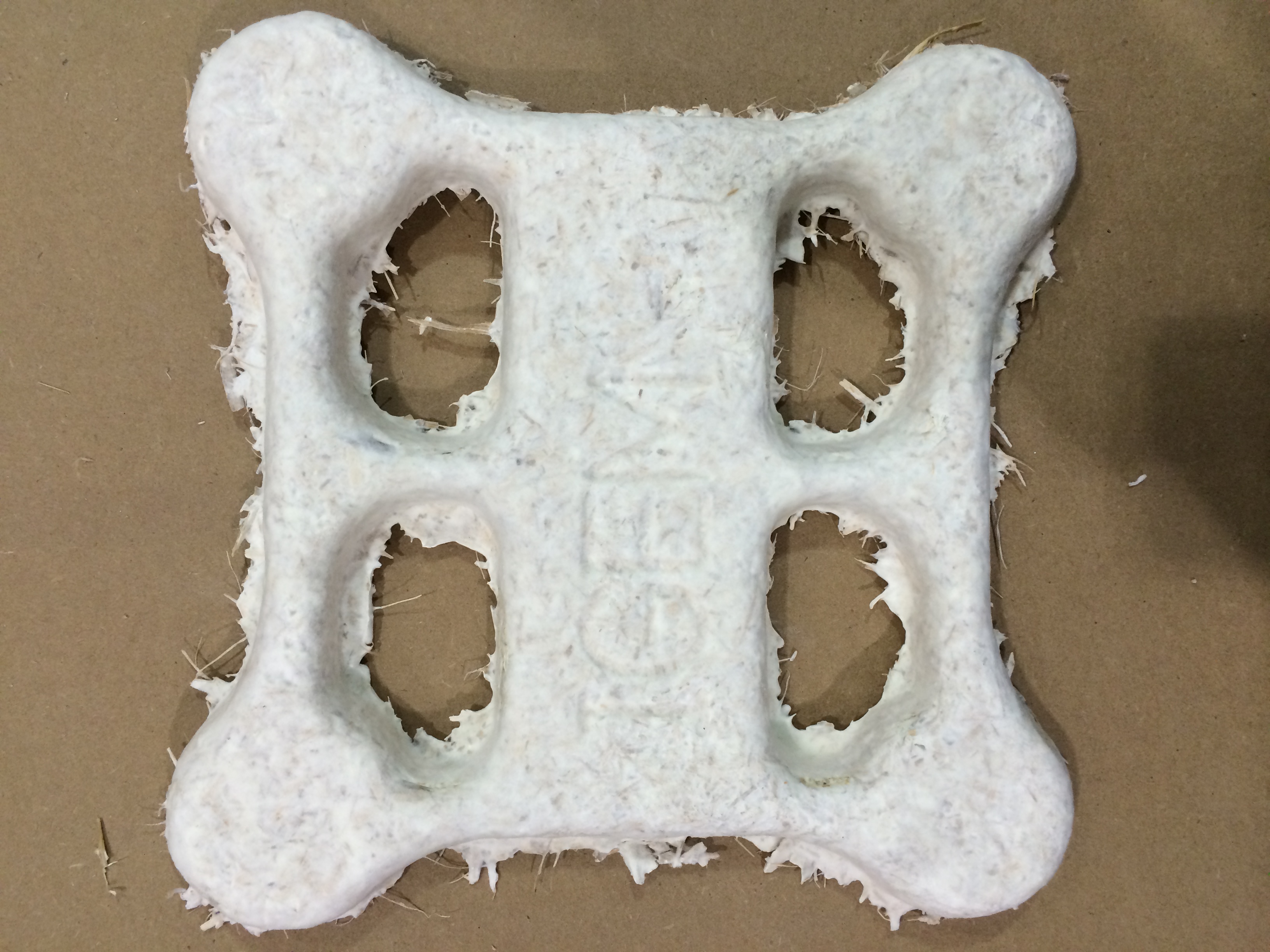
Mycelium drone chassis, modeled and 3D-designed by our team, produced by Ecovative.
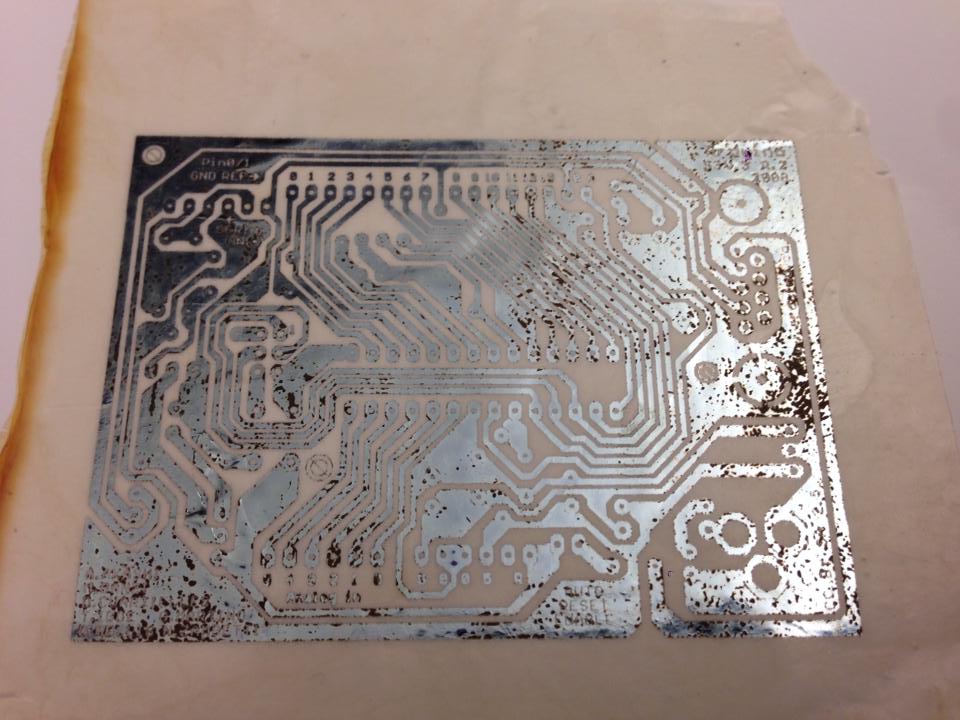
Our team collaborated with a silicon valley start up AgiC Inc. to print circuits onto our cellulose-based biomaterials in order to prototype how fully biodegradable circuitry might function on a biological UAV. See our Biomaterials page for details on the conductivity of this circuitry.
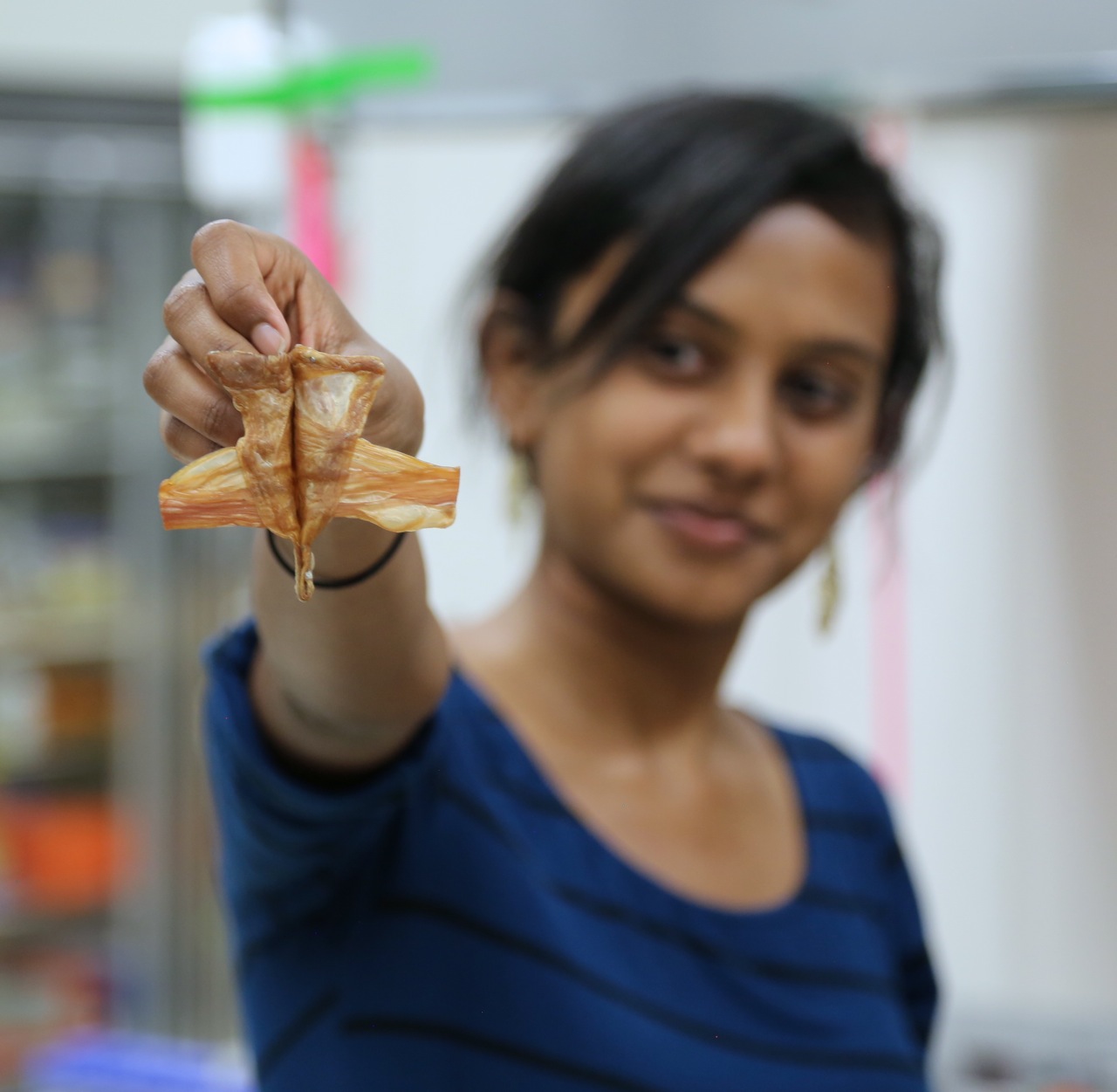
Variable thickness elements and experimental fragment attachment methods.
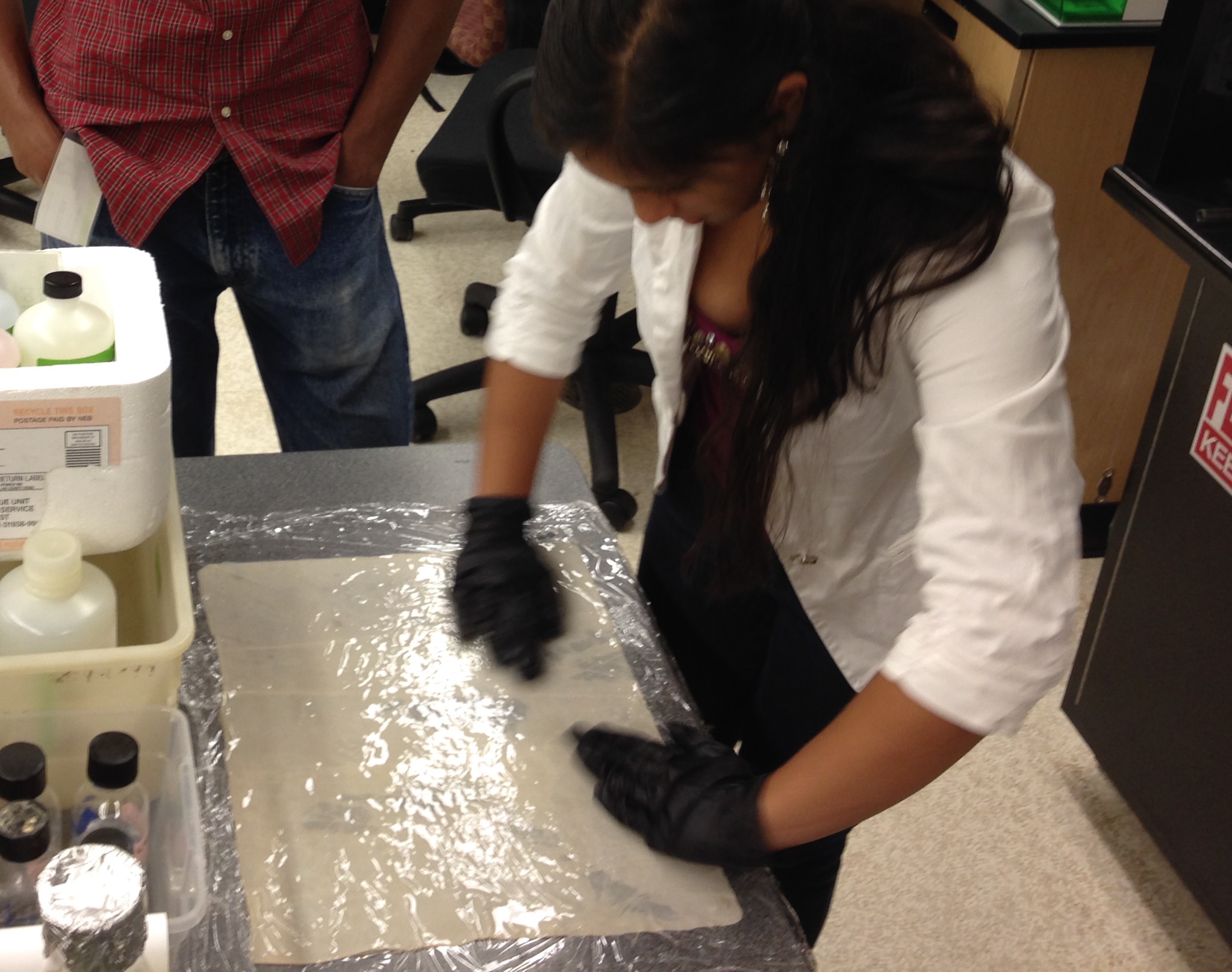
Spreading a cellulose sheet out to dry.
Starting Small, Ending Big
We began by experimenting with producing cellulose in sheets and cellulose acetate non-biologically. Seeing that primarily cellulose materials are extremely strong and tough, but tear easily and becomes soggy when wet, we sought to increase the durability of the cellulose by grinding it into pieces to create a cellulose paste (that became spreadable into sheets like paper made from wood pulp) and stretching and twisting it into ropes to add strength. A few of our material samples follow:
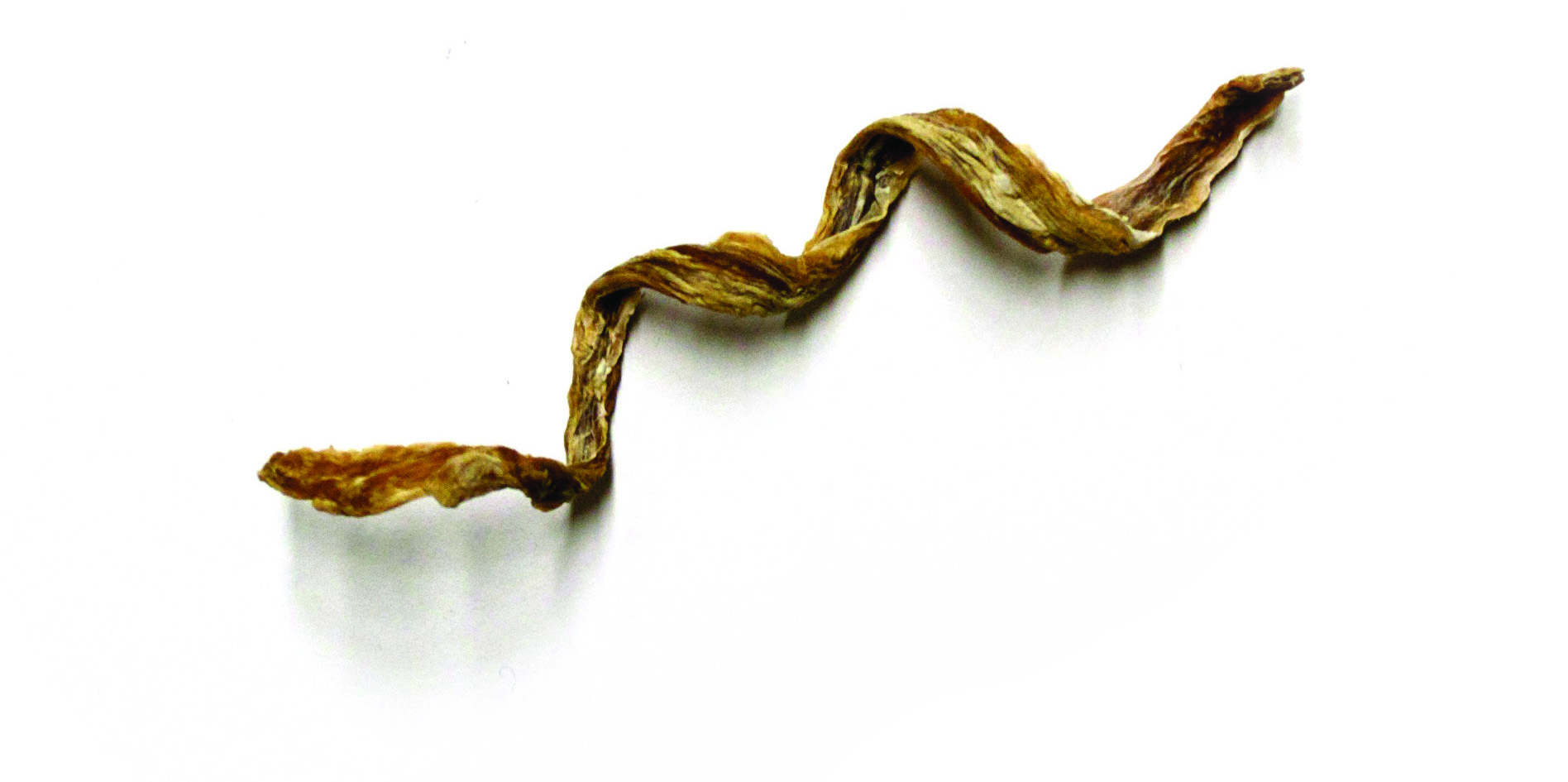
A spiral rope made by weaving together several cellulose sheets and dehydrating them.
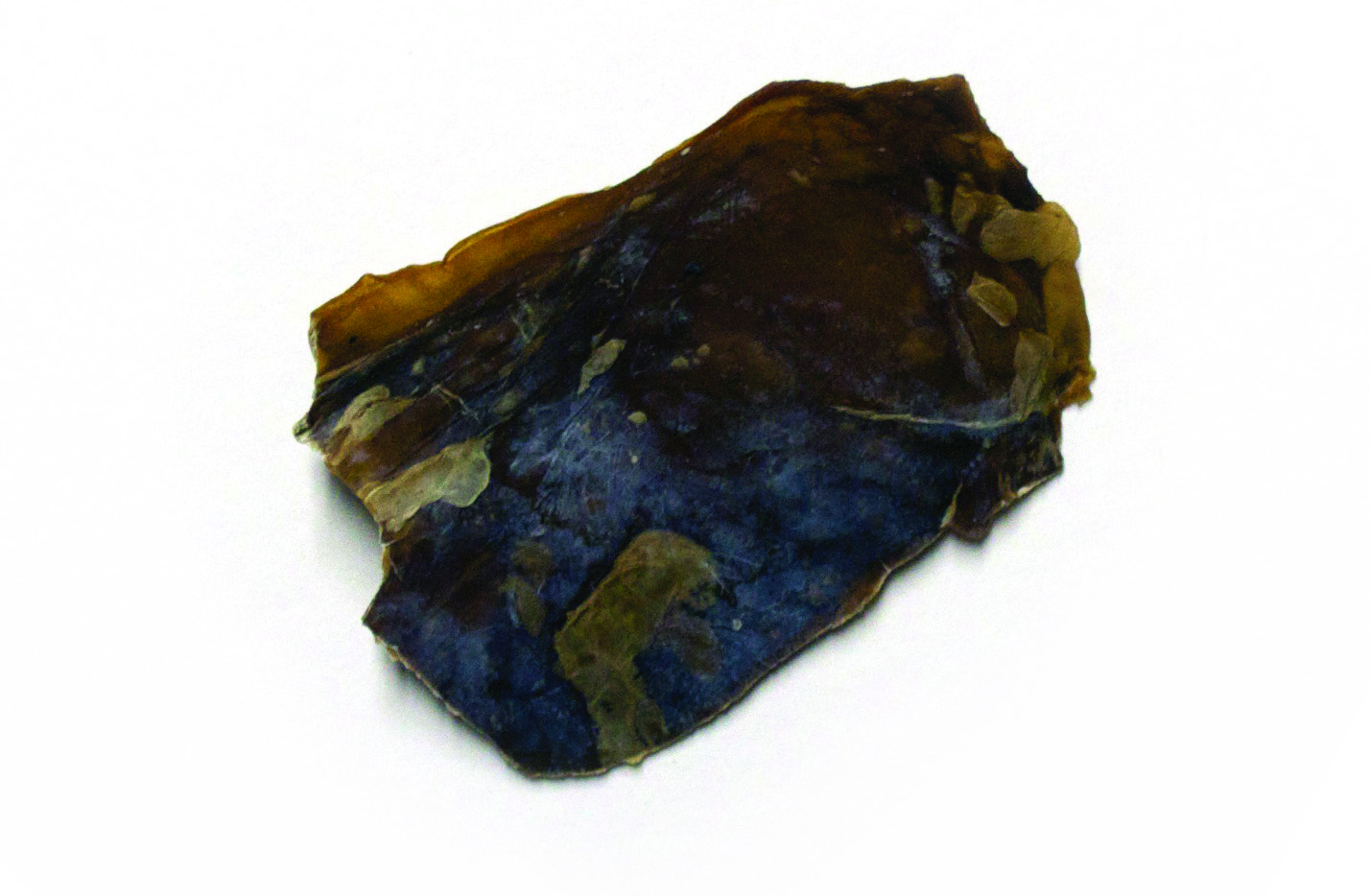
A piece of cellulose leather generated by laying multiple sheets of cellulose together in perpendicular orientations.
While experimenting with cellulose-based materials, we also explored traditional starch bioplastics to compare material functionality. Here is an example of a starch bioplastic that we produced synthetically in the lab:

Common starch bioplastic, which is more voluminous but less strong than bacterial cellulose. Starch bioplastics, like bacterial cellulose materials, suffer disintegration when wet.
Realizing that cellulose acetate is tough but thin, our team was in need of a building material that was durable and lightweight. So, we reached out to Ecovative Design, a pioneering fungal-mycelium-based biomaterial company, to prototype a mycelium form that could serve as the chassis of our vehicle. Ecovative shipped us mycelium samples (pictured below), that we skinned in bacterial cellulose.
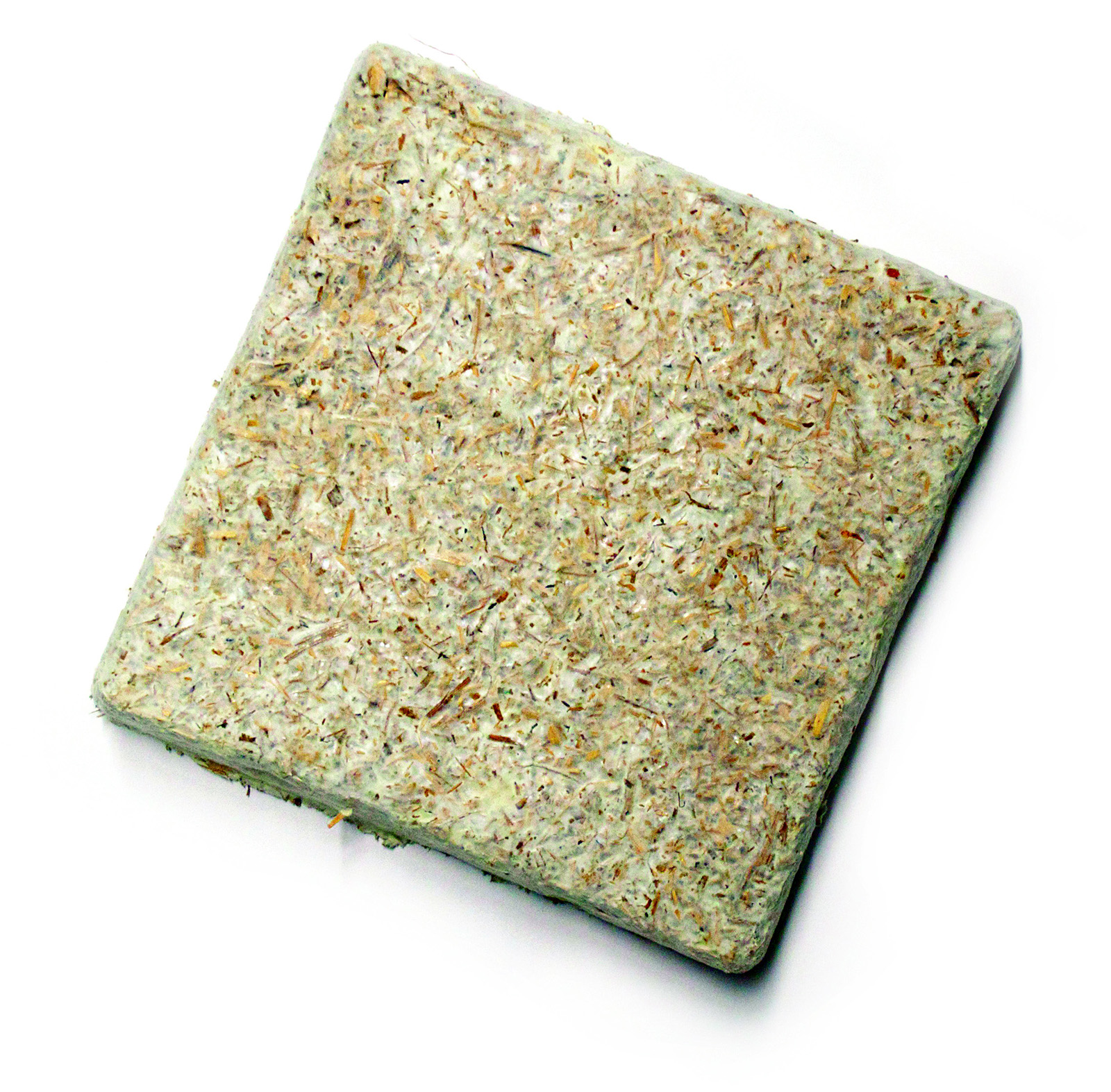
6" by 6" by 1" sample of Ecovative's lightweight mycelium-based biomaterial.
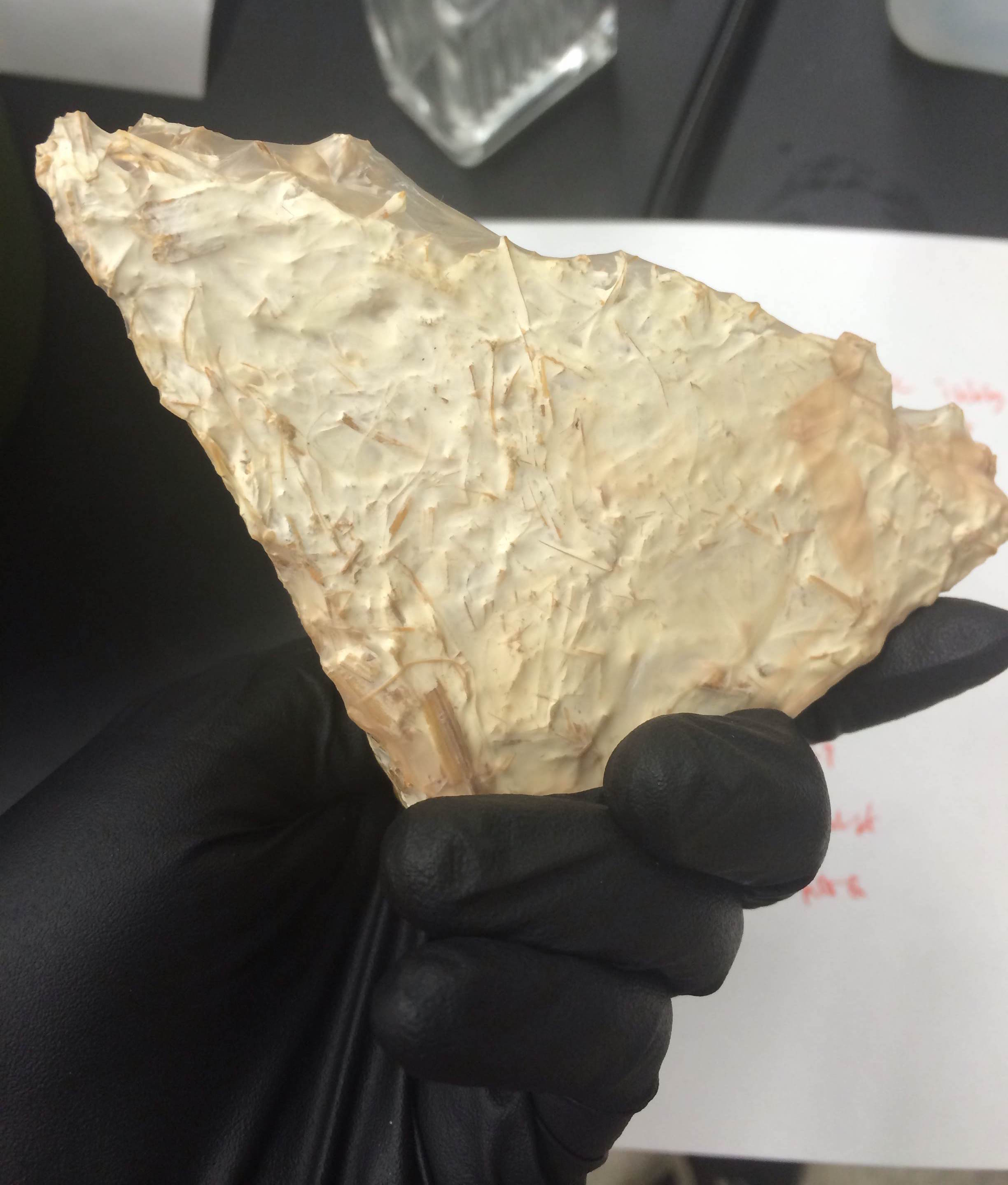
A piece of fungal mycelium skinned in bacterial cellulose.
Thanks to Ecovative, we were able to construct a prototype biological unmanned aerial vehicle!
But we didn't stop there. Our team was enthusiastic about drone design and so we developed concept UAV designs meant to inspire future scientists and designers to think outside the box about how a future, partially living vehicle might look. Pseudo-natural and pseudo-industrial, our drone design references the traditional biological architecture of birds while embracing industrial additive manufacturability.
All 3D printable files for this concept drone are available in the downloads section. Images of our work follow:

Concept UAV Design

Biological UAV Concept, Exploded View
Designed Parts & Downloads
We succeeded in producing multiple viable chassis designs for mycelium UAV concept prototypes. You can download our basic chassis designs here. If you would like to receive a copy of the designs for our more involved, final UAV concept (pictured above), then please reach out to us! We would love to share our work! In the meantime, download and check out our other models below:

Mycelium_Drone_1.SLDPRT: Download a 3D printable STL file for a secondary drone chassis mold concept. Modeled in house and ready for printing, molding, and biomaterial casting.
Mycelium_Quad_1.SLDPRT: Download a 3D printable STL file for our mycelium quad chassic (pictured at top of page), which can accept four motors and serve as the foundation for a DIY biomaterial drone prototype.
Links & References
Interested in what we've been working on and want to find more relevant information? Check out some of the following sites, companies, and people who either aided us in our production of biomaterials or collaborated with us in working to produce a viable biological unmanned aerial vehicle.
● Ecovative — Fungal-mycelium-based biomaterial production company
● Miriam Ribul's Recipes for Material Activism documents bioplastic production with household ingredients
● Cooking Objects — Understanding objects, objectivity, and our relationship with sustainably produced, biodegradable household objects
● The NASA Space shop, providing resources and tools for rapid prototyping at the NASA Ames Research Center
Drone Futures
Here is a collection of drone-related sites and speculative work that stimulated our team to think about synthetic biology, the future, and the role of personal unmanned aerial vehicles or biological devices in an evolving world of DIY craft, government surveillance, and channelled creativity.
● Frabrica — Drone, speculative fictions in the age of the drone
● Drone Survival Guide — a poster series highlighting the uneasy relationship between the public and drones
● DIY Drones — a growing online community of makers committed to building unmanned aircraft
● Drone shadows, a visual reminder of constant surveillance
● Anti-Drone hoodie



sbsigem@googlegroups.com
View our Complete Project List
Meet our team!
link to the original post here
Links & References
Interested in what we've been working on and want to find more relevant information? Check out some of the following sites, companies, and people who either aided us in our production of biomaterials or collaborated with us in working to produce a viable biological unmanned aerial vehicle.
● Ecovative — Fungal-mycelium-based biomaterial production company
● Miriam Ribul's Recipes for Material Activism documents bioplastic production with household ingredients
● Cooking Objects — Understanding objects, objectivity, and our relationship with sustainably produced, biodegradable household objects
● The NASA Space shop, providing resources and tools for rapid prototyping at the NASA Ames Research Center
Drone Futures
Here is a collection of drone-related sites and speculative work that stimulated our team to think about synthetic biology, the future, and the role of personal unmanned aerial vehicles or biological devices in an evolving world of DIY craft, government surveillance, and channelled creativity.
● Frabrica — Drone, speculative fictions in the age of the drone
● Drone Survival Guide — a poster series highlighting the uneasy relationship between the public and drones
● DIY Drones — a growing online community of makers committed to building unmanned aircraft
● Drone shadows, a visual reminder of constant surveillance
● Anti-Drone hoodie
sbsigem@googlegroups.com
View our Complete Project List
Meet our team!
link to the original post here

Comments
This project is actually about the synthetic biology (the drone was just a sample app), and that's awesome -- the main point was to create the bacteria used to strengthen the cellulose substrate. The iGEN program this is part of is a terrific student competition to add new "biobricks" to the synthetic biology toolkit, and these kids did a great job of that.