The name of our revision is APM Copter rev 3.1.11 this release is without OS , We have also available the NuttX-PX4 revision of code but only in alpha revision for dev team test.
On VRBrain the Arducopter code use use only 6-7 % of cpu resource .... on APM 2.x use from 70 % to 95 % of cpu ... so we have a lot of resource available for doing reliable test of advanced functionality . The code need only 480 kbyte we have available 60 % of flash for develop new functionality .
Last revision of code work very well ... we are very happy of these fly result ... in italy a big community of user start to switch to VRBrain from Arduflyer or Cirus Board AIO.
ENHANCEMENT of MPU6000 enabled by default (MPU6000 @ 1KHz and gyro full scale @ 1000dps)
update to latest 3.1rc5 of arducopter code
Corrected bug in Dataflash log download
Yellow led on board now show Scheduler activity.
THe Gyro and Accels now are sampled at 1KHz instead of 200Hz and main loop averages 10 samples every main loop.
This has imprved flight performance, but it is still in test, so use accordingly. With this version you can try to rise the INS_FILTER partameter to 42Hz or 98Hz, but you must have vibration under control.
Posted by Quadzimodo on November 2, 2013 at 11:46am
G'day All,
I have been working on a new airframe over recent weeks and wanted to replace the rather abstract 66 x 35mm box used to represent the APM 2.5 board with something a little more detailed and accurate. My search for an existing model found nothing I could use, so a few hours later this is what I came up with.
In line with the spirit of open source, I will be putting this up on the 3D Warehouse when I get a chance. In the meantime, please feel free to download from the bottom of this post.
This video is doing by our VRGimbal user VR Gimbal with Sony 3D HXRNX3D1U ( 720 gr) in handeld mode
This is a video using complete VRGimbal with Panasonic GH2
..and this is another video of the same copter (in HD)
Dear Friends,
These are specification of our : VR Gimbal :
Micro Controller is STM32F1 at 72 mhz.
3 Axis Brushless Direct Drive gimbal :
Roll (MOT1)
Pitch (MOT2)
Yaw (MOT3)
For each channel we have 3 high power pwm 5 Amp output .
I2C IMU that support 3 axis . It is on camera module , so we can know exactly the position of camera and control in realtime the 3 Brushless motors. MPU6050 (6 DOF) + HMC5883 (3 DOF)
1 USB port.
1 Serial port that support mavlink protocol.
1 Power module that support until 3S battery.
4 Radio RC Input for :
Control ROLL Setup.
Control Pitch Setup.
Control YAW Setup.
IR control repeater.
4 Analog Input 0-3.3v
1 IR Out , so is pssible to control a remote camera by its ir receiver.
On new revision 2.0 we add :
customizable push buton.
support for motors ampere monitor for each motors.
Very intuitive Firmware update tools.
Simple and powerfull VR Gui for VR Gimbal configuration.
Serial driver on USB port.
A complete and updated wiki repository with media gallery with last video from our user.
In this video is possible see the utility available for measure the current used by different kind of motors. This feature is very usefull for evaluate the specification of motors.
Is available a new tools for firmware update you can found more detail here :
We release a Major release 1.0.12 we add a lot of new functionality and full support of pan stabilization with 1 IMU sensor or two sensor .
The accelerometer 6 position (scale and level ) calibration is a one-time configuration. You need to do it the first time you power up the board after the firmware update (or if you change your IMU board), then you can save the calibration parameters and don’t worry anymore.
Power up the board and connect it to the VRGimbalGUI 0.11
Open the “Logs” tab
Write AC in the command line textbox and click on “Send Command”
Follow the procedure moving the IMU as requested. After each step click on “Send Command”
If the calibration is successful send the ASC command using the command line textbox
Click on “Save to Flash”
rev 1.0.12
Minor bug correction
Accelerometer 6 position (scale and level) calibration with saved parameters (see below)
rev 1.0.11
Stabilize mode on Yaw
Corrected stabilization issues for pitch near 90°
Configurable PWM frequency
Support for auxiliary IMU for more precise Yaw measurement (see here for more information)
Gyro calibration can be saved to avoid calibration at startup
Added radio channel for position reset of each axis (you can use the same channel to reset two or three axis)
rev 1.0.9
Experimental Stabilize mode on Yaw (good with small pitch values)
Experimental Follow mode on Yaw (need motor steps calibration and PID reconfiguration)
Experimental support for second IMU for precise Yaw measurement (contact us for more info)
Added support for analog/digital input (like joysticks and buttons) to be used in alternative to RC:
configure channel 100 to 105 to use analog input 1 to 6;
use the “JYC” serial command and follow the instructions to calibrate the inputs.
rev 1.0.5
Completed PID mode on Roll and Pitch, with support of RC commands.
Manual (RC) mode (to be used on Yaw for now) working but requires improvement.
So if you want to join in development you are welcome .
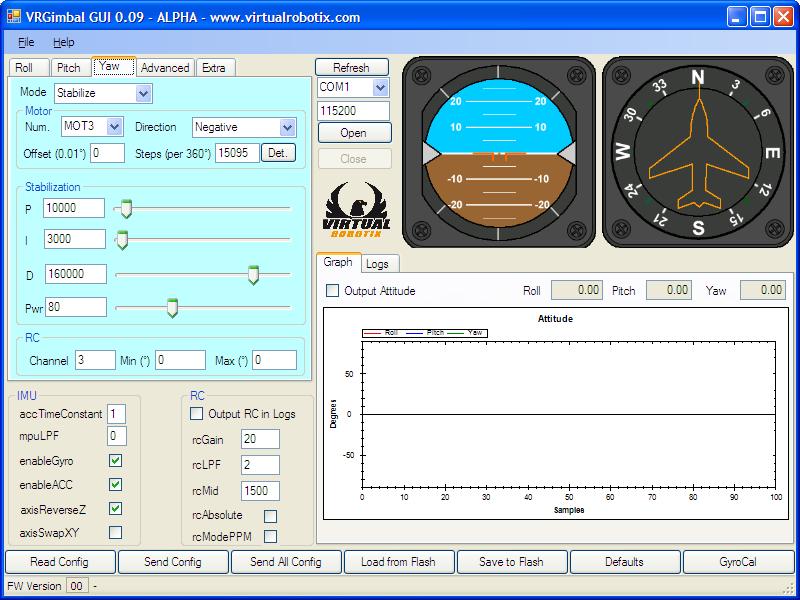
This is a screenshot of VR Gimbal Gui developed using .net technology, so could be work also using mono on mac and linux , test on that platform is welcome ,you can connect directly by usb to VR Gimbal or by radio link as 3dr module , blueetooth or other ttl wireles adapter :
We Upgrade also the VRGui with new functionality , slider full support of Pan axis and Full Frame.
With VRGimbal is possible to control this kind of gimbal ;
Handheld and Air Drone Gimbal 2-3axis Entry level gopro gimbal.
Handheld and Air Drone Gimbal 2-3axis Heavy dslr gimbal.
This is an example of video doing by our user of VRGimbal on heavy dslr gimbal :
This is official thread in virtualrobotix community is here join us for have more info and support :
The three-rotor SwitchBlade, a small, collapsible drone that's already raised $32,810 on Kickstarter, is designed to compete with radially symmetric quadrotors in the realms of search and rescue, infrastructure inspection, aerial photography, research, and (of course) recreational flight. According to creators Vision Aerial, the tricopter has better balance while flying forward compared with a quadcopter; it's also easier to determine the orientation of an asymmetrical drone while in flight.
The SwitchBlade comes in both regular and pro models. Neither include cameras or other special sensors right out of the box, but both have mounts for them. Both have on-board flight computers that keep the trirotor stable in the air; the pro's system allows for programmable missions. Radio controllers are included with each model. The regular SwitchBlade goes for $949 on Kickstarter, while the pro costs $1,549.
After years of quadrotor domination in the commercial drone market, we're excited to see new designs emerge. Watch some SwitchBlade-captured aerial views of a motocross track below.
The National Science Foundation recently invested in technology that makes it easier than ever to create 3D maps not just of mountains but of any landscape using nothing but a drone and a point-and-shoot camera. It's called Ecosynth and is specifically geared towards folks like ecologists who have long had a hard time gathering massive amounts of data about the land they're studying. Now, thanks to camera-equipped drones, they can do it with the push of a button.
"I flip the switch on the controller and away it goes on its own," Jonathan Dandois, a doctoral candidate at the University of Maryland, told Txchnologist. While Dandois spends his time surveying forests, he believes the Ecosynth software will have much broader applications. "It might inspire ecologists to rethink the ways they collect data."
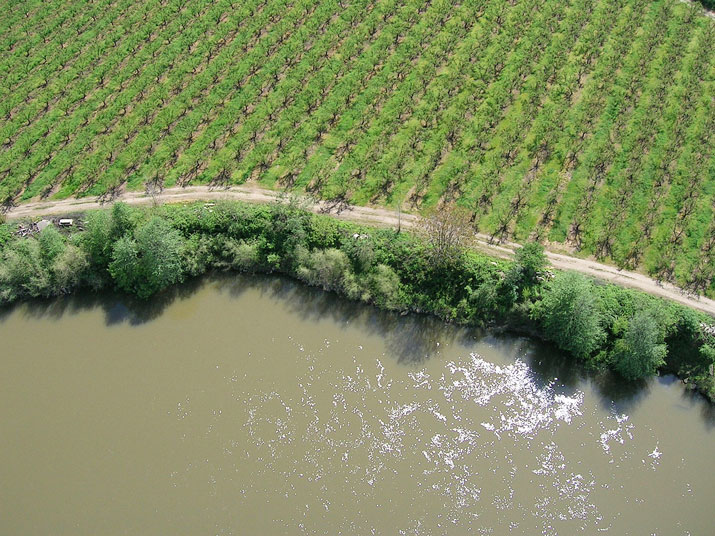
And data they can collect. The software is being designed so that anyone from professional ecologists to amateur science can easily make 3D maps of any landscape with a few fly-bys. The drones just need to hover a few meters above the treeline, snapping photos of what's below, and the software turns everything into a 3D model. (An example of a drone photo is at the top of this post.) Gathering this amount of data would've taken years in the past. Now it takes just minutes.
I'm creating this Association to bring together the top minds and companies throughout the Midwest. The goal of this association is create a list of regulations to purpose to the FAA that will allow for the Unmanned Agricultural Vehicle market off the ground here internationally by starting here in the Midwest. Currently the FAA is working very extensively with Midwest colleges, companies, and organizations on the integration of Unmanned Systems. Below is a list of some short term, Intermediate, and long term goals for the organization.
(If you're interested in donating to this Association or establishing a new chapter for your state you can message me on DiyDrones or email me at JoshuaAllenJohnson@gmail.com)
Short Term Goals:
Establish chapters/groups for each state within the Midwest
Work with UAV Tech companies and their products to find the best airframes, autopilots, and UAV Tech to submit for FAA Certification (in the same way ScanEagle got certified)
Build a website and create a group forum/chat that can be used to social network and create the regulations list
Find proper funding to build up the Associations advertising capabilities and website maintenance costs
Establish Association plans,groups,conference locations,meeting times, and all the groundwork of the Association
Intermediate Goals:
Create monthly conferences for each state chapter to discuss issues and work out regulations
Get a list of regulations together that is considered a rough draft and will be edited and changed minorly until each state chapter approves of the list
Have each state chapter submit a weekly memo that includes proposed regulations, regulation edits, local regulations based off of counties within their state, and any Midwestern regulations they are against
Long Term Goals:
Finish Midwestern Unmanned Agricultural Vehicles Regulations to submit to the FAA
Establish Western, Southern, and Eastern UAVA associations
It is very hard to tune a brushless gimbal. Even the best tutorial found on the internet are hard to replicate because we all have different setups : cameras are different, hardware is different, Voltage input to the alexmos board is different, etc.
Let's share our PID settings to constitute an as big library of settings that works as we can. Either you will have the same configuration as someone and you can just copy the settings, either you are close to a published setup and then you can start from there to tune your particular gimbal.
Please post:
-Gimbal hardware : make or model
-Camera : make and model (specify also if you have particular lenses as the weight changes with differetn lenses)
-Brushless motors : make and model, number of turns
-Power , P, I, D for pitch and roll axis
-an eventual youtube video to show your best results with these settings
My turn:
-Gimbal from kamkop.de
-Camera : NEX5R with 16-50 lens
-Brushless motors : GMB 5010 - 150 turns (copies of RCtimers I think)
I wanted to share a cool screen capture I took from my micro camera quad. It was a self-portrait of the quad (and partially the pilot) taken while flying in front of a polished black granite wall.
And, to finish the post, here is some footage from this flight. It was getting very windy, and I had flown my LiPo earlier, so I didn't want to overdo anything. I only flew about 2 minutes at this location, and edited my video down to some highlights.
Since it was asked, this quadcopter is the Hubsan H107C HD with an onboard 720p camera. It is slightly bigger than a smartphone. I hope to build my own micro aerial video platform capable of carrying a Mobius camera.
From Robohub, an introduction to GimBall, a flying robot that can collide with objects seamlessly, from EPFL. Excerpt:
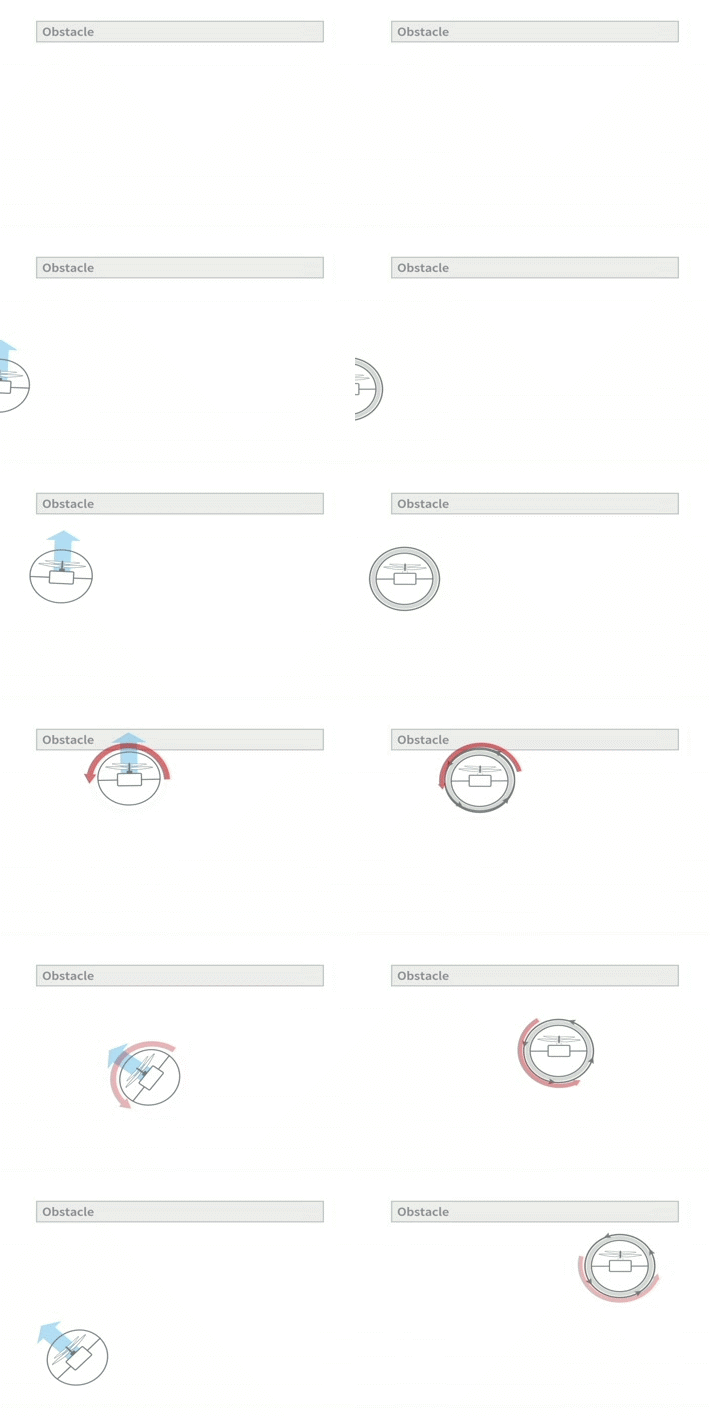
The concept The inner frame comprises everything a flying robot needs to stabilize in flight: a coaxial motor, two control surfaces, the battery, an IMU and control electronics. In case of collision, GimBall’s spherical protective frame prevents obstacles from touching the inner frame and can passively rotate thanks to a gimbal system (hence the name). This way, the contact force does not affect the orientation of the inner frame, whose center of mass is also carefully centered. This allows the inner frame to always stay upright, and maintain the robot in stable flight.
A conventional platform will be strongly affected by collisions, because its orientation is disturbed. GimBall keeps the orientation of its inner frame stable thanks to the gimbal system. Note that this is a side-view of a collision in the vertical plane, but the principle remains the same from all angles, since the protective cage rotates around all 3 axes.
Posted by Simon Wilks on October 30, 2013 at 1:00pm
I recently received the Iris RTF package and finally had a chance to take it for a fly today. Here is what I did:
- Unboxed it - Inserted batteries into the transmitter - Charged the Lipo - Flashed the PX4 firmware using QGroundControl (currently the Technology Preview version) - Selected the Iris from the airframe config section - Calibrated the RC and sensors - Mounted the GoPro - Grabbed an extra GoPro to place out in the field and video camera to film the action. - Had Fun
Posted by Gary Mortimer on October 30, 2013 at 12:33pm
Patrick Egan and the sUAS News podcast were lucky enough to be able to talk to Raphael Pirker (aka Trappy) and his counsel Brendan Schulman earlier today.
Posted by Gary Mortimer on October 29, 2013 at 10:08pm
Patrick Egan
There are bushels of folks out there now spending money and putting time in finding niches for unmanned systems that already exist. You may be saying, isn’t that what we should be doing? Possibly, but first we have to understand that the idea of carrying sensors on aircraft is not revolutionary, it has been going on for years. Drones too, but we are supposed to act like it doesn’t happen because FAA policy says so.
At the lower end of the data collection spectrum of course is photography. Pretty pictures may be enough to satisfy some. However, others may need just a little more data to make all of the regulatory hassle and cash outlay worthwhile. Let’s use the pick-up truck analogy that has been bandied about. Sure you can haul your roller-skates, but does the added expense and cost to operate justify the outlay?
In July of 2012 Erik Johnson posted a description of his company's protected-propellers frame prototype. The production model went on sale today. http://safeflightcopters.com/
The Midwest states make up the largest percentage of area of land used for agricultural purposes in the country. The MidWest offers large area's of land for extremely reasonable prices. This land is usually land that has been over farmed and is neighboring farming communities. Start ups and expansions of companies like John Deere, Rockwell Collins, Honeywell, and other large companies in the MidWest will be the primary purchasers of these large plots of land. They will most likely purchase this land to build large facilities for engineers and use the extra land to build mock farms or habitats that will allow them to test the equipment and technologies being produced.
With the University of North Dakota's "Unmanned Aerial Systems Operations" four year Bachelors Degree leading the country in qualified graduates and with top notch professors like Ben Trapnell, states in the MidWest are receiving more and more qualified UAS Operations workers as each semester passes. The first semester of students to graduate from UND with a Bachelors Degree in UASO were just a small number of students but these students all went on to prominent jobs within the industry and some starting their own companies. With each passing semester the number keeps getting higher and higher and soon at some point UND might be graduating 100+ qualified UAS specialists each Semester. The MidWest drone market relies heavily on UND graduates working with MidWest Companies projects and also rely on the people who graduate from UND's UASO (Unmanned Aerial Systems Operations) program that start their own drone companies throughout the Midwest.
Do you agree that the MidWest is the key to the Agricultural Drone Market?!
I thought I'd share my recent marine excursion to a drilling rig that's anchored about 5.2km offshore. I was testing my new ReadyMadeRC 8000mAh 3S batteries (awesome, light) and the new pan & tilt mount, from Flite Evolution (changed my FPV life). As I was cruising down the beach I noticed a drilling boat that I recently saw in the harbour, so I thought I'd pop over and have a look. It was upwind all the way there, crawled along at 15-20km/h ground speed. Some of you might notice I passed the the E Whale on my way there..
Beautiful views that I was able to take in at my leisure thanks to the Cruise mode of the APM and the pan & tilt.
I eventually turned around but got a shock to see how much ocean 5.2km is! Made it back in 3 minutes averaging 70km/h ground speed, thanks to the tail wind.
I have the great privilege to have a vodcast tonight at 16:00 pm UTC Time (12:00 pm New York, 17:00 pm UK time, 18:00 pm Swiss/S. Africa time) with two of the founding members of ConservationDrones.org, Lian Pin Koh (Lian Pin is a conservation ecologist) and Serge Wich (Serge is a primate biologist).
So please join our live vodcast today on google hangouts and if you have not added diydronestv@gmail.com to your google circles do it now to assure you get an invite. I will start sending out all of the invites at around 15:30 pm UTC.
The interview will be on our YouTube channel for you to watch over and over.
Good piece from the US National Public Radio on how the hobby community approaches drone safety while regulators deliberate rules. Here's the section I'm quoted in:
It's counterintuitive, but many in the drone community want more rules.
"I very much want rules," says Chris Anderson, who founded 3D Robotics and DIY Drones. "Why? Because I want clarity. We want to know what the landscape is so that we can respond appropriately." Anderson says such clarity could start with a few definitions — like what a recreational drone really is.
Right now, he says, all drones are lumped into the same category, from the little foam onesavailable at Wal-Mart to the 50-pound behemoths some people could choose to convert into flying weapons.
In the absence of official rules, people have started coming up with their own.
"There have been some recent unsafe instances that don't represent our community, but in a sense they do," said Timothy Reuter, founder of the DC Area Drone User Group, addressing members at a meeting to discuss safety guidelines.
"In the public mind ... anyone who operates a drone in an unsafe manner is tarnishing the reputation of the entire community," he wrote in an email later.
Reuter says the need for establishing these safety guidelines is quickly approaching.
"We don't want regulations to come down on us like a ton of bricks," he told the group. "Because if we don't come up with our own safety guidelines, then other people who don't understand the technology will." He likens public anxiety about personal drones to that in the 1800s about balloons, and more recently about 3-D printing.