All Posts (11086)

Sort by

Reptile 500 FPV Rebuild

3689555242?profile=original

3689555047?profile=original

3689555354?profile=original

3689555304?profile=original

3689555379?profile=original

3689555269?profile=original

3689555294?profile=original

There was a blog post a while ago of someone who made his wiring very clean by wrapping it together, so I decided to do the something cause I was very tired of all these random wiring sticking out everywhere. I also decided to move the battery to the bottom of the quad so that the quad is not so out of balance with the battery at the back. 

Read more…
3D Robotics

3689555036?profile=originalFrom Matt Waite at DroneJournalism.org, the university research team who was recently shut down by the FAA for lack of a COA:

As part of our efforts to get a Certificate of Authorization from the FAA to test drones for journalism, we’re opening up the process to others who might be interested. 

On GitHub, we’ve posted our work-in-progress on a COA and we’re making the content of the permitting screens available. To our knowledge, this is the first time the look and content of the permitting system has been made available. You can get copies of approved COAs on the FAA website, but the context for those answers isn’t included.

Now it is.

The GitHub repository is organized by the individual screens that applicants must fill out to get a COA. In each folder, there is a PDF of the screen itself and a Markdown file of the text of the screens plus our answers to some of the questions. We will be adding more answers as we complete them.

Unfamiliar with GitHub and Markdown? You can click on the folders and then on the files themselves and GitHub will render the Markdown files as they should appear. There’s also a link on the right where you can download the entire repository as a Zip file. There are numerous free Markdown editors out there.

Familiar with GitHub and want to help out? Pull requests are welcome. Are you in the COA process and want to add your answers? We’d love it. The more information we all have, the better.

(Vias UASNews)

Read more…
Moderator

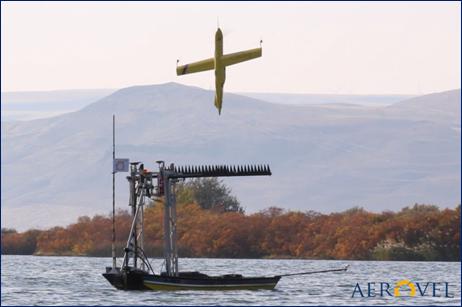
flexrotorfromboat.jpg

I can't get enough of this platform

The aircraft is Aerovel’s 20-kg Flexrotor, which combines VTOL and small footprint with Hawaii-to-West Coast range. The carrier is a 4-metre skiff equipped to launch, retrieve, and service Flexrotor automatically. In what are believed to be the first-ever flight cycles of an unmanned aircraft based on an unmanned boat, Flexrotor launched from the remotely-controlled skiff while underway, climbed out as a helicopter, transitioned to wing-borne flight, imaged the skiff while flying at low and high speeds, transitioned back to thrust-borne flight, and retrieved autonomously onboard. The aircraft then shut down, was automatically refueled and restarted, and repeated the first flight, finally being secured onboard in a docking station. Aircraft and skiff then came ashore, and were driven 100 miles home into the setting sun.

Tad is a wonderful friend to sUAS News and we can't thank him enough for the scoop. Keep reading sUAS News folks we will keep you a couple weeks ahead of the rest ;-)

http://www.suasnews.com/2013/10/25645/first-flight-of-unmanned-aircraft-from-unmanned-boat/

Read more…

The VR goggle meets Rube Goldberg


Google recommended this video & it's relevant to the RC hobby drone industry VR goggle market.

Long ago after she disappeared from Goo Tube, there was a story about her getting sh*tcanned from a startup that was doing this ridiculously complicated VR project & now she was trying to sell it alone. It sounded like they hired her to do this idea which they thought of, then she got attached to it, but in actuality it was her idea all along.


There must have been a huge ergonomical benefit to using head mounted projectors, a head mounted webcam, retro reflective material, IR leds, active shutter lenses. The only obvious advantage is it could include practical objects in the VR world.


Detecting head position is a huge win for VR glasses. It's hard to see why no-one has done it. It's very hard to track the position of an indoor object, but VR glasses aren't constrained by the requirements of a flying vehicle. The ambient lighting required by machine vision can be controlled. The update rate doesn't have to be fast.


She does it with a glasses mounted camera detecting ground based LEDs. It would have been much easier to use a ground based camera tracking glasses mounted LEDs. The problem no-one can solve is detecting where your pupils are converging.


She could have probably already shipped something really basic, with low definition & bulky electronics, but she doesn't seem to have a final product in mind, just endlessly trying to reduce the size & increase resolution.  Something really complicated with no obvious goal is the kind of thing that makes money from the crowd.   She conceded that the reflective material is too cumbersome & offered a glasses mounted reflector while still sticking to the head mounted projector.  It might be a case of being too far invested in the projector idea to go back to the simpler glasses mounted display.


The 1/2 million raised so far may seem like a lot, but it took lots of trade shows, traveling, & knocking on doors, not just signing up on kickstarter. There seems to be an infinite amount money available from crowdfunding, for a certain price.  Everything alive & breathing now seems to get at least $100,000, but there's obviously a limit. A lot of projects have to not get anything for the few to get $100,000.  The money tends to concentrate on the Rube Goldberg machines. 

Read more…

Using a FrSKY Taranis X9D, we have been mixing different switches and testing 7 flight modes. RTL on a one-switch return home and 6 other flight modes.   We have included our video logs of how we set it up.   You can use any switches following our3689554728?profile=original example. Since there are so many 3 position switches on a Taranis, you can spare one for a mix.


With 6 CS switches, you can next easily assign sound files to each flight mode.  We will also include the sound files (voice) of all the flight modes in the next video and a link to download them.  Maybe someone will find these useful.  Cheers!
3689554793?profile=original

Previously Part 1 of 3: FrSky Taranis and Setting Up Basic Switches
3689554908?profile=original


Next Part 3 of 3: Adding sounds to flight modes

3689554921?profile=original


Read more…
3D Robotics

Phantom pilot arrested

The pilot of the Phantom that crashed on a Manhattan street earlier this month has been arrested, ABC reports:

David Zablidowsky of Brooklyn has been charged with "Reckless Endangerment" for allegedly losing control of a helicopter drone at "an unreasonable height creating a substantial risk of serious physical injury". 

Read more…
3D Robotics

"Electro-cosmetic" copter control

Definitely file this one under "silly", but it's a toy copter launched with blink of some sort of electrical false eyelash controller. I just wish they wouldn't call every flying toy a "drone".

From Popular Science:

With a wink, the drone flies out of the woman's hand. This isn't the opening sequence of a James Bond movie (though it totally should be). Instead, it's the metallic makeup of computer scientist Katia Vega. When the eye closes, the metallic makeup completes a circuit, which sends a signal down conductive eyeliner to a radio transmitter, which tells the drone (really, a toy remote control helicopter) to take off. The future!

The drone-contolling eyeliner, dubbed the "Blinkifier," is party of Vega's Beauty Technology project. In addition to controlling a drone, Vega configured the Blinkifier to change the lights on an LED headress and to switch images projected behind the presenter. Her other works in Beauty Technology include artificial nails with RFID tags that can play a virtual piano and, combined with a special set up, can turn a pool of water into a DJ's turntables.

Read more…
Distributor

IRIS unboxing (photos)

3689554611?profile=original

Disclaimers:  This is still called a DEV kit... things may change in real production version. 

Full disclaimer, I am the Canadian reseller of 3DR stuff, but people knowing me know that I keep it true and if there is something I don't like I will point it out! 

So my IRIS RTF arrived Guess what I did... yeah pictures time! 

First of all... the box is HUGE!! (30 X 21.5 X 7.5 inches...!) 

3689554439?profile=original

It has no issues with Fedex, I think because of it's size carrier will maybe handle it a bit better... hard to toss this one around... but could it has being smaller  a bit... let's open it up... 

3689554498?profile=original

Oh... shipping with props on... !!!  that is a first for me... was it really necessary guys? I mean installing props is something we do (or should do) everytime we go flying and for safety I am always saying to remove them when done flying/crashing  :) 

I think it's one critical step that I like to leave for the customer to do... 

There is space optimization too where 3DR could have fit this all in a smaller box (but not much, Radio is cleanly secured, IRIS arms are solidly held in place in the cardboard cutout and tape.

Let's see the parts we get! 

3689554630?profile=original

Wow a LiPo Bag! yeah! now we are just missing a small LiPo Alarm/bench tester to complete the kit (as the included charger has no voltage display... plugging in the LiPo to the IRIS and starting up Mission planner to check voltage is not intuitive...)

So here we go with the inventory (remember, DEV kit, subject to change, bla bla bla) 

1 X IRIS craft (yeah... will get back at this later but the first time you touch it to take it out of the box you feel how strong and rigid the arms and shell are... wow) 

1 X Radio FlySky FS-TH9x (basic, proven, comes with the FrSky 2.4GHz DJT module so reliable signal) - no battery included, need 8 X AA regular batteries or a power pack... 

1 X IMAX B3 charger... basic, simple, does the job, 1 LiPo at a time

1 X bag of cables (international plugs for charger

1 X very nice user manual! 

4 X spare props (10x4.5 APC composite) 

3 X LiPo (not sure this is standard, I think you only get 1 LiPo unless you order more... I feel special!) 

What is missing... Tool bag... USB cables... I think It is included, manual refers to an included Alen key and a supplied custom wrench for the prop nuts... Also there should be a Tablet/USB cable and a PC/USB cable (referenced in manual)

So I think that was all in one bag that is missing from my DEV early shipped box... not a big deal for me but not fun for someone new to the hobby.  (guys put a checklist in the box for the content, it helps a lot and customers like to review it too) 

Love the included pre-flight check list and the sticker for Radio switches flight modes (wish it was pre cut but again maybe an early version) 

3689554667?profile=original

3689554683?profile=original

3689554758?profile=original

Belly side up

(more pictures in next post, reached the max for now) 
Read more…

Castle Creations QuadPack 35, 35AMP Multi-Rotor (4)Pack

3689554805?profile=original

Castle Creations is introducing the QuadPack 35. This pack of four 35-amp multi-rotor ESCs is equipped with three (3) ESCs without a BEC and one (1) with a BEC*. Each ESC has optimized firmware specifically designed for quadcopter and other multi-rotor platforms. Refresh rates up to 490 Hz give your platform optimum stability and maneuverability without missing a beat. QuadPack 35 comes preprogrammed for multi-rotor platforms and is recommended for platforms ranging from 450 to 650 sizes pulling up to 35 amps** and running up to 6S LiPo. As with all Castle ESCs, this product is easily programmable using the Castle Link USB adapter (sold separately).

*The single BEC supplies power for all 4 controllers.

**RC HOBBY APPLICATION RATING: 35 amps for the duration of a single 4,000 mAh battery pack with the ESC in contact with a 5 mph airflow of 25C (77F) or cooler air. Controller temperature must never exceed 100C (212F). Exceeding current or temperature ratings may damage components and may shorten the life of the ESC. Always verify system current draw at full-throttle. Decrease load or increase airflow to decrease the ESC’s operating temperature.


Specifications

Continuous Maximum Current: 35A
Input Voltage: 7.4-22.2V (2-6S LiPo)
Input Connector Types: Bare Wire
Output Connector Types: Bare Wire
Length: 1.93 in (49mm)
Width: 0.88 in (22.4mm)
Height: 0.33 in (8.4mm)
Weight: 0.98 oz (27.8 g) each
BEC Voltage: 5.5V; 5A continuous, 7A peak

Paul @ WavetechRc

Read more…

Qualcomm Zeroth - brain like processor

3689554409?profile=original

Qualcomm Zeroth processor to not only mimic human-like perception but also have the ability to learn how biological brains do.

This might be the powerful new tool for drones development in the next few years. Just imagine what possibilities it gives.

We have a lot of switches on our radio (or tablet). It would be amazing, to use one as a "good drone" button. The speed of learning in a connected network like Mission Planner could be incredible. With this feature the future looks way more futuristic and drone populated.

I would love to order, in few years time, my first 3DR NPU (Neural Processing Unit), wouldn't you? :) 

Look at the video below.

Qualcomm Zeroth processors have three main goals:

1. Biologically Inspired Learning

2. Enable Devices To See and Perceive the World as Humans Do

3. Creation and definition of an Neural Processing Unit—NPU

3689554539?profile=original

Qualcomm’s technologies are designed from the ground-up with speed and power efficiency in mind. This way, devices that use our products can run smoothly and maximize battery life driven experiences. As mobile computing becomes increasingly pervasive, so do our expectations of the devices we use and interact with in our everyday lives. We want these devices to be smarter, anticipate our needs, and share our perception of the world so we can interact with them more naturally. The computational complexity of achieving these goals using traditional computing architectures is quite challenging, particularly in a power- and size-constrained environment vs. in the cloud and using supercomputers.

For the past few years our Research and Development teams have been working on a new computer architecture that breaks the traditional mold. We wanted to create a new computer processor that mimics the human brain and nervous system so devices can have embedded cognition driven by brain inspired computing—this is Qualcomm Zeroth processing.

We have three main goals for Qualcomm Zeroth processors:

1. Biologically Inspired Learning

We want Qualcomm Zeroth products to not only mimic human-like perception but also have the ability to learn how biological brains do.  Instead of preprogramming behaviors and outcomes with a lot of code, we’ve developed a suite of software tools that enable devices to learn as they go and get feedback from their environment.

In the video below, we outfitted a robot with a Qualcomm Zeroth processor and placed it in an environment with colored boxes. We were then able to teach it to visit white boxes only. We did this through dopaminergic-based learning, a.k.a. positive reinforcement—not by programming lines of code.

2. Enable Devices To See and Perceive the World as Humans Do

Another major pillar of Zeroth processor function is striving to replicate the efficiency with which our senses and our brain communicate information. Neuroscientists have created mathematical models that accurately characterize biological neuron behavior when they are sending, receiving or processing information. Neurons send precisely timed electrical pulses referred to as “spikes” only when a certain voltage threshold in a biological cell’s membrane is reached. These spiking neural networks (SNN) encode and transmit data very efficiently in both how our senses gather information from the environment and then how our brain processes and fuses all of it together.

3. Creation and definition of an Neural Processing Unit—NPU

The final goal of Qualcomm Zeroth is to create, define and standardize this new processing architecture—we call it a Neural Processing Unit (NPU.) We envision NPU’s in a variety of different devices, but also able to live side-by-side in future system-on-chips. This way you can develop programs using traditional programing languages, or tap into the NPU to train the device for human-like interaction and behavior.  

Read more about this amazing project:

http://www.qualcomm.com/media/blog/2013/10/10/introducing-qualcomm-zeroth-processors-brain-inspired-computing

http://www.slashgear.com/qualcomm-zeroth-processors-official-mimicking-human-brain-computing-14301263/

http://www.engadget.com/2013/10/11/qualcomm-zeroth-brain-like-computer/

Read more…
3D Robotics

3689554389?profile=original

Cool article from the open access scientific journal PLOS One

Abstract

The use of remote imagery captured by unmanned aerial vehicles (UAV) has tremendous potential for designing detailed site-specific weed control treatments in early post-emergence, which have not possible previously with conventional airborne or satellite images. A robust and entirely automatic object-based image analysis (OBIA) procedure was developed on a series of UAV images using a six-band multispectral camera (visible and near-infrared range) with the ultimate objective of generating a weed map in an experimental maize field in Spain. The OBIA procedure combines several contextual, hierarchical and object-based features and consists of three consecutive phases: 1) classification of crop rows by application of a dynamic and auto-adaptive classification approach, 2) discrimination of crops and weeds on the basis of their relative positions with reference to the crop rows, and 3) generation of a weed infestation map in a grid structure. The estimation of weed coverage from the image analysis yielded satisfactory results. The relationship of estimated versus observed weed densities had a coefficient of determination of r2=0.89 and a root mean square error of 0.02. A map of three categories of weed coverage was produced with 86% of overall accuracy. In the experimental field, the area free of weeds was 23%, and the area with low weed coverage (<5% weeds) was 47%, which indicated a high potential for reducing herbicide application or other weed operations. The OBIA procedure computes multiple data and statistics derived from the classification outputs, which permits calculation of herbicide requirements and estimation of the overall cost of weed management operations in advance.

Read the resthere. 

Read more…

We've been experimenting more and more with tablet ground stations here at Event 38 and have had a lot of success using the DroidPlanner app. The software has been working well for us but we found our ground station setup was really cluttered, the opposite of what we were going for when switching to tablets. My main complaint was having the ground side telemetry radio dangling from my phone or tablet. Not only was it a hassle and prone to coming unplugged, it was also hard to keep it in a good position for radio reception.

Following Arthur Benemann's instructions, we set up a bluetooth bridge that would let us at least set the radio down and move freely with the ground station tablet. A huge improvement, no doubt, but still a little rough around the edges, even needing power from a laptop. So we added a nice case and a single cell LiPo battery to power it all. This worked even better, and looked pretty nice as well!

2013-10-16 15.36.09

It still had some power management issues but it worked well enough for our purposes. At this point we're thinking about running a Kickstarter campaign to run a production scale build of these but we'd like to get some feedback from potential users before we solidify the specs. I'd appreciate any/all comments on what kind of features you'd like to see on something like this, if any, besides the telemetry bridge to Bluetooth. Right now we're planning on including the following:

  • Internal LiPo battery, rechargeable by USB
  • Battery status LEDs
  • 433 and 915MHz variants to be compatible with any 3DR Radio
  • ~20m Bluetooth range
  • ~1km telemetry range
  • 5-6 hours battery life
  • A durable plastic enclosure

Is there anything else we should consider adding to improve the functionality or usability? Do you think this would be priced fairly at $139? Let us know what you think!

Read more…


You all might remember my integrated groundstation project, which I started earlier this year. Based on this project, I started integrating flight instruments from Dutch manufacturer Flight Illusion. Flight Illusion in one of the leading manufacturers of gauges for flight simulators and has a wide range of various instruments. Piece by piece, I will write a library which is able to control the most important gauges to display MAVLink data.

Why oldfashioned "steam gauges", you ask? There's Mission Planner, QGroundControl, Andropilot, Droidplanner?

Very simple: "steam gauges" have various advantages:

First of all, they are fully sunlight readable. Unless you have a really expensive laptop, you will have problems with reading the screen on a beautiful summer day, unless you have some bulky glare shield. Next, with "steam gauges" you save space. If your ground station has a nice big FPV monitor and you additionally have a laptop, you have a pretty bulky piece of equipment going on. When using gauges, you can have your FPV monitor and 3 or 4 gauges in one nice Peli case, ready to go with all important information at a glance. Last but not least, having "real" flight instruments in your ground station is way cool :).

Of course, gauges don't work with FPV goggles, but neither does a laptop or tablet.

A solution with gauges is definitely no universal solution for everyone, but for more professional use, it is a very good solution.

Development will also include creation of a control unit which includes the necessary power supplies and accepts a MAVLink data stream to directly control the gauges, without the need of a computer.

Over time and if there is sufficient demand, we will also think together with Flight Illusion about creating a line of instruments specifically for drone use, e.g. a speed indicator or altitude indicator with a display range more suitable for small UAVs.

Read more…
100KM

The near future of precision farming

3689554206?profile=originalI have been quite successful to perform general aerial mapping, producing othomosaic and digital surface model for our local plantation company. Our Skywalker base UAV power by APM is a very reliable tools for acquire aerial images. Currently for a typical mission we fly at 300 meter altitude and resulting ground sample distance is about 9 to 12 cm per pixel using Canon S100 GPS. 


I am very excited to learn that Agpixel is providing a way to transform Near Infra Red images to NDVI, which may become a very powerful tools for the agronomist or the plantation management personnel to zoom in the problematic area as soon as possible before more severe damage or losses occur. This type of information will be crucial for the agronomist in their recommendation of fertilizer input, which account for 60% of the overall cost of production for oil palm plantation.      

Normal RGB Othomosaic image
3689554161?profile=original


To acquire NIR image, I am using Maxmax modify NDVI Canon S100 GPS camera. The images quality is very good. Agpixel has maxmax modify camera setting ready to use so the user no need to tweak parameter like imageJ. A few click later, some beautiful false color image can be generated for viewing or export to various format.


Here come the tricky part, while the false color image is very attractive but how to adjust the parameter so the information presented in the false color image will be accurate and useful to the user has yet to finalize. More research will be needed. It will not serve the purpose to supply an eye appealing NDVI false color images and only to found out that the data is not accurate or misleading.


According to Mark Lanning, the CEO of Agpixel, the program is under massive update and I hope the final product can deal with cloud shadow issue, support large ( Gigabyte ) file and output geo-reference images. For the mean time, this program may be targeted for researcher and the professional from remote sensing field. I can not find a manual or tutorial on how to use it. In my opinion, a comprehensive and detail manual plus video tutorial is crucial if this product is target for general mass market. Most of the farmer or even agronomist may not well train in remote sensing subject.   


With the hard work of Mark and his team, I hope Agpixel will become a leading software for precision agriculture and ultimately help the world to produce more food in the most efficient way.

Near Infra Red Othomosaic image

3689554151?profile=originalAgpixel Green NDVI

3689554206?profile=original

False Color Composite image

3689554241?profile=original

Read more…
3D Robotics

Why microdrones should eat meat...

...at least if they want to compete with insects for energy management. 

A University of Maryland professor's experiments with solar-powered microdrones finds that sunlight is still an order of magnitude too low in power to keep his aircraft aloft. That's why insects don't use sunlight, but rather food: chemical energy (like digesting meat) is much higher density than solar. IEEE Spectrum explains more:

UMD professor S.K. Gupta explains how well Robo Raven works with the solar wings:

So how good is the performance? Solar cells currently cover less than half the wing area in Robo Raven III. These solar cells produce 3.6 W of power during a sunny day. The efficiency of these solar cells appears to be around 6 percent, and the combined efficiency of batteries and motors is somewhere between 25 to 50 percent. We hope that the performance will go up significantly as more efficient solar cells become available and we cover more of Robo Raven III’s wing and body area with solar cells in future versions.

Robo Raven's motors currently draw about 30 watts, meaning that the solar power output is an order of magnitude below what would be required to keep the robot aloft indefinitely. Real ravens, of course, rely on foods like meat, which has a crazy high power density:

Nature has a significant edge over engineered system in other areas. For example, 1 gram of meat stores 20 times more energy than 1 gram of the current battery technology. So in terms of the energy density, we engineers have a lot of catching up to do. In nature, solar energy collection devices (e.g., trees) are not on-board ravens. Hence, ravens ultimately utilize a large collection area to gather energy into a highly dense storage source (e.g., meat), giving them a much longer range and better endurance than Robo Raven III.

I think what Dr. Gupta is saying here is that we should just forget solar power entirely and start feeding our robots meat. But until that happens, continuing advances in solar cell technology should allow Robo Raven to at least significantly extend its flying time, if not power itself from the sun completely

Read more…

Power Distribution Board

3689554092?profile=original

After putting together a Carbon Core 950 and trying to fit all the electronics, ECSs and miscellaneous electronics into the frame, I realized I really need to use a power distribution board to keep the installation clean. I know there are some pretty good power distribution boards available, but none that did what I exactly wanted. I ended up cobbling together a MultiWii board with an AttoPilot 180a sensor. It works, but I had to ship a board from AU and the installation still wasn't as clean as I would like. With this in mind, I started working on a 8 position power distribution board with integrated current and voltage sensors. I also added a place for (3) 1000uF caps (I removed the ones attached to the ECSs in order to gain a little space in my installation and moved them to the board.).


I was planning on sending the board above to a PCB fab shop as a prototype order, but was wondering if anyone else would be interested in something like this?


Not sure how much something like will cost, but if there is interest, I can figure out the BOM and labor costs. At this point, it would be easy enough to create versions for a quad, a hex, and an octo, with or without current sensing, and with or without capacitors. I sourced it with (4) 5 watt shunt resistors, so the max amps could be considerably more than the AttoPilot version... I know the large Octos are drawing more than 180 amps at full throttle, so I calculated this version could handle 282 amps.


I'm just throwing ideas around at this point, so any input would be appreciated.

Read more…
3D Robotics

More on textbook delivery drone concept

[Just adding video and commentary to what was covered in the earlier post] I'm usually pretty skeptical of "drone delivery" concepts, given that most are just marketing stunts. But new Australian startup Flirtey has at least addressed (if not solved) some of the most obvious problems with the model. Their textbook-delivery concept would lower a package from a cable, rather than attempt to land (possibly on someone's head) and claims some unspecified "obstacle avoidance" system. No word on how they're going to extend the range of the multicopters further than what would much more easily by accomplished by a delivery bike. 


From TechCrunch:

As countries around the world gradually lift regulations on the use of commercial drones, a new startup called Flirtey hopes to turn Australia into a worldwide industry leader for the use of UAVs (unmanned aerial vehicles) in e-commerce deliveries. Flirtey plans to launch commercial drone delivery of textbooks purchased from Zookal for domestic customers in 2014 before expanding to the U.S. in 2015. The startup says this marks the first use of fully automated commercial zones for package delivery in the world.

..

Ahmed Haider, CEO of Zookal and co-founder of Flirtey, says Australia is in a unique position to pioneer the global UAV industry because of regulations by the Civil Aviation Safety Authority (CASA) designed to encourage adoption of drone technology, as well as the continent’s geography, which ranges from densely populated cities to vast swathes of rural Outback.

Zookal will use Flirtey to send parcels for free and claims deliveries can be made in as little as two or three minutes, compared to two or three days for traditional shipping methods. Upon arrival at an outdoor delivery destination, Flirtey’s drones hover and lower the parcel through a custom delivery mechanism that is attached to a retractable cord. Real-time GPS tracking of each drone’s location will be available through the Flirtey app for smartphones.

One of the reasons Zookal decided to pursue commercial drone deliveries was because of concerns over the cost and performance of parcel shipments as its business grew. Haider says the use of UAVs will cut Zookal’s costs from $8.60 AUD to 80 cents AUD per delivery.

Flirtey’s goal is to present UAVs as a speedier, cost-effective and environmentally friendly alternative to traditional delivery methods. One of the startup’s biggest challenges, however, is the public perception of drones. In Australia, critics have described the UAVs as a “safety and privacy headache.” Though Congress has required the FAA to come up with legislation that will allow commercial drones by 2015, lawmakers and groups like the American Civil Liberties Union are voicing concerns over the use of drones in aerial surveillance.

To address these issues, Flirtey is currently collaborating with the The Warren Centre for Advanced Engineering, a non-profit research institute, to draft a set of guidelines for the use of commercial drones.

“We hope to use this guide as a way to work through safety, privacy and community concerns locally which will hopefully set a benchmark for the rest of the world as to how to interact with this new technology,” says Haider. The startup also advocates the establishment of a non-profit association that will allow UAV operators to share safety innovations in hardware, software or test data online.

Haider and Flirtey co-founder Matthew Sweeny say that several safeguards have been built into Flirtey’s UAVs, including “collision avoidance technology” to prevent them from crashing into trees, buildings or birds; a mechanism that forces drones to hover and then land slowly if it loses signal range or experiences technical failure; and the ability to override autonomous operation and allow a person to take control. Flirtey’s commercial drones don’t have cameras in order to prevent privacy intrusions.

“As with most major innovations that start with a military background, such as the Internet, SMS, GPS and satellites, when applied to a community problem they have a significant and positive impact on society. Our goal is to do this with UAVs. We don’t store any user data other than what is required to safely deliver the product,” says Haider.

Haider is hopeful that UAVs will close the gap between innovation in e-commerce and the logistics industry, which has used the same delivery methods for decades.

“Textbooks are an excellent way to test the market as they allow for varying weights,” he says. “With the concentration of students in universities in Australia, we will have proof of concept that shows if you can deliver a textbook, then things such as urgent medical deliveries, clothes, shoes, fast food and other e-commerce will be much more viable.”

Read more…