Hi,
Tired of cutting your fingers during the testing stage of your quad.
Then make some thin cardboard short propellers.Your fingers will thank you.
Hi,
Tired of cutting your fingers during the testing stage of your quad.
Then make some thin cardboard short propellers.Your fingers will thank you.
Here is an official video from IMAV 2011 (International Micro Air Vehicles Conference and Flight Competition). It seems to be very interesting there.
More coolness from the UPenn GRASP lab, via IEEE Spectrum.
Some pretty big goals as this competition evolves, rather puts the OBC in its place and considering how difficult that is one wonders how well the competitors fare in this one.
This is this years task
Homa Sazan (University Level) Missions and Goals:
1-Level 1 (2010-2011)
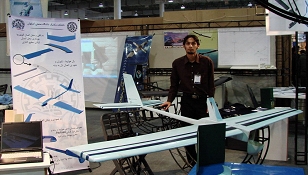
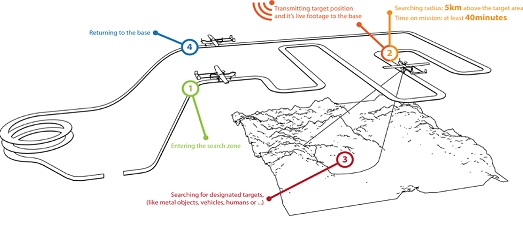
In this competition, participants must provide a UAV equipped with a Camera to search a 10 square kilometer area for at least 40 minutes to find 3 square meter marks on the ground with different English letters on them. Finding ground targets and reporting the geo location are criterion for choosing the contest winner.
 No guts no glory though!
http://www.suasnews.com/2011/09/8080/iranian-national-uav-competition/
I found this video over the weekend. Not sure if its been posted on here before but its worth the watch. Some pretty tight flying through jungles and bridges.
I made nice progress - but not after having some bad experience.
As you may know I decided recently to replace DCM with the solution from Seb.
During my holidays in holland i got a terrible cold but i could work a little bit.
Not in terms of a total new framework but experience what to do and not.
I started to change the pid control loop using this guide: The balance filter
The biggest surprise was the amount of propellors used.
One hand is enough for counting :-)
Above a simple hovering in the garage.
and the same outside.
To me the result is ok.
I am happy to have something flyable in a short time frame.
Hi everyone,
For years now we use model aircrafts as a hobby or job, and for many years as aerial platforms for aerial photography and mapping. So after many discussions here and reading, I will begin here an UAV application that I think and prepare from student and I hope that now I have the background to make it happen. The reason I post the project here is because I learned all about model aircraft from aeromodelling.gr and everything I know for autopilots from diydrones.com
I began my first efforts for knowledge and hobby with the famous Telemachus (similar to telemasters). The Telemasters are well known to most of you and they have been used as such platforms, although satisfactory results have pluses and minuses that we saw in corresponding topics. So after studying, planning and design of many commercial and non-commercial UAV’s, i resulted in the formation of one new platform that meets ALL of my conditions:
Finally anything else you suggest...
And we begin:
 Uploaded with ImageShack.us
2. Equipment detail
3. fuselage,
After much thought for the space, size, versatility, the total weight, I decided to give to my plane a “Stick” form, ie a square carbon fiber of 1,5cm witch all equipment, (wings, rudders etc) will be screwed on it and can change position depending on the setup and CG. The aerodynamic "outfit" will be left out as a surprise at the end of construction, the only hint is that the total weight of the planking will not exceed for 1 meter aircraft 60gr and it will be practically unbreakable!
4. horizontal and vertical stabs are in shape and size same with those of the skywalker, but is made of balsa & depron (6mm) with normal layout (not T-Tail) and the servos are mounted on them
Everything is screwed! Because a. I do not want even traces of glue, and b. the weight. Also I will be literally be able to unscrew everything and put it in a Bag.
5. Finally, all data from the cameras (dual 640 * 480 3d, RG NIR) will united directly to the base station in a GIS environment, ArcGIS, there the data will be fed into an algorithm that can calculate the terrain, the sunshine and hence the potential evapotranspiration (pennman), various health indices (NDVI, RVI, etc.), leading to immediate conclusions about the course of cultivation.

A little backround,
I am from Athens- Greece, I work as GIS technician for cadastral agencies and forest mapping cartography, I studied agriculture technology and environment management. The whole project has to do with my phd witch I hope to combine spatial data, agriculture techniks and knowledge with remote sensing and the calculation capabilities of GIS.
I purchased a full ardupilot mega kit from udrones ready and tested, I used it to fly right out of the box my custom made telemaster (img below)with perfect results, but I needed something more, so I am building my own airframe, I update my APM’s firmware and now I need some help to make it come to life.

I hope that are many people in this forum that we share the same interests (and passions) and I believe this could be a nice post-think tank to gather all opinions for remote sensing applications. Also I am willing to help everyone who wants to know more about photogrametry and GIS issues, image rectification and so on.
At this point I have to thanks, my employer Silva- Natura , www.greekwings.gr for providing cnc machinery and knowledge for the wing construction and www.nemhobby.com for sponsoring most of my rc gear.

Thanks in advance,
James Stefanakis
Great Idea for FPV, Onboard Camera and LCD on Transmitter Available in just 82$. The product comes in metal case.
This product is available at http://yingkemodel.en.alibaba.com/
Having a problem with your APM? No worries! I'll hop on the next plane and personally come check out your board, wherever you are. It's the least we can do.
For example, John Stuart was having trouble with his ArduCopter. As it happens, he lives in Cape Town, South Africa, which is a bit far from San Francisco. Not a problem! 24 hours of air travel later, and here we are this afternoon checking out the hardware near his house. And now it's working great!
Seriously, I just happened to be in South Africa with my wife on a speaking tour and we figured out we'd be just minutes from John's home, so we managed to meet up. He's got the coolest collection of multicopters I've ever seen. Mikrokopters, Droidworx and a couple ArduCopters, plus a bunch of planes getting ready to go. Plus he lives in one of the most beautiful places in the world in which to fly (the wine country outside of Cape Town). Thanks for the hospitality, John!
It's always great fun to meet up with DIY Drones members in the real world. We're looking forward to scheduling a meetup in London next month, too.
Awhile back, I posted that my ArduPilot Mega (now Arduplane) gave me some headaches (also here). I loaded the previous versions of the code and went through the radio calibration and the setting of the hardware through the APM Mission Planner. But when I switch to Stabilize mode, the motor would start at full throttle and the servos would lock. I believe that the PWM of my radio at that channel (Stabilize) is not enough to trigger it. I believe the mode was not Stabilize but something else (FBW A maybe?) Anyway, I came back from an out of town trip and sat down with my Arduplane again. This time, I uploaded the newest version, 2.24+ Remzibi (for OSD) through the newest version of the mission planner. I underwent the same radio calibration and hardware settings. Success! Now the stabilize works. I have no way of testing whether the RTL worked but there's just one way to find out: fly it! I have taken some vids to prove it. Now the results are in: the newest version of the code works and have solve my problems.
Thank you Chris for your patience to help me. Thanks too, to the others who pitched in to help and advise. To the developers of the code and Mission Planner: Doug, Jordi, HappyKillmore, and the others I failed to mention, Thank you very much! This is why the DIY Drones community thrives.
Gent
I'm constantly loading and testing code and the power setup of the 2560 can be a bit of a pain. Mainly, the radio does not receive power because the Servo rails are only powered via a Lipo, which can be very dangerous. I never do anything but fly with a Lipo connected and I certainly don't connect one indoors. I'm just paranoid that way.
This hack will power the radio half of the servo rail with 5V from the APM's USB connection. The idea is to spilt the 5V rail into two halves. If you use an X-Acto knife you can easily cut the trace connecting both sides. I cut the ground rail in half as well, then used some solder to repair the bridge. Then I connected the 5v from the APM to the input side as indicated below. Now I can power the radio with the USB.
Not that great of video, but you get the idea.
There is a better view at 1:02
No tail, just flapping wings, dressed as a real bird but fitted with a camera, costing $4 million. The new leading edge technology in spy drones recently unveiled and developed by a California company AV for the Pentagon. It can maintain a steady hover in gusts of wind, propels forwards, sideways and spins. Weighing only 19 grams and with a wingspan of 16 cm it is the smallest ever spy drone yet announced. It is described as an observation and surveillance platform capable of providing video feed from inside the building, and can fly indoors or perch on a window ledge.
Hooray, got to the point where I've got APM set up and in a plane (Hawk Sky). Now I need a bit of help diagnosing a flight problem.
I took off and got some altitude, and then flipped into stabilize mode. As you can see from the video, as soon as I did this, the plane started spiraling down and to the right.
I brought the plane back in and recalibrated gyros, but still couldn't get it to work.
Any advice appreciated!
Update: As noted in the comments, I had the ailerons reversed.
Revised ground test and setup notes here.
Following that, here's what I did to reset and try again.
A year and a half after its first autonomous flight, the gluonpilot finally has a powerful ground control station.
It borrows functionality of both the paparazzi ground control station (navigation blocks) and micropilot. Mission planning can be done before flight, but can still safely be modified during flight. Also included is a new configuration window that hides most of the advanced features, and allows newbies to configure their Gluonpilot in just a few minutes.
Read more about this in the announcement post.
Hot off the wires (needless to say, ArduPilot will be part of this. 32-bit, 100Mhz, yum!):
Atmel and Arduino Collaborate on
AVR and ARM-based Development Platforms
San Jose, CA, September 16, 2011 – Atmel® Corporation (NASDAQ: ATML), a leader in microcontroller and touch solutions, and Arduino, the leading open-source electronics prototyping platform and community, announced they are collaborating on several development boards usingAtmel AVR and ARM-based microcontroller (MCU) products. The new easy-to-use Arduino boards use several Atmel products including the Cortex-M3-based SAM3U MCU, ATmega32U4 and AVR UC3 MCUs.
Arduino is an open-source, community-based prototyping platform that offers accessible hardware and well-documented software to electronics enthusiasts. The community encompasses artists, designers, students, kids, hobbyists and anyone interested in creating interactive objects or environments. Committed to offering the shortest learning curve, Arduino has developed several boards featuring Atmel’s AVR and ARM-based MCUs leveraging its complete, flexible software and hardware environments.
Atmel and Arduino will be demonstrating several platforms in the Atmel-sponsored Arduino Pavilion including:
“Arduino is a grass roots community that has been working with Atmel AVR products since its inception,” said Massimo Banzi, founder of the Arduino Community. “We are thrilled to use Atmel’s ARM-based products for the first time in our latest development platforms. The new boards, based on the Atmel SAM3U ARM-based MCUs, include a complete, flexible eco-system that provides our community of developers with access to the most sophisticated, yet easy-to-use platforms for designing innovative and fun electronics devices,” Banzi concluded.
“We are excited to be a sponsor of the Arduino Pavilion at the Maker Faire,” said Alf Egil-Bogen, chief marketing officer, Atmel Corporation. “The Arduino community reaches a large group of university and hobbyist communities focused on developing new designs. We’ve seen this community grow from grass roots to a well-established organization of true enthusiasts and hobbyists. We are excited to work with Arduino on a variety of different projects in the future.”
I've final finished setting up the worlds first (to my knowledge, and until proven otherwise) ArduPlane F22 Twin EDF with thrust vectoring, flaps, slats, and retractable undercarriage. It flies using delta wing mixing. With 6S 4000 mah.
Take off weight: 2.0 kg
Max thrust: 2.5 kg
Pre-flight complete, with Manual, Stabilize and FBW modes currently programmed. This should make this aircraft easier to fly. With a huge elevator on the back I might have to reduce the pitch PID substantially.
More goodness from the engineers down the hill from me at UC Berkeley. The quad can see and catch ping pong balls! Life is good if you've got a Vicon motion caption system and an Ascending Technologies quad (ie, a big research budget).
From IEEE Spectrum:
This technique is called LBMPC (that's Learning Based Model Predictive Control), and you can see it in action when the quadrotor needs to move sideways to catch the ball, as it figures in the fact that it's going to drift a little bit after it cancels out its lateral movement. Clever.
Due to the recent shift from a Subversion to a Git repository, you'll need to use the latest versions of the Mission Planner to ensure that you'll be able to get the latest ArduPlane and ArduCopter firmware. Versions from 1.0.67 up will pull from the correct Git repository.
Google Code has currently got a file download glitch, which they're working on. So in the meantime, I've put the latest version of the Mission Planner (1.0.68) in a public DropBox folder here.
UPDATE: The regular Google Code repository is now working again.
Once Google has got the download issue fixed, the Mission Planner will be available in the download section as usual.
First flight today in full manual mode with a brief session on stabilization mode. Plane: Slowstick - short wings, spinning 8x8 carbon prop, rudder elevator only.
Autopilot: Ardupilot mounted on stick in box from Bask Aerospace.
Ground Station: APM uploaded lastest firmware and using xbee link for comms to laptop.
Flight Report: Like all good flights it went well until the plane flipped onto its back and then I throttled back and waited for the hard landing / crash. Slowstiks are not good inverted is all I have to say not possible to recover from low altitude as I was setting up for a landing.
Flight Data: Mavlink worked well, captured data plays back on APM planner.
Things to do Now: will investigate flight data to see if it was an autopilot input or just the wind.
Satisfaction Factor: 7/10
richie
Picture above: Wind Tunnel Testing anyone? its not really for my planes but I get to work on some interesting stuff - I own and run a test laboratory here in brisbane.


