All Posts (11086)

Sort by
3D Robotics

3689705586?profile=originalGreat news from Randy and the ArduCopter team:

Over the past month or so a few of us have been experimenting with using the Pozyx1 system (based on the decawave DWM1000 chip) for non-GPS navigation.

We've made quite good progress and it's just been integrated into ArduPilot master and should go out with Copter-3.5 in a few months. You can see a video of a flight using Pozyx here1:

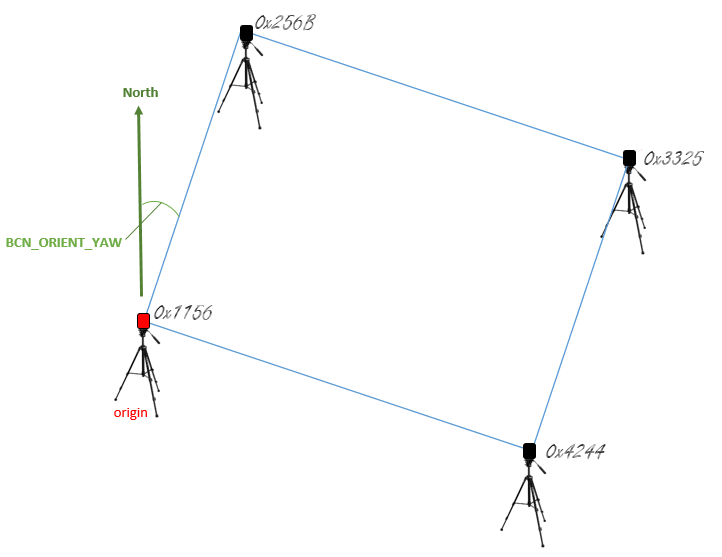
The system works by setting up 4 anchors (aka "beacons") in a rectangle (see image below). Then a "tag" is mounted to the vehicle (see IRIS above). This tag is a pozyx sensor plus an arduino uno which runs a fairly simple sketch which tells ArduPilot's the length of the sides of the rectangle and the vehicle's distance to each beacon. ArduPilot's EKF has been enhanced to consume this information and come up with a position estimate.
6c936c2c032eae68c9966b24516eba51e01de78e.png

Some extra info:

  • the range of the sensors seems to be a bit longer than 50m.
  • there's some indication that the system suffers from multipathing so it really needs a clear line-of-sight from the vehicle to the beacons.
  • so far we use 4 beacons. The minimum is 3, the EKF supports up to 10.
  • the hardware is quite bulky but we hope smaller hardware will be manufactured by someone eventually. There seems to be interest from several groups to do this.

For developer who want to experiement with the system, we've created a fairly detailed setup wiki page here1.

Some credit for the work so far:

  • idea to use the DWM1000 was brought to the team by long-time ArduPilot developer Jonathan Challinger
  • strategy to use Pozyx and first GPS_INPUT implementation by the Drone Japan School1 members including Kitaoka-san, Matsuura-san and Murata-san.

As per usual, if you're interested in getting involved with ArduPilot development, you can find many of us on Gitter.

Read more…

Skywalker EVE-2000 Madien Flight Video sharing

3689705559?profile=original

    Today, I will share skywalker EVE-2000 Madien Flight Video to you. It is really good for hand casting, some hobbists are fond of installing landing gear. That looks really great, which protects propeller from damaging. However, he choose propeller is not good, because it is too narrow. He'd better use our company's propeller, which is wider than his, ensure strong drag that make better effieciency.

      Skywalker EVE-2000 Madien Flight Video

         What do you think so? Do you like it?

Read more…
3D Robotics

Visualizing autopilot behavior with Flight Gear

Great post from Curtis Olson, the lead developer of FlightGear and a long-time autopilot developer, on using simulators to do sophisticated autopilot analysis.

Blending real video with synthetic data yields a powerful and cool! way to visualize your kalman filter (attitude estimate) as well as your autopilot flight controller.

screenshot-from-2016-11-30-14-31-14

Conformal HUD Elements

Conformal definition: of, relating to, or noting a map or transformation in which angles and scale are preserved.  For a HUD, this means the synthetic element is drawn in a way that visually aligns with the real world.  For example: the horizon line is conformal if it aligns with the real horizon line in the video.

  • Horizon line annotated with compass points.
  • Pitch ladder.
  • Location of nearby airports.
  • Location of sun, moon, and own shadow.
  • If alpha/beta data is avaliable, a flight path marker is drawn.
  • Aircraft nose (i.e. exactly where the aircraft is pointing towards.)

Nonconformal HUD Elements

  • Speed tape.
  • Altitude tape.
  • Pilot or autopilot ‘stick’ commands.

Autopilot HUD Elements

  • Flight director vbars (magenta).  These show the target roll and pitch angles commanded by the autopilot.
  • Bird (yellow).  This shows the actual roll and pitch of the aircraft.  The autopilot attempts to keep the bird aligned with the flight director using aileron and elevator commands.
  • Target ground course bug (show on the horizon line) and actual ground course.
  • Target airspeed (drawn on the speed tape.)
  • Target altitude (drawn on the altitude tape.)
  • Flight time (for referencing the flight data.)

Case Study #1: EKF Visualization (above)

What to watch for:

  • Notice the jumpiness of the yellow “v” on the horizon line.  This “v” shows the current estimated ground track, but the jumpiness points to an EKF tuning parameter issue that has since been resolved.
  • Notice a full autonomous wheeled take off at the beginning of the video.
  • Notice some jumpiness in the HUD horizon and attitude and heading of the aircraft.  This again relates back to an EKF tuning issue.

I may never have noticed the EKF tuning problems had it not been for this visualization tool.

Case Study #2: Spin Testing

What to watch for:

  • Notice the flight path marker that shows actual alpha/beta as recorded by actual alpha/beta airdata vanes.
  • Notice how the conformal alignment of the hud diverges from the real horizon especially during aggressive turns and spins.  The EKF fits the aircraft attitude estimate through gps position and velocity and aggressive maneuvers lead to gps errors (satellites go in and out of visibility, etc.)
  • Notice that no autopilot symbology is drawn because the entire flight is flown manually.

Case Study #3: Skywalker Autopilot

What to watch for:

  • Notice the yellow “v” on the horizon is still very jumpy.  This is the horizontal velocity vector direction which is noisy due to EKF tuning issues that were not identified and resolved when this video was created.  In fact it was this flight where the issue was first noticed.
  • Notice the magenta flight director is overly jumpy in response to the horizontal velocity vector being jumpy.  Every jump changes the current heading error which leads to a change in roll command which the autopilot then has to chase.
  • Notice the flight attitude is much smoother than the above Senior Telemaster flight.  This is because the skywalker EKF incorporates magnetometer measurements as well as gps measurements and this helps stabilize the filter even with poor noise/tuning values.
  • You may notice some crazy control overshoot on final approach.  Ignore this!  I was testing an idea and got it horribly wrong.  I’m actually surprised the landing completed successfully, but I’ll take it.
  • Notice in this video the horizon stays attached pretty well.  Much better than in the spin-testing video due to the non-aggressive flight maneuvers, and much better than the telemaster video due to using a more accurate gps: ublox7p versus ublox6.  Going forward I will be moving to the ublox8.

Read more…
3D Robotics

Very cool hack, as reported by Hackaday:

The HTC Vive’s Lighthouse localization system is one of the cleverest things we’ve seen in a while. It uses a synchronization flash followed by a swept beam to tell any device that can see the lights exactly where it is in space. Of course, the device has to understand the signals to figure it out.

[Alex Shtuchkin] built a very well documented device that can use these signals to localize itself in your room. For now, the Lighthouse stations are still fairly expensive, but the per-device hardware requirements are quite reasonable. [Alex] has the costs down around ten dollars plus the cost of a microcontroller if your project doesn’t already include one. Indeed, his proof-of-concept is basically a breadboard, three photodiodes, op-amps, and some code.

His demo is awesome! Check it out in the video below. He uses it to teach a quadcopter to land itself back on a charging platform, and it’s able to get there with what looks like a few centimeters of play in any direction — more than good enough to land in the 3D-printed plastic landing thingy. That fixture has a rotating drum that swaps out the battery automatically, readying the drone for another flight.

If this is just the tip of the iceberg of upcoming Lighthouse hacks, we can’t wait!

We loved the Lighthouse at first sight, and we’ve been following its progress into a real product. Heck, we’ve even written up a previous DIY Lighthouse receiver built by [Trammell Hudson]. It’s such an elegant solution to the problem of figuring out where your robot is that we get kinda gushy. Beg your pardon.

3689705419?profile=original

Read more…
T3

3689705336?profile=original

Hi All,

Being very experienced avionics designer with significant operational drone experience including stratospheric airdrop, I have tried to contact Polish space3ac fund asking for funding. I was blocked on facebook march 2016 after asking the first question by coordinator who knew me as being whistleblower.

You can find entire entry under the link describing the idea:

https://drive.google.com/open?id=0B9-O1_5eWoN9RDNOQ1MzSUxMX1U


I have revised 20-years old patent issues, found solutions and made a proposal for European Satellite Navigation Contest knowing than in 2015 their award-winning project was CAD sketch of giant quadcopter project that should be able to drop safety equipment at sea (that never left drawing stage).

ESNC contest organizers have failed to review the proposal and never contacted me, while blocking my email address on their side:

-Two hours before submission deadline (which I have met) I have received a notification “with so many new registrations in the last couple of days and the UEFA Euro still running, we decided to give you 10 days of added time to submit, complete, or improve your idea #160828”. Basically 3-month submission process for space contest was extended because of football match that evening which raises the suspicion that specific participants were receiving special attention.

-Organiser’s answer to suggestion this is against contest regulations, thay have pointed a clause where thay can reserve the right to alter any clause at any time. Since one of the clauses is non-disclosure of submissions and honest evaluation, I must assume those premises are equally volatile.

-The only feedback I was being asked for was using automated questionnaires without follow-up

-Nobody has contacted me regarding neither patent issues nor any other doubts that might arise during evaluation phase, legal aspects risks were somehow evaluated at 50-60% despite the fact I have been examining scope and validity of related patents during past 4 years. Obviously I didn’t uploaded full patent analysis for free without making sure I am dealing with professionals.

-Evaluation (only 2 diagrams with percentage points were presented https://drive.google.com/open?id=0B9-O1_5eWoN9LVVMUURNeFEzYkk) contains ridiculous notes, like technological feasibility rated at 50%, despite the fact that early solutions with limited altitude reaching stable flight at 12km existed (discontinued because lack of funding at trial phase, New Zealand 2010) and there are documented amateur trials at 20km altitude (Canada, 2001) plus recent DLR research (2015 albeit using very heavy and completely impractical airframe)

-Market potential has been evaluated at 40-60% despite the idea is replacing at least 80% uses of balloon-dropped meteo probes worldwide. Nobody asked for a businessplan, there was no option to upload a businessplan when a detailed multi-variant businessplan was well prepared based on recent prices, use cases, investor capital options and various countries.

-GNSS Relevance was estimated at 60-63% even if GNSS navigation is strictly necessary component of said invention; current solutions are using satellite navigation only for wind speed reporting during ascent phase. Proposed invention is updating meteo profile both relative to moving air mass (ascent) as well as relative to any fixed ground position (descent).

-Polish region organizers stated on ESNC competition page that their own secured investor’s capital is 10 times higher than the capital they have precisely enumerated on their Polish website as invested in Polish startups which puts in doubts existence of control over money flow, particularly that one of organizing committee submission persons is an owner of a company sponsored directly by venture capital he is representing for ESNC submissions

-Polish region organizers have a history of promoting funding of exotic constructions of null scientific value, like Mars Greenhouse near Kraków – a primitive building without scientific background being made on budget allowing only most basic construction of the structure

-My submission as independent review researcher for future editions was rejected strictly because I have asked for my proposal to be analyzed by international committee, and not by regional organizers. ESNC representative has stated explicitly that if I am not going well along with local contact person, I am unfit. At this point ESNC has no experts able to evaluate aerial autonomous vehicles in Poland because of lack of professional experience.

-After the answer above, I have asked regular contact person (German nationality) for a contact with his supervisor in order to explain the situation, just to witness my email put into spam list

Following all the above, I publicly state that ESNC contest is a scam led by closed circles that are trying to trick people into submitting ideas, while keeping applicant’s personalities hidden. I can defend it in front of any court. In order to prevent the idea of being forgotten or stolen, I am publishing it in its entirety. I claim that ESNC contest in its current form is damaging to ESA and GALILEO public perception, making selection of proposals on strictly non-scientific background. Organizers have admitted they have purposely extended submission deadline for more than a week in order to allow unnamed participants to complete their submissions.

On this occasion I would like to congratulate Polish region winners for ESNC2016 http://www.esnc.info/index.php?anzeige=winner2016.html AEROBITS http://aerobits.pl/ that are aiming at providing ADS-B UAV broadcasting functionality that is already available for free here: https://flightaware.com/adsb/ .  This is an interesting contrast to my submission that is based on several years of prior research verified during at least 2000 flights.

I discourage everybody from submitting to ESNC contest until said grave problems are addressed.

I am forced to make this idea public in order to parts of it being claimed by CanSat competition organizers or other patent claims that might appear.

I am among very few persons capable an willing to make this system operational. 


Read more…

Hi Guys!

I have an uplifting video for you today! :) Look at that brave drone pilot catching this nasty forrest polluter, near the capitol of Poland.

Disturbed and frightened by this new amazing technology ;), polluter rushes to pick up his garbage, puts it back on his car and drives away. Actually, he probably is afraid that the hole event is recorded, but he surely is amazed by the technology that invaded his once peaceful day. IMHO this video is an amazing presentation of the possibilities brought by drones.

Did you enjoy, this movie as much as i did? Hope so! Cheers! :D

Read more…

Static and Kinematic Datasets for Post-processing

3689705392?profile=original

Hi there,

Two sample datasets (in Tersus binary format) for static and kinematic scenarios are logged with Precis-BX305 GNSS RTK Board (GPS L1L2/GLONASS G1/Beidou B1B3) for post-processing software compatibility test. You can download them to do the testing in terms of observation quality analysis and PPK purpose.

Download: http://www.tersus-gnss.com/pages/document-software

Any questions, drop us a line to info@tersus-gnss.com. 

Read more…
Developer

[mRo] The new DIY store

Hello everyone, we are back!

3689705277?profile=original


Let me introduce myself, some of you might remember me as the cofounder of 3D Robotics/3DR. Since then, a particular and well-selected team of people from 3DR San Diego and 3DR TJ and I are pleased to announce we are continuing to develop legacy & new products for you.

Be patient with us, we are just engaging in this new startup, managing to bring out the best of us and to offer the best service and products. But, we do promise great things, and if everything goes as planned, you will see all this soon.

3689705243?profile=original

(Actual 3DR in 2008)

Our history in the tech industry precedes us, some of that history includes Ardupilot, APM1, APM 2.5, the re-introduction of the PPM encoder (originally developed by Paparazzi), Introduction of u-Blox to the masses (when it was impossible to get, we created a special adapter), ArduOSD, Power module with Battery sensing, Economy Airspeed sensor, Solo Link and blah, blah. 

3689705294?profile=original

(First ArduCopter back in 2007)

And we are now pleased to welcome you to our new home in technology “mRobotics.io” where we are working hard to continue the development of our most distinguished products in 3DR for the DIY community.

As proud as we are of being the ones who created and developed all of this hardware, it is an honor to witness how much we can Inspire others to follow our lead and suddenly realize our products are being copied and reproduced all over the world, it is a great sign for us. It means we're doing something in the right way.

Even though some of these projects were on pause by 3DR since 2012, we are already working on improving them, with the sole purpose of providing solutions and the best service for the engineers, geeks out there or anyone in that is interested in playing with technology in their garage for entertainment or hobby as well as for small, medium and large businesses.

mRo is focused on offering the best! Same as when I cofounded 3DR, we are always trying to outdo ourselves on product quality and service. Right now, we are beating our own shipping prices. Not only do we ship worldwide, but also our average price, to almost everywhere is around just $15 US DLLS via FedEx, this way we can be at everyone’s reach. And of course, we are still shipping the same day of purchase, guaranteeing a fast delivery, thanks to our one vertical strategy.

As mentioned, mRobotics.io is formed in ”Vertical Integration” arrangement, this way we can avoid any hold-up problems. While we design and create our products, manufacture them in house (San Diego, California), and sell them ourselves we gain lower transaction costs, lower uncertainty and we will be able to offer better prices for the quality and service you will be receiving. Overall, this gives us the opportunity for faster and better innovations.

Right now, we have developed the new “GPS for SOLO”, and we are very proud of it. Don't hold back, visit us at and take a look at our reviews; it has made us, and a lot of people, really happy with its upgrades.

We are also bringing back the legendary PixHawk1, now available as barebones (full kit version with case and JST-GH version will be available soon), and we are officially manufacturing and distributing PixRacer (California made), PixRacer in my opinion, is the best PixHawk out there in terms of simplicity and reliability. Also, we will be stocking PixHawk 2 after the supply is more stable. Making our way on positioning ourselves as the store that distributes all the genuine “PX” hardware. At the same time, we are supporting the “Ardupilot” group. With each purchase, we will be offering donations to the “Ardupilot fund”, and I'm still working out a way we can help this Fund at a greater scale.

It gives me much joy and brings back great memories from when I was the first one to be in charge of the Ardupilot. I have great respect and admiration for those who are in charge now, without them, all this won’t be possible. I still remember seven years ago, when I started coding, and to be honest, it was a very modest and not the best quality, but it still worked, for being just the start of it. It has come a really long way and has evolved into a much better and interesting platform. The magic of open source.

Be sure to join us at mRobotics.io and follow us on our Facebook page, and come along on this new Adventure, on our journey to create amazing products. Not only will we be continuing with the drones, but also robotics in general.

Don`t forget to catch us on the Arduino platform. I really like this platform especially what it represents for education, and I feel the responsibility not to only provide professional products, but to develop Educational Systems for future generations to be inspired and allow those who are just starting with coding and technology to easy develop new ideas and products. After all, they are the future of technology...

What about an easy to use Mavlink library for Arduino? With a few easy to understand lines, you will be able to tap into the telemetry line and send simple commands to your drone! 

Bonus: Have you met B-BOT? (Balance Bot) let me know what you think!

Keep tuned for our new GPS+I2C total isolator with range extender (physical isolated GPS module and I2C for those noisy drones) and I’m glad to be the first or one of the first to introduce the new Differential I2C from NXP (Qualcomm), which has all the noise immune benefits of CAN, but with the simplicity of I2C and is compatible with all the current I2C devices out there with an adapter, it even allows you to have multiple masters! Check out how it works:

3689705161?profile=original

How beautiful differential signals looks like: 

3689705311?profile=original

We know you have a lot of options to buy from, we hope you will remember to support innovation! ;-)
Read more…
3D Robotics

Geoff Barrows at Centeye has been working for many years on his small, low-cost vision chips and they're really starting to get good. See the above video for visual obstacle avoidance on the Crazyflie nano-drone platform. Sadly you can't buy these boards (Geoff mostly does custom engineering for defense industry clients), but maybe we can convince him to make them a product? 

More details here. 

Read more…
3D Robotics

Indoor swarming using ultrawideband positioning

3689705265?profile=originalThe great Bitcraze team in Sweden who created the Crazyflie nano drones have now added an ultrawideband indoor positioning system called Loco Position (it uses the same Decawave chip as the Pozyx system that I use). They're still bringing it up, but have just hit a milestone: swarming! Over to them:

Last week we reached a milestone for our Loco Positioning System: we got 5 Crazyflie 2.0 to fly in a swarm with Time Difference of Arrival measurements. This is a great step closer to making the LPS leave the early-access state.

Until now, positioning has been done using a method called Two Way Ranging (TWR). The advantage of TWR ranging is that it allows us to easily get ranges to the anchors by actively pinging them in sequence. Based on these ranges we can then calculate the current Crazyflie position and control the Crazyflie to move to a wanted position. The big drawback though is that since each Crazyflie has to actively transmit packets to ping anchors, flying many Crazyflie means sharing the air and so the more we want to fly the less ranging each Crazyflie can do. In other words: it does not scale.

TDoA measurement consist of measuring the difference of flight time between packets coming from different anchors and this is harder to achieve since the anchor clocks must be synchronized to each other. The killer feature of TDoA is that it can be implemented using unidirectional packet sent from the anchor system and received by the tag/Crazyflie. It means that as soon as you get one Crazyflie flying with TDoA, you can get as many as you want since the Crazyflies do not have to transmit anything.

This is what happened last week: on Thursday evening we got 1 Crazyflie to fly with TDoA measurements. On Friday we tried 3 and then 5 without much effort. It was just matter of modifying the ROS launchfile to connect more crazyflies, a copy-paste operation.

There still seems to be a margin for progression to get even more stable flight with TDoA and we are also working on making the LPS and Swarm work with our Python client which will make it easier to use outside a robotic lab.

If you want to try the (very experimental!) TDoA mode with your loco positioning system we have documented how to get it to work on the wiki.

Thanks a lot to the growing community that is supporting us and allow us to move faster towards a Crazyflie swarm.

Read more…

3689705214?profile=original

I'm a teacher at high school and I try to tempt my students to the world of Drone!

I studied the beautiful DroneKit framework for talking with my students on this argument. Immediately they tried to develop some little Apps. Here one, that takes the time on laps when you fly with your racing drones (FPV CHRONO RACING).  You can download it here, and the code is here. 

With one of my friend I opened a small FabLab in Fano, my city, for all people that want to understand on Arduino, Drones, 3D printing, computer Science and so on.

http://ac-ies.eu/index.php/fablabfano

We received help to open by the town hall and the University of Ancona where I have contacts at the Computer Science Department.
I developed 3 drones, one based on the APM2.6 and two on Pixhawk, and I showed them to my students in our classroom and at the FabLab, and also at the University.


My last talk at the University was on the Dronekit framework:

http://battistifano.it/index.php/161-blog/home/2305-workshop-in-collaborazione-con-il-dipartimento-di-ingegneria-dell-informazione-dell-universita-politecnica-delle-marche

When I told to my students about my passion on the drone's world and when I told them about your story, immediately they wanted to develop Apps with Dronekit and develop their drones.

If some of you is interested to help me to increse the feature of the App is free to do.

Thanks

Ing. Emanuele Tonucci

Read more…

Skywalker EVE 2000 2240mm Twin Motor FPV Plane

3689705077?profile=original


      There is another new, large twin motor FPV plane, EVE-2000. It is a great breakthrough for Skywalker to promote such huge aircraft. I will introduce these aircrafts to you now. 

     The inspiration of EVE2000 derived from thr Movie WALL-E 2000. You can make comparision this aircraft with carton character.It owns unique design from appearance design to inner layout, letting you experience real FPV flying.

3689705039?profile=original


   Let's share a video of Skywalker EVE-2000 Which taken by one hobbists bought this aircaft.Welcome to your review!!!

   Unboxing of Skywalker EVE-2000

   Skywalker EVE-2000

     Let us see more details of Skywalker EVE-2000.If you have any question, you can contact with me at skywalker-rc@hotmail.com. 

Characteristics

  •  Module design, easy to carry, stable flying, large space, specially parachute cabin, camera slot, flight controller,  professional equipment platform.
  •  Adopt EPO materials, high strength body and wings ,long time flying.    
  •  Fast disassembly components and adjustable tail distance structure.
  •  Bearing large weight load, keep stability.
  •  Seperated layment design, transparant and clear view.

Parameters

  • Wingspan:2240mm
  • Fuselage length:1270mm
  • Wing area:49dm2
  • Maxium wind resistance: Grade 4
  • Take-off:Hand cast, catapult shot
  • Landing:Parachute landing

Standard configuration

  • Motor:2816KV650*2
  • ESC:40A*2pcs
  • Servo:12g*4pcs
  • UBEC:6-8A
  • Propeller:(9*6/10*6 )*2pcs
  • Battery:5S-6S 10000-16000mah
  • Radio:4CH 4SERVO

3689704992?profile=original

3689705111?profile=original

3689705129?profile=original3689705101?profile=original

Read more…

      Direct Line reveals their open source service - drones with Pixhawk and Reach RTK inside equipped with high-powered on-board lights:

3689704881?profile=original

While the vast majority of drone projects seem focused on photography, video surveillance or acts of war – Direct Line insurance has been investing in new ways to use unmanned aerial vehicles to help preserve life in novel ways. KitGuru was invited to experience the Fleetlights project at Wrotham Park and to see, first hand, some of the innovative ideas that this open source project is developing.

Now presenting motor sports on the BT Sports channels, Suzi Perry will be familiar to KitGuru readers from the 8 years she spent presenting Gadget Show. Alongside the technical presentations, Suzi asked us to imagine travelling alone on a train at night to a station that’s far away from a town centre. It’s cold, dark and you don’t feel safe. How cool would it be if you could press an app on your phone and have a drone waiting for you when you get off the train?  The drone would follow you to your final destination, illuminating the way with powerful Fiilex AL250 spot lights, only leaving when you say that you are “Safe inside”.

In a more dramatic set of circumstances, imagine you were trapped somewhere but you knew that pressing a button on your phone would place a drone right above your position – with a light to direct rescue services. How useful might that be?

Seeing Fleetlights is much easier than explaining the technology in words, so we’ve created this video for you to watch via VIMEO (Below) or over on YouTube HERE.

Mark Evans is the marketing director for Direct Line and is the driving force for a series of technology initiatives that his company will be funding.

“Traditionally, we have been a ‘fixer’ company”, Mark told us. “We’re there after a customer has experienced a problem and it’s our job to help them recover. We wanted to kick off a series of new projects that use some of the latest technologies and then mash them together with the help of experts, to see if we can improve prevention – to help protect people from problems before they even happen”.

Next, we wanted to dive a little deeper into the technology itself. For that, we spoke with Simon Cam who calls himself a Technical Creative Partner. He originally studied design and art direction at university, but these days he’s focused on Python and Javascript across the full stack from front-end to back-end to server admin.

3689704968?profile=original

3689704943?profile=original

3689704899?profile=original

Simon explained that there were two key challenges for the Fleetlights project. First, increasing the accuracy of the GPS system and second to augment the available mapping/tracking software in the market – in order to create something very fast and responsive, that also allowed a group of drones to work as a team, using a mesh network that can be daisychained.

The demonstrations that KitGuru took part in involved a smartphone with advanced GPS ‘bunny ears’ attached. This attachment means that Fleetlights can operate to an accuracy of a few centimetres – rather than the 1-8 metres that most of today’s systems use. The system we used included RTK Reach units, but Simon was confident that this new generation of GPS accuracy will be normal in mobile phones very soon.

Fleetlights drones have advanced open source mapping technologies already built in, but they use them in a unique way. Routes are predicted in advance and the Fleetlights drone will actively lead you to your destination – so the intention is that you follow the lights. You can veer off the predicted path by up to 20 metres, but at a certain point the drone starts to ‘wonder’ if you’ve given the correct destination.

“We have successfully tracked a car at close to 50 miles per hour”, said Simon. “But there are a lot more improvements to come – including advanced collision detection and blue cell hydrogen power units – while at the same time we’ll need to work closely with any Civil Aviation Authority legislation that comes to pass for commercial drone projects”.

How the project will work commercially and which organisations will pick up on it first, is still to be decided. Mark explained, “We want to encourage the exploration of these new technologies – especially among students. There is no specific commercial goal in mind, we just want to encourage innovation in technologies that can help accident prevention”.

You can find out more about Fleetlights by visiting the site and downloading the technical manual here.

KitGuru says: At the start of the evening’s demonstrations, we were totally fixed on the commercial difficulties that would make it hard to deploy Fleetlights across the country. By the end, it became clearer that this kind of funding for a wide range of innovative projects is genius and very encouraging. As the software/tracking become more robust, the cost per unit drops and adoption of these technologies becomes more widespread – we could well reach a point where Fleetlights (and related projects) are dead easy to implement. For now, the idea is fascinating and we applaud the investment.

Video from Direct Line channel on Youtube:

Fleetlights technical manual is here.

Article original source.

Read more…

Helicopter Concept

3689705062?profile=originalHello everyone, I have posted about this idea before in the form of an aircraft which could transition between vertical and horizontal flight.  While I believe it is possible, especially in the form of a flying wing, the response I have received from this site as well as other sources indicates that most observers have serious doubts.

I have decided to focus on non-transitioning embodiments to eliminate that doubt for now, and hopefully get some feedback on the concept as a purely rotary wing airframe, the helicopter.

What is the point of this weird helicopter?  The goal here is mechanical simplicity, turning a mechanical challenge into a software challenge.  This is why multirotors are so popular.  They are mechanically simple, and the rest is configured and reconfigured with code.  The code can then be copied, altered, provided at little or no cost, and never wears out or needs replacing.  The above concept would require eight moving parts.

This idea would require only three positioning sensors, one for the main shaft, and two for the rotors, and these can be simple rotary position sensors or IMUs which evaluate their position in relation to each other.

I would really appreciate any feedback or ideas anyone might have about this.

Thank You, and Happy Holidays!

Read more…

Remotely controlled autonomous drones 

Dear friends, check out our latest project in partnership with Mouser Electronics to build a complete autonomous solution for first responders that uses our XL Pro drones and works over our Global ARC platform (www.globalarc.us) to enable remote control over the internet. 

Two more episodes coming soon

What is GlobalARC?  

Global Autonomous Robot Communication (ARC) is a cloud platform for deployment and command over completely autonomous UAV's to unlimited distances. It allows for instantaneous data collection and low latency video feed worldwide. 

Let us know what you think!

Read more…
3D Robotics

Simulation of a drone/airplane collision

From Hackaday:

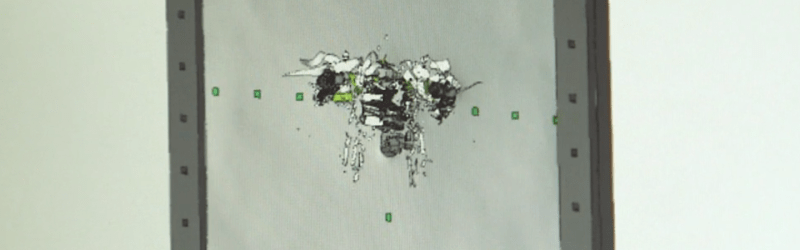
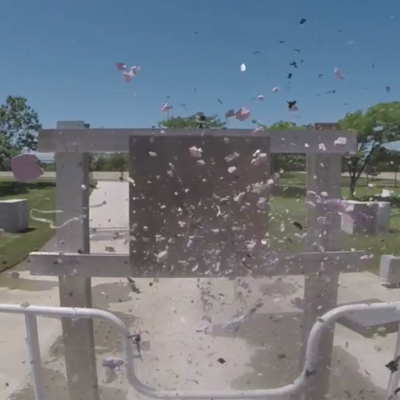
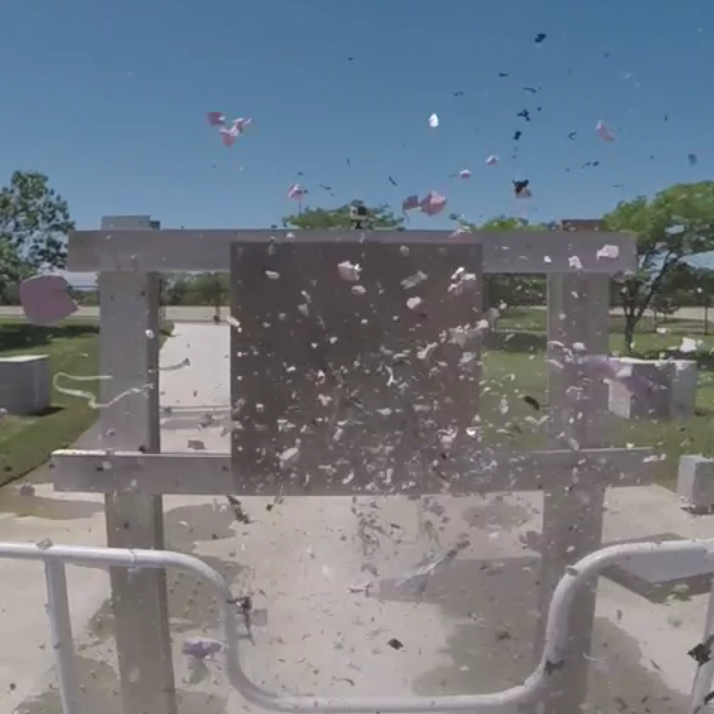
Ignore the article, watch the video at the top of the page. The article is about some idiot, likely not even a hacker, who bought a drone somewhere and nearly rammed it into a plane. He managed this with concentrated idiocy, intention was not involved. While these idiots are working hard to get our cool toys taken away, researchers elsewhere are answering the question of exactly how much threat a drone poses to an airplane.

droneexplode_thumbhttps://hackadaycom.files.wordpress.com/2016/11/droneexplode_thumb.png?w=250&h=250 250w, https://hackadaycom.files.wordpress.com/2016/11/droneexplode_thumb.png 714w" sizes="(max-width: 400px) 100vw, 400px" />Airplanes are apparently armored to withstand a strike from an 8lb bird. However, even if in a similar weight class, a drone is not constructed of the same stuff. To understand if this mattered, step one was to exactly model a DJI Phantom and then digitally launch it at various sections of a very expensive airplane.

The next step, apparently, was to put a drone into an air cannon and launch it at an aluminum sheet. The drone explodes quite dramatically. Some people have the best jobs.

The study is still ongoing, but from the little clips seen; the drone loses. Along with the rest of us.

Perhaps the larger problem to think about right now is how to establish if a “drone” has actually been involved in an incident with a passenger aircraft. It seems there are a lot of instances where that claim is dubious.

Read more…

3689703915?profile=originalHi all.

Finally I received all parts so I assembled the first prototype of my 170 mm FPV racer design (see previous posts for details and STL files).
All-up weight excluding battery and micro GPS is finally 286g.
And HOTT telemetry totally works!!! :)


* * * * * UPDATE * * * * *

First light 3D flight: https://www.youtube.com/watch?v=V6tNE8_PvQo&t=76s

Regards

Adrian

3689703877?profile=original

3689703986?profile=original

3689703941?profile=original

Read more…