Posted by Colin Snow on November 9, 2016 at 10:25am
DroneDeploy’s new App Market fills a need for commercial drone use, but can the data quality measure up for widespread industrial use?
THE FACTS:
This past week, DroneDeploy introduced its new App Market, a store for drone applications from a range of companies—including Autodesk, Box, John Deere, and 13 others—as well as a variety of industry verticals. Additionally, it includes applications from Airmap, Dronelogbook, Flyte, Kittyhawk, NV Drone, Skyward, and Verifly that help pilots and businesses manage drone operations and compliance. In a nutshell, these apps enable enterprises and drone-based business service providers to automate their workflow and data integration with specialized tools built right within the DroneDeploy user interface.
In one way or another, the apps enable businesses to extend the capability of DroneDeploy’s automated mapping and online drone data services with apps that augment flight planning, logging, data analysis, export, and more. Apps appear in different areas of the DroneDeploy interface, depending on what they do, and you install them in your DroneDeploy account. For example, a flight planning app will appear in the flight planning interface, whereas an export or integration app may appear in the export menu. You can read about the details of this announcement here.
WHAT’S COOL AND WHAT’S NOT
The three apps that stand out in this announcement and make progress toward workflow goals are Autodesk, Box, and John Deere. In a generic sense, “workflow” is the...
"9 Lessons Learned from Attaching a Super Heavy, Custom Rig to a Quadcopter": A very interesting post from Makezine and how to attach things to drones:
Recently, a company called 360.place contacted me about mounting a GoPro VR Rig to an Inspire 1 drone. Getting paid to work with new and interesting technology is pretty much the most fun an engineer can have, so I was thrilled to take on this challenge. After about a month of work designing and building the rig, I had something that the customer was pleased with, however, it definitely took some work to get things right. Here are a few of the lessons I learned on this project, as well as a few that I got right the first time!
When in Doubt, Measure or Weigh
At the start of this project, 360.place decided themselves what type of drone and camera they wanted to use. The good thing is that two of the project conditions were already taken care of, but on the other hand, I had my doubts about whether this drone could lift what we thought was a 5 pound weight. After the vehicle struggled to lift 4 pounds in a test video (not ours) seen below, a 5 pound weight plus whatever I needed to use to attach it seemed like it would be impossible.
Not having my arms “properly calibrated,” 5 pounds seemed like a good assumption after holding it, but when I went back to their office to discuss the project further, I brought a precision scale. Although I thought this might have been the end of the project, the rig actually weighted in at a much more manageable 2 pounds. It was time to start planning
Ideas Come… Eventually
An Early Design Idea
The obvious solution to mount this rig was to run some sort of rod down from the center of the DJI Inspire. This has been done before, but I didn’t see a good way to do it without modifying the quadcopter itself. For better or worse, when I can’t figure something out, it just tends to churn over and over in my head until I have a good solution. Perhaps I should figure out how to charge for these random “unguided brainstorming” sessions. On the other hand, listing “$300: staring off into space for several hours” on an invoice likely wouldn’t go over too well.
The final idea hit me while driving, “Why not mount it to the carbon fiber rods attached to the motors?” I’m not exactly sure how inspiration struck, but having 30 minutes or so where I was entirely free from distraction besides staring at the road really seemed to do the trick. Perhaps taking a break from everything once in a while is a good idea in the creative process. Just remember to note your great ideas down when they come!
Pay in Dollars or in Weight
One thing that struck me while doing this was how expensive carbon fiber and other lightweight components are. The rods attaching the camera rig carrier to the Inspire cost well over $100, and I purchased several components in aluminum that traditionally would be made out of steel. Add to that some machining time to take off extra material, and the costs really start to add up.
Angular Momentum Matters
The whole time I was designing this, I concentrated on weight and keeping the Inspire far away from the VR rig in order to keep the shots as clear as possible. Unfortunately, the farther away from the quadcopter the weight is mounted, the greater the angular momentum acting on it. As seen in the video below, before I reduced the length of the rods, things did not go well:
Or as Archimedes said: “Give me a lever long enough and a fulcrum on which to place it, and I shall move the world.” Perhaps today he’d also add, “…Or death-spiral a quadcopter.”
Test Incrementally
After the first failed experiment, we loaded up the quadcopter incrementally. First we just used the rig with no weight, then a lighter Samsung camera, and finally a weight representing the Omni. There was no real problem this time, but perhaps if we’d tried this procedure the first time, we could have avoided a crash.
Record Your Trials, Know When to Bail
The one upside to this crash was that we did record it from several angles. Besides perhaps being educational for others or even myself pursuing their own filming system, I found it quite entertaining.
One thing that may stick out is that while the pilot tried to go catch the Inspire, you can see me leaving. Though it might not look very “heroic,” having worked on and around machinery for many years, I always try to remember that your hands, eyes, or life isn’t worth whatever piece of equipment you’re working on. When things start to crash, in most cases it’s best just to let it happen.
Practice On Small Drones is Good
During this process, I said that I didn’t want to fly the drone, I’d leave it up to the customer. Probably a good policy, but while I had it to work on, I needed to do some landing gear testing and decided to take it up myself. I had permission, and had been assured that it was OK with the customer, but obviously didn’t want to crash their multi-thousand dollar quadcopter.
To my pleasant surprise though, the controls worked in the same manner as the little Hubsan drones that I’d crashed hundreds of times, and I was able to take off and land with no problem.
Don’t Take Risks with Other People’s Equipment
Though it was easy to fly with no payload, after trying it out myself, I requested to fly the entire rig during our final test. This wasn’t a problem initially, but when I decided to pull in for a landing I was a little off, tilting the quadcopter, and eventually causing it to topple and crash. Fortunately, there was no serious damage, but I was quite embarrassed. The gimbal mount was cracked (re-cracked actually, since I repaired it from the first crash), and one of my custom rod ends pulled out of the carbon fiber.
Not good.
Take All the Tools You Might Need
The good news on this though is that I brought everything I though I would possibly need to the test site. Once I’d examined the defects, within a few minutes I had epoxy drying in the appropriate places, and the drone’s normal pilot went on to film on location in a few days. Here’s some footage that he took:
Overall it was a successful project, and I hope I can help them with other projects in the future. If you’re interested in building your own rig, I put my design and bill of materials up here (with permission) as well as more information on the design process. I invite you to check it out, and hopefully this post helps you realize what went into building it!
Featured Image Photo Credit: PJ Accetturo, 360.place
Posted by Andy Little on November 9, 2016 at 1:37am
Next generation STM32. 400 MHz clock. Up to 1Mb RAM. Double precision hardware floating point. There is enough RAM there to start using dynamic loading of code. You can also increase the FLASH using memory mapped QUADSPI
For those in the SF Bay Area and interested in the DIY autonomous car scene (which I'm also part of), here's the latest on our hackathon this weekend.
Self Driving Racers, Carl, Joshua and I are looking forward to seeing you all this Sunday (10:00am - 3:00pm) in Berkeley for the meetup/hackathon. Here's some information to help you prepare and otherwise make the most of the event. It's going to be mostly indoors, in Carl's new workshop (in that happy window between a new space and it being totally filled with equipment). Here's about 1/4 of it, under construction a few weeks ago:
In that space, we're going to have a track. By "track" I mean strips of colored tape, roughly like this (thanks to the Formula Pi team for the inspiration):
If you want to race, bring a ~1/10 scale car/rover (anything under about two feet long) that is capable of autonomous navigation with computer vision. Already got something like that? Great! If not, if you've got a RC car and Raspberry Pi + camera, you can start with the Formula Pi code (forked version here), although please note that that code does assume you're using the ZeroBorg motor controller board with a Raspberry Pi Zero. If you don't have that board, you'll have to modify the code to support whatever motor controller you are using.
I'll have 3-4 Raspberry Pi-based rovers available for people to hack on. They don't have the ZeroBorg boards, so no guarantees that they're ready to roll without modifications. But who knows? Perhaps I'll have them running by then.
As an additional navigation aid, we'll have a ultrawideband indoor positioning system set up. This uses the Pozyx system, so if you've got one of those, you should be able to use that. What about larger autonomous cars, from go-karts to full-size? If you've got one, bring it for show and tell! We may have access to the parking lot a block away for some slow-speed driving, but no guarantees and definitely no racing.
The famous Carl Bass autonomous monkeymobile will be there. Rides may be offered, although you'll have to fight the monkey for the wheel.
Other stuff that will be provided: Tables, chairs, power, wifi, coffee, pizza. And interesting fun.
Don't worry if you don't have anything to bring/hack on. You're welcome to just hang out and do the meetup thing. Or help others hack their things. This is that brief moment where we can all be n00bs. Someday our cars are supposed to be perfectly safe and autonomous. But for now, let's hack and crash while we still can.
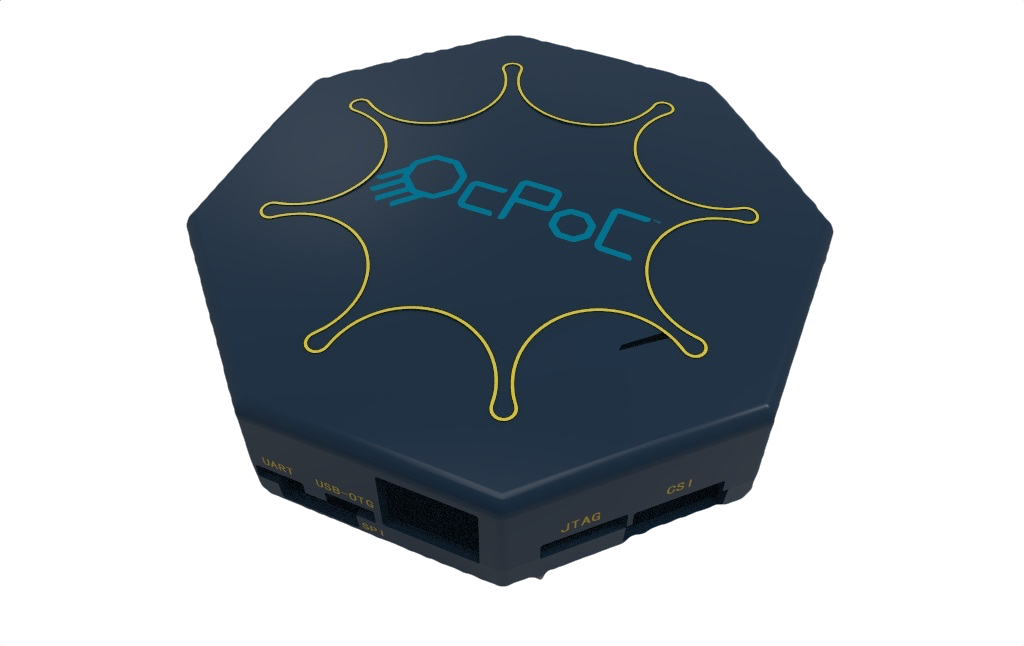
OcPoC (Octagonal Pilot on Chip) is the SoC FPGA-based open-source flight control platform engineered to bring you greatly enhanced I/O capabilities and processing power that is unparalleled by any other platform of its class. Including the traditional sensor options for common peripherals, OcPoC also expands its input and output capabilities to include fully programmable PWM, PPM and GPIO pins to integrate with a vast number of different sensor additions. It also includes many other standardized connectors for peripherals such as GPS, CSI camera link and SD card. Drone developers can integrate various sensors and have the processing power to not only run ArduPilot but also implement real-time processing of sensor data simultaneously. OcPoC opens the door for drone development to the next level.
OcPoC-Zynq is powered by the Xilinx Zynq processor which combines the flexibility of FPGA architecture with the processing power of ARM, all in one SoC. Along with the I/O expansion, OcPoC provides increased processing power capable of achieving real-time sensor fusion and onboard data processing. This advanced system caters to both the UAV enthusiast that wants a ready-to-fly package and also to programmers and developers wanting a platform to power their ideas.
Features
• First Xilinx SoC FPGA-based flight controller • FPGA + ARM Cortex A9 dual-core processor • Over 100 I/Os for sensor integration • Video streaming and processing capabilities • Enhanced GPS and IMU sensor packages • PX4 and APM compatible (www.dronecode.org) • Open-source hardware and software platform
The Federal Aviation Administration last week granted Disney a waiver so it can show off its amazing drone skills in the Orlando and Anaheim parks. Not a company known to wait well, it's already released a video teasing Disney's use of the drones to create what appears to be a floating, rotating Christmas tree.
The clip, posted Monday to its Disney Parks Blog, is brief (less than 30 seconds, and is just a teaser), but shows several people coordinating the drone effort, probably licensed drone pilots as required by the FAA waiver.
In the application to the FAA from October 2015, Disney stated that the drones (which it calls "Flixels"... how adorably Disney is that?) would operate in no-fly zones away from guests in restricted areas. In addition, the filing stated that these Flixels are less than 40 inches in diameter, weigh less than 10 pounds and fly at "six knots groundspeed" or about 7 mph.
Keep in mind this is a teaser and not a guarantee that we will see anything this new this holiday season. Much like the Guardians of the Galaxy Mission Breakout or Star Wars-Land, no timeline for these experiences has been announced.
3.4.2 RC1/2 work is already well advanced and will be available shortly, but consists only on small minor improvements. For some of us that fly small drones the support for the PixRacer is fantastic, and even the new PixHawk 2.1 from ProfiCNC is already supported.
Overall is a great release, with a high degree of professional work by the entire ArduPilot team.
Adam from Aeroworks Productions unboxes the new Pixhawk 2 flight controller.
• An integrated, single board / box flight controller. • Sufficient I/O for most applications without expansion. • Improved ease-of-use. • Improved sensor performance. • Improved microcontroller resources. • Increased reliability andreduced integration complexity.• Reduced BoM and manufacturing costs.
Key design points
• All-in-one design with integrated FMU and IO and lots of I/O ports. • Improved manufacturability, designed for simpler mounting and case design. • Separate powersupplies for FMU and IO (see power architecture section). • On-board battery backup for FMU and IO SRAM / RTC. • Integration with the standard power brick.
Pixhawk FMU Main Board
• STM32F427; flash 2MiB, RAM 256KiB. • On-board 16KiB SPI FRAM •MPU9250 or ICM 20xxx integrated accelerometer / gyro.• MS5611 Baro • All sensors connected via SPI. • Micro SDinterfaces via SDIO.
• 14 PWM servo outputs (8 from IO, 6 from FMU). • R/C inputs for CPPM, Spektrum / DSM and S.Bus. •Analogue / PWM RSSI input. • S.Bus servo output. • 5 general purpose serial ports, 2 with full flow control • Two I2C ports • One SPI port (un-buffered, for short cables only not recommended for use).• TwoCAN Bus interface. • 3Analogue inputs • High-powered piezo buzzer driver. (On expansion board) • High-power RGB LED. (I2C driver compatible Connected externally only) • Safety switch / LED.
FormulaPi, the remote RaspberryPi-based racing series has started, and it's proving both very interesting and further evidence that vision-based navigation is hard, even on a well-marked track.
The tiny drone is called Piccolissimo, after the Italian word for pocket-sized. The drone comes in two versions: the quarter-sized one, and a slightly larger and heavier one that is steerable.
The drone can fly and steer because both the body and the propeller work together. A tiny motor spins the body while the propeller spins the opposite direction. The propeller is mounted off-center, which is how the drone steers. By precisely changing the speed of the propeller at different points during the rotation of the body, the drone can control the direction of its movement. It's a trick that's been put to use in larger drones before, and is no less clever now that it's smaller.
The drone is built using a 3D-printed frame, a lithium polymer battery, a motor, and a simple control mechanism. These simple parts ensure that the drone is very cheap and easy to build.
"One of the interesting things about the design is that much of the complexity is in the design of the body which is 3D printed," said researcher Mark Yim to Digital Trends. "Since the cost of 3D-printed parts are based on the volume of plastic in the part, and independent of complexity, the flyer is very low-cost."
The researchers hope that their drones could be used in swarms for applications like search and rescue, where hundreds of small Piccolissimos could be used for the same cost as a single large quadcopter.
Posted by Tersus GNSS on November 6, 2016 at 6:00pm
Precis-BX316, the Multi-GNSS, Dual Frequency RTK Board with Dual Antenna for Heading released. Pre-order Now. Check with our sales representatives for details. Key features:
Multi-GNSS Signal Tracking
GPS L1L2/GLONASS G1G2/BeiDou B1B2
Reliable Centimeter-level Positioning
Up to 20Hz RTK solution output
Dual-Antenna GNSS Heading
Accurate yaw & pitch angle of moving platform
Accurate Shutter Synchronization
Ideal for aerial mapping and drone
Raw Observation Data Logging
Onboard SD Card for data logging & storage
Smaller, Lighter
Compact and lightweight design
Learn more about this RTK board, click here. Contact Us: info@tersus-gnss.com
Posted by lianpinkoh on November 5, 2016 at 10:00pm
My team and I used the Parrot Disco for a few days of whale and dolphin surveys off the coast of Timor Leste where a cetacean migration event has been going on for the past few weeks. This effort is a partnership between the Unmanned Research Aircraft Facility, a University of Adelaide unit I lead and Conservation International, and supported by Parrot's Educational Program and a local supplier (MongrelGear).
This bird is super easy to launch and fly, as other Disco users have already noted. It is a perfect platform for operating off a boat that was following a pod of dolphins moving at ~8 knots.
We decided to bring it back down after ~15 min of video footage (with ~80% battery remaining). We went for a moving target final approach to land on the aft of the boat, which was maintaining a straight course at ~10 knots. We set up an improvised 'catch net' using a bedsheet for the Disco.
Unfortunately the bird was just short of the target, hit the stern and went for a swim. Luckily we were able to retrieve it, immediately disassembled the entire wing and its CHUCK controller, and flushed them with freshwater. Amazingly nothing was damaged, barring a scratched camera lens and the battery. We only lost the fuselage cover to the sea.
The following day, we treated all electronics (C.H.U.C.K.) and the two servos with CorrosionX. We left only the barometer untreated (well protected under the GPS). The teardown photographs are below. The antenna array is really interesting!
I have written with my friend Yuri Kapitanyuk (the main idea was from him) an algorithm for solving the problem of tracking smooth curves by an unmanned aerial vehicle travelling with a constant airspeed and under a wind disturbance. Basically, if the trajectories are twice differentiable, i.e., they are continuous, without "spikes", etc. then the algorithm is capable to construct an attractive vector field around the trajectory in order to guide the vehicle.
The algorithm has been successfully tested on different fixed wings and it is available in Paparazzi. It has been written as an independent module there, so it should be easy to port to other platforms if somebody is interested. In fact, the code of the algorithm has been split in two parts there.
The first one is the core of the algorithm and it is transparent for the user that wants to include its own custom trajectories.
The second one corresponds to the trajectories, where the user has to provide the equations of the trajectory, its gradient and its Hessian (the gradient of the gradient).
That makes the algorithm very modular. As an examples (in the gif) I have already implemented in Paparrazi ellipses (they cover the case of circumferences) and sinusoidals (they also cover the particular case of straight lines a.k.a. zero frequency).
If one is interested in the details and how the algorithm works, I have written a more detailed post in my blog http://dobratech.com .
When it comes to sensing and collision avoidance, vision, ultrasonic and LiDAR have been the most commonly used sensors. Despite radar’s robustness and reliability in all-weather, all-terrain and all lighting conditions, until recently it has not been considered a practical sensing solution for smaller drones due to size, weight and cost.
Our mission at Aerotenna is to provide robust sensing and processing solutions that are affordable and easy to integrate with any airframe and flight stack. This year we introduced microwave sensing to the commercial and consumer drone industries with the release of theμLanding compact radar altimeterandμSharp 360° collision avoidance radar, both of which have received stellar feedback from a number of drone manufacturers and service providers.
The newly released μSharp Patch is a single-direction collision avoidance radar designed to meet the need for smaller and more robust collision avoidance sensors. This microwave radar patch is an affordable, low power and easy-to-integrate collision avoidance solution for even the smallest drones.
Features:
Miniaturized design (6.5 x 4.5 x 0.8cm) with low power consumption (<1.5 W)
Robust and reliable performance in any weather and lighting condition
Advanced target detection and recognition algorithms
μSharp Patch collision avoidance radar
The newly released OcPoC mini is engineered to enable sensor fusion and onboard real-time processing for multi-sensor drone platforms. With over 100 I/Os for sensor integration and redundancy, ARM processor and FPGA structure, OcPoC mini has the processing power and efficiency to handle complex drone applications while maintaining safe and stable flight. Just like the µSharp Patch, OcPoC mini has easy integration with any airframe and open-source flight stack.
OcPoC mini SoC FPGA-based flight controller
We believe the addition of radar sensing as well as sensor fusion and real-time processing capabilities to commercial and consumer drones is a crucial step in the advancement towards smarter and safer drones. We look forward to opportunities in working together with the community to make Aerotenna's latest technology and solutions available to more DIYers!
Find out more about Aerotenna radar sensors and SoC FPGA flight controllers:
Posted by Patrick Meier on November 2, 2016 at 10:45am
I recently gave a TEDx talk on Humanitarian Drones. Aside from my slip up on triangles vs rectangles (sigh), I hope that talks like this will help get the word out about the very real humanitarian applications of aerial robotics. Here's the short video of the talk.
This post announces recent noteworthy developments in some of our projects.
The observations we made since the announcement of Zubax Orel 20 (a Sapog-driven ESC) led us to believe that people tend to have serious misconceptions about power capabilities of ESC. A possible reason for that is the abundance of Chinese low-quality ESC that tend to have much lower actual power capability than advertised. Here at Zubax we termed it power capability inflation. In order to prevent our customers from having incorrect understanding of the true power capabilities of Zubax Orel 20 (pictured on the right), we strongly suggest to model and verify your application using ECalc: http://www.ecalc.ch/xcoptercalc.php.
Besides the above, Sapog had another development: we've released a number of important improvements, mostly concerning stability of the spinup algorithms. The release binaries can be downloaded from files.zubax.com and installed via UAVCAN or DroneCode Probe.
Zubax GNSS 2 has received a firmware upgrade too. A few users reported that they're having difficulties calibrating the compass with PX4 or APM. An investigation uncovered that the difficulties were caused by 2 factors:
1. The measurement range was not sufficiently wide to account for all valid use cases. This was fixed in the firmware.
2. APM and PX4 somewhat mishandle external compasses by making invalid assumptions about their measurement ranges. We added a configurable scaling coefficient that allows to reduce the magnitude of the output magnetic field vector, silencing the warning from the autopilot. Learn more from the docs at docs.zubax.com.
The fix is available in firmware version 3.1, you can get it from files.zubax.com. If you're not using the compass, there's no need to upgrade.
Congrats to Victor Mayoral and the rest of the Erle team for a successful acquisition by Acutronic. From Victor's story on the company's beginnings and latest deal:
How two brothers turned a 3K€ robotics startup into a multi-million Euro company
This is a story about how two young brothers of 24 and 21 years old turned a small venture that had nothing more than 3000 € (about 3300 USD) into a multi-million Euro robotics company. The lessons learned in the Erle Robotics journey
Taking off for the first time is tough, always
Erle started in 2012 as a project (ProjectErle Robot) that aimed to create tools for developers in the robotics area motivated by our previous experiences (and struggles). Hardware and software that helped roboticists test and do their work without having to reinvent the wheel every single time they created a new robot — which is pretty much what has happened in robotics over and over. Refer to this article if you’re interested in reading more about the topic.
David and I started with barely 3000 € borrowed from our father, Patxi. At the time, we had no office so we refurbished a room in our father’s house and started it out there. Not many knew what we were up to and the ones that did, didn’t seem to put much interest on it. We were indeed doing something out of the ordinary but more than that, we started noticing that
failure in southern-european countries is unacceptable. The fear of failing kept many away from us from the very beginning.
Still, we’ve always been a pair with that grit factor on us so motivated by the growing popularity of the so called drones, we decided to start focusing in aerial robots and slowly designed, prototyped, assembled and tested ourselves the first concepts that later would become the brains for thousands of robots and drones out there. Starting something for the first time is definitely difficult. You probably won’t get it right the first time but if you have right attitude, every misstep will strengthen your vision and ultimately, yourself.
A robotics startup needs cash
After a couple of prototypes that burned our few resources we had the first results. We managed to put together a Linux-based single board base platform for building a wide variety of different robots. It felt great and we could sense that there was potential for doing business with that.
It was time to look for an investment!
Unfortunately, many private investors closed their doors to us. Apps were popular at the time. Everyone thought that Android and iOS were all you had to know in the startup environment. Bootstrapping and getting a minimum viable product over the weekend was common but we were trying to create hardware. Robots. We needed cash.
Robotics startups are totally different beasts from software startups and they need cash from the very beginning.
While many investors kept considering our venture too risky, we were lucky enough to get supported by the Basque Government through BIC Araba (previously known as CEIA) and their Ekintzaile program. A grant that helped us iterate and reach a certain maturity point that led us to finally convince the first business angels.
The team is the king
With the first funds available, it was time to grow our team. We hired our father as the finance guy in the company — a person we could trust while being focused in the technical development and commercialization of the technology. We also hired Alex, Iñigo and Irati as our first engineers. Incredibly talented people that helped realize our vision step by step and motivate newcomers. We slowly kept incorporating new members. Lander, Asier and several others followed.
Starting such an adventure required people we could trust so we hired carefully but mistakes were also part of the path. If there’s something we learnt out of these years of work is that
in a startup one needs to be prepared to hire but also to fire.
Stay away from individuals that look solely for their self-benefit and growth while getting away from the company’s core values. These last years taught us that understanding your team is as relevant as having a clear vision of what’s ahead in the business landscape. The team is the king and those that fail at accepting that, don’t fit.
The secret sauce … a.k.a. the hidden founders
Many startup stories talk solely about the founders: their inspiring vision, their leadership, their hiccups, … and while much of this remains true for a great majority of success cases, there’s something as relevant that rarely gets mentioned.
This secret sauce is present in every single startup in the world. I call this sauce the “hidden founders”.
We had two ingredients in our recipe, each one of them as relevant as the founders:
The first hidden founder was Patxi Mayoral Pizarroso and as you probably guessed, he’s the father of the founders. Patxi, helped from the very beginning in every angle. Providing business advice, technological advice, management advice … he took part in the conception of the company and he was there in every single initial test. As the company grew, Patxi took a financial and admin position which helped us focus enormously. Patxi was the glue of Erle Robotics. He helped figure out the best outcome for every problem. Founders have issues between them. This is a well known fact and Patxi found a way to always support us all (which was extremely difficult in his situation). He supported the vision from the background and did all that work that’s never been mentioned. We wouldn’t be where we are today without Patxi.
The second hidden founder is Alejandro Hernández Cordero. Alex and I knew each other from college and he could’ve joined the team as a founder but out of personal reasons, decided to join later and became the first employee of the company. Despite the fact of his non-founder condition, his commitment has been remarkable and he’s been there in every single relevant scenario providing much more than technical support. He’s an outstanding engineer with worldwide experience in the robotics area. He’s brilliant, honest and well-spoken. He helped us lead the team and create a solid group. Every startup needs an Alex and chances are that you might already know your Alex before even founding.
Celebrate milestones
As it’s already been reported in several places, Erle Robotics has officially been acquired by Acutronic Robotics, called to become a leading robotics firm focused on the next-generation robotic solutions.
The new company will have three business lines: it will be responsible for the development and commercial activities related to H-ROS; robot and drone hardware products will continue to be sold under the Erle brand and engineering services will be offered to corporate and government clients.
One thing that entrepreneurs often forget is that being focused is as relevant as knowing when to celebrate. I strongly believe we’ve failed at this. Our focus has been constant and I don’t remember the last time we celebrated something as a group. Bülent Atlan a great technologist and an even better advisor once shared a few of his lessons with me. I couldn’t agree more with:
If you work hard, party hard.
Spanish people have (at least) two last names
No kidding, in fact we’ve got more than two but we just use the first two. Let me take my brother’s name as an example. His full name is David Mayoral Vilches. Now, let me analyze his name:
David: First name.
Mayoral: First last name, generally comes from the father.
Vilches: Second last name, generally, it comes from the mother.
I know this is silly but I’m sick of this. Specially given the fact that Spain has one of the oldest and most influential cultures in the world. So either because you’d like to be knowledgeable from a cultural perspective or just because you want to be respectful, keep in mind that:
it’s not common nowadays for spaniards to have a middle name and likely, that thing after his first name is his last name.
Getting called “Mr. Vilches” feels weird (the right form should be “Mr. Mayoral” although “Mr. Mayoral Vilches” would be a total milestone).
The future ahead
Erle Robotics has nowadays been acquired by a multinational and our team has been placed at the center of a new robotics division that will bring many of our ideas to industry. We’re extremely excited about this chance to push our vision around hardware for robots further (summarized in H-ROS) and contribute towards a future where interacting with robots is not restricted to a few individuals with high technical (and mathematical) skills but to a great majority of the users out there.
We’ve been extremely lucky over the last years to hire more experienced and talented profiles like Carlos Uraga Pastor (who took over the CEO position in Erle). Carlos helped us reach the maturity we needed with an extremely committed attitude and a skillset similar to that of many founders. Carlos and everyone else will remain with us in future adventures and we are all extremely excited about leading the changes of what’s coming next in robotics since we truly believe that:
The best way to predict the future is to invent it — Alan Kay
I’d like to take this chance to thank those individuals and organizations who supported us during this period, particularly thanks to my family (that’s you mom!), my girlfriend Keila, BIC Araba (previously known as CEIA) for their support, IE Business School for an amazing training, TechFounders program for helping maturing our ideas and connecting us with the right networks and the overall ecosystem of the Basque Country and Spain for their constant support and aid.
Special thanks to our team at Erle Robotics. The best prize has been having the chance to work with you. We couldn’t ask for a better group.
Posted by hiroshi takey on October 31, 2016 at 1:44am
Hi folks, sorry about delay publishing URUS system source code, for people interested and to know how it's will work with ardupilot, there is a recently documentation with descriptive images explaining the URUS structure system and URUS Protocol.
This document was used in a conference at EMI University and UAGRM Bolivia's statal university.
The URUS integration into ardupilot is right now merged through thi PR https://github.com/ArduPilot/ardupilot/pull/3718, and you can follow all PR pushing update to ardupilot following me at github if you want.