All Posts (11086)

Sort by
3D Robotics

3689690212?profile=original Cool new product from Anysense that works with all 3DR flight controllers: 

AnySense Pro turns your Radio Control into a real-time telemetry system with no costs for additional hardware, such as a GPS sensor, voltage module or vario.Additionally all data will also be saved on the storage card of your remote control. With the right tools, you can easily visualise the content of the storage card, export it to Excel or even embed it into existing videos.

Here's the display on a Taranis transmitter:

3689690090?profile=original

Read more…

Drone Workshop also works in China

3689690178?profile=originalHere is Shanghai Mushroom Maker Space, funded by DFRobot and Intel. This maker space wins lots of competition.

They certainly good at drone. At the end of January, a drone workshop started in here.

3689690327?profile=originalThere was seven high school students joined in this workshop. After two days, they will have their own copter based on pixhawk.

Instructor is a former developer of Ehang. I forgot to take his picture.

3689690199?profile=originalStudents building his own copter.

3689690443?profile=originalgroup photo

the second person is me. the third is the instructor.

It's a successful workshop, all students built his own copter very well. This era is very amazing. I can't imagine that when I was young.

Written By Stone

3689690471?profile=originalI think maybe I should startup a market research company later.......OTZ......

Read more…

Is Deep Learning the future of UAV vision?

bZNzhAWuOsammpM1ze_m0Gwd3gO5GBJxLy9AB8bxqmYfyUi1fM5cJvirbWRSi2QHovW7RNG-nAxFah5DlJ5J264KVFWO-iHZR0AH-EhAwjb0P_7Du2JCRfpALTyNdyQyabqFrLCmnxWjDSIVZA

A few weeks ago Chris Anderson shared a post about the efforts of bringing obstacle avoidance to PX4. This efforts are based on Simultaneous Location And Mapping  (building a map of the world in real time) and Path Planning -- For the sake of conciseness i will call this approach SLAMAP.


I want to offer some thoughts on why this might not be a very promising approach, and propose an alternative that i think is more interesting.


One of the major shortfalls of SLAMAP is its inability of handling dynamic objects (objects that move)

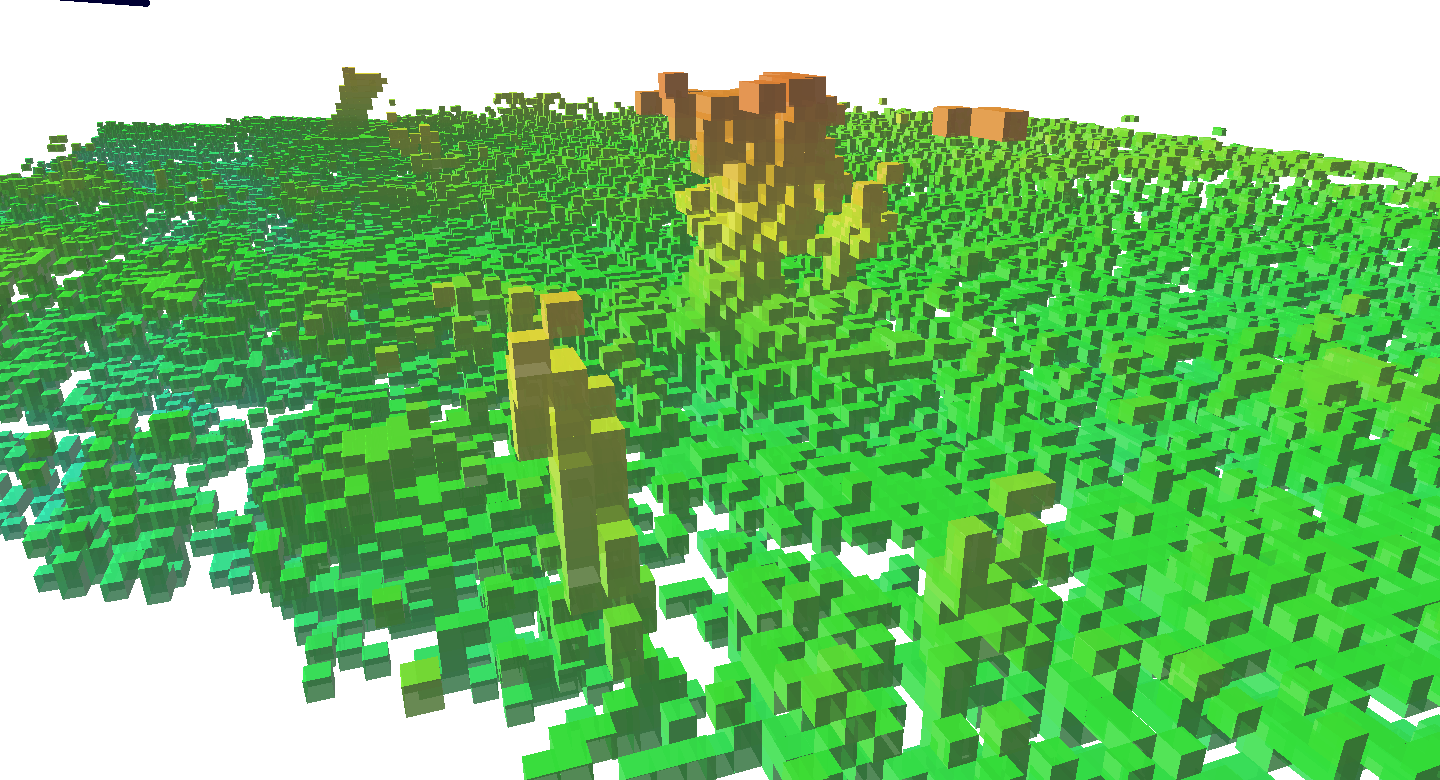
For example, the block on the middle of this 3D map could either be a still box, or a vehicle moving at full speed towards the drone. Just take a moment to think how fundamental the perception of motion is to your ability of moving around or driving. Think about how would it be to have no information about the velocity of the objects around you.


Another problem is the binarity of the information stored in 3d maps — The cell is either empty or solid, seen or unseen.
i5WjX_LYUUdmHcIy09Jb6xZVLPwuKsxyvPxOZ1yRinpYQ5_k_E5dksAfHCzQ1300tre64kPlJM0RqexJ8LPEduGSEK4ijECUfoLgYUlwdnHYYhi38JG_MRZe7Z31jQlL_Y2pdiOd7EErDN-rcQ

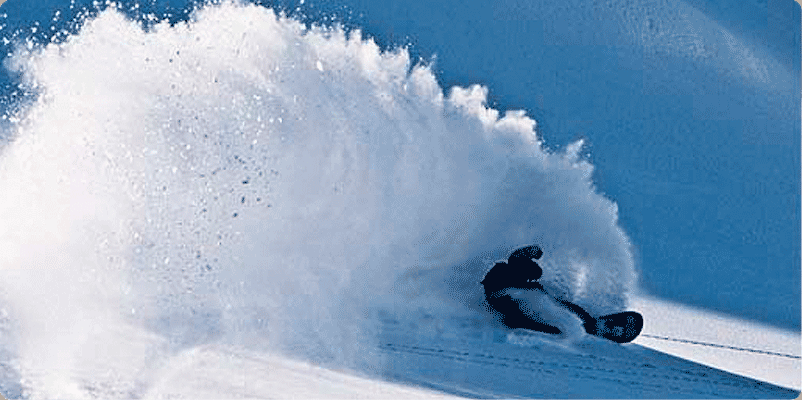
Look at this image. To Assume that the cloud of snow powder is a solid wall is a huge constraint on the path of the drone. If the drone were following the snowboarder from behind, it would be forced to suddenly stop.


The idea of seen and unseen is also very limiting. If a building you have previously seen is now out of line of sight it’s reasonable to assume it hasn’t moved. But you cannot say the same about a person or vehicle. Similarly you can’t assume that there is nothing in every place you looked and saw nothing. — This relates to the lack of understanding of dynamic objects.


What I am arguing here is that to successfully interact with the environment, a drone needs a semantic understanding of the world (materials, physics etc) and ability to handle uncertainty. SLAMAP can’t do that.


Another difficulty with SLAMAP is that the utilization of this framework to provide the desired functionality is not trivial. Path planning solves the problem of finding a feasible route from A to B. But following a target is not the same problem. Reframing the problem to track a target, while also filming beautiful smooth footage and avoiding obstacles is very hard.


And finally there is a very empirical argument against SLAMAP. After decades of research it seems to have failed at finding applications outside academia. Most industrial applications in which SLAMAP is used, are simple and highly controlled — nothing like drone flying.


In short, the shortfalls of SLAMAP are:

  • Does not support dynamic objects

  • Does not handle uncertainty

  • Does not have semantic understanding of the world

  • Is difficult to get the desired behaviours

  • Empirically, it has been around for quite a while and hasn’t been very successful.


So, is there another option? Yes there is, and is called Deep Learning.


The idea behind deep learning is drop all the handmade parts of a system, and replace them all with a single neural net. This neural net can then be trained with examples of how to do a task, so that it learns the desired behaviour.


So, instead of having a stereo visión block, sparse SLAM block, dense octomap bock, path planning block, etc, now there would be a single neural net. To train it to control a drone you could use two basic methods. Give it footage of a person flying it or simply tell it if it’s doing a good job or not — or a mixture of the two.


Deep learning has proven incredibly successful in a wide variety of tasks. One of the earliest and most important is object recognition. This year deep nets outperformed humans on the ImageNet challenge — classifying an image among a 1000 classes — achieving an error rate of 3.5%. For perspective, humans are estimated to score around 5.5% while the best non deep learning approaches get arround 26%.


The state of the art speech recognition systems are also based on deep learning. See this post by google.


Deep learning has also been used to outperform the current systems in video classification, handwriting recognition, natural language processing, human pose estimation, depth estimation from a single image and many others.


And it has also been applied to broader tasks outside classification. One of the most famous examples is the deep net that learned to play atari games, sometimes at a superhuman level.


And of course Alphago, a go player that recently beat the go master Lee Sedol 4-1. A feat that was thought by many to be decades away.


Very recently NVIDIA published a paper of an end to end steering system for a car. It showed a simple deep net — so simple that i was amazed — with only 70 hours of driving experience, running on a mobile GPU at 30 fps perform very well at driving on all kinds terrains and weathers.


But aside from off the empirical success of deep learning, the reason i believe it is more promising than SLAMAP is that it has the capacity to understand all the things SLAMAP cannot. All of the inherent limitations of SLAMAP i previously mentioned don’t exist in a deep net.


A deep net can learn to understand a dynamic world – tell the difference between a truck moving at 100 mph and at rest. And they can also learn meaningful semantics like: that snow powder is nothing to worry about, but that water is dangerous. And it can then learn how to use  this understanding


It might seem too good to be true. But would it really be that surprising that the methods that succeed were based on the only machine that can currently do this task — the brain.


I am pretty sure that with the available mobile hardware, deep learning frameworks and sea of freely accessible research, a decent team in less than a year would develop a better system than SLAMAP would ever lead to.


Do you agree?


Read more…
Developer

3689651507?profile=originalAs mentioned on the 3.5.2 release discussion we have decided to do a 3.5.3 release to fix a couple of important bugs found by users in 3.5.2.

The main motivation for the release is a problem with flying without a compass enabled. If you fly 3.5.2 with MAG_ENABLE=0 or no compass attached then there is a risk that the EKF2 attitude estimator may become unstable before takeoff. This can cause the aircraft to crash.

The other changes in the 3.5.2 release are more minor:

  • fixed loiter radius for counter-clockwise loiter
  • fixed the loiter radius when doing a RTL at the end of a mission
  • provide reasons to the GCS when a uBlox GPS fails to properly configure
  • support a wider variety of NMEA GPS receivers
  • use EKF1 by default if no compass is enabled

For those of you feeling a bit more adventurous you might like to try the 3.6.0beta1 release. There is still a fair bit more to do before 3.6.0 is out, but it already has a lot of new features and I have been flying it for a while now.

The biggest single change in 3.6.0beta1 is the update of PX4Firmware. This brings with it a lot of changes, including much better support for the Pixracer flight board.

There has also been a lot more work on QuadPlane support, which a new QRTL flight mode, plus support for using the forward motor in VTOL flight and active weathervaning support. If you are flying a QuadPlane you'll find the names of the copter rate control parameters have changed (just like they have in copter). You should be able to find the new parameters OK, but if not then please ask. I'll provide more detailed documentation with the final 3.6.0 release.

Detailed changes in 3.6.0beta1 include:

  • merge upstream PX4Firmware changes
  • new AC_AttitudeControl library from copter for quadplane
  • modified default gains for quadplanes
  • new velocity controller for initial quadplane landing
  • smooth out final descent for VTOL landing
  • changed default loop rate for quadplanes to 300Hz
  • support up to 16 output channels (two via SBUS output only)
  • fixed bug with landing flare for high values of LAND_FLARE_SEC
  • improved crash detection logic
  • added in-flight transmitter tuning
  • fix handling of SET_HOME_POSITION
  • added Q_VFWD_GAIN for forward motor in VTOL modes
  • added Q_WVANE_GAIN for active weathervaning
  • log the number of lost log messages
  • Move position update to 50hz loop rather then the 10hz
  • Suppress throttle when parachute release initiated, not after release.
  • support Y6 frame class in quadplane
  • log L1 xtrack error integrator and remove extra yaw logging
  • limit roll before calculating load factor
  • simplify landing flare logic
  • smooth-out the end of takeoff pitch by reducing takeoff pitch min via TKOFF_PLIM_SEC
  • added support for DO_VTOL_TRANSITION as a mission item
  • fixed is_flying() for VTOL flight
  • added Q_ENABLE=2 for starting AUTO in VTOL
  • reload airspeed after VTOL landing
  • lower default VTOL ANGLE_MAX to 30 degrees
  • Change mode to RTL on end of mission rather then staying in auto
  • implemented QRTL for quadplane RTL
  • added Q_RTL_MODE parameter for QRTL after RTL approach
  • reduced the rate of EKF and attitude logging to 25Hz
  • added CHUTE_DELAY_MS parameter
  • allow remapping of any input channel to any output channel
  • numerous waf build improvements
  • support fast timer capture for camera trigger feedback
  • numerous improvements for Pixracer support
  • added more general tiltrotor support to SITL

I flew both 3.5.3 and 3.6.0beta1 today and both are really flying nicely. I hope you all enjoy flying it as much as the dev team enjoy working on it!

Happy flying!

Read more…
3D Robotics

IMG_PROD_QX-1_02.jpg?width=750

If you got a chance to see the big 3DR area at NAB in Las Vegas last week, you'll have seen the new cameras and accessories for Solo first-hand (along with the new software features such as sense-and-avoid and smart rewind announced earlier). But here's a quick recap:

The new hardware:

The Sony UMC-R10C (above) for 3DR’s Site Scan enterprise solution. Available for preorder this summer.

Capture ultra-high resolution images with the gimballed Sony UMC-R10C. The large APS-C image sensor allows for exceptional low-light and low-noise performance. Automatically trigger 20MP stills that are ideal for high-resolution inspections and photorealistic georeferenced 2D and 3D models.

IMG_PROD_KODAK-360-VR-CAM_01.jpg?width=750

Kodak PixPro SP360 4K 360 cameras. An immersive 360-degree VR camera from Kodak, Made for Solo with custom stitching software. It ships this summer, either as a bundle with the vibration-isolated hard mount, or, if you have or buy the cameras separately, with the hard mount alone.

As if Solo wasn’t cool enough.

  • Record 4k immersive 360 VR video from the air
  • Vibration-isolated attachments for two SP360 4k action cameras
  • Wearable remote control for synched recording
  • State-of-the-art post-production stitching software customized for Solo
  • Ships this summer

IMG_PROD_FIILEX-LIGHT_01.jpg?width=750 The Fiilex AL250 Light for Solo

Sky light:

  • Dynamic set lighting from virtually any angle
  • Detachable, for hand-held use
  • Powerful enough for search & rescue and after-hours work
  • Mount with a gimbaled camera
  • 5600K CCT  2000 Lumen
  • Shipping in the next few weeks!

IMG_PROD_TETHER_02.jpg?width=750

The Hoverfly Tether for Solo

Endless flight:

  • 150 ft-long powered tether (plugs into standard outlets)
  • Set up a tripod in the sky: sports, events and job sites
  • Pair with Fiilex light for scene lighting
  • With Solo’s HDMI out, the perfect tool for live broadcast


Screen-Shot-2016-04-28-at-3.04.07-PM.jpg?width=750

A gimbal for the Flir Vue and the Flir Vue Pro IR cameras from RHP International.

Thermal imaging is here!

  • Active 3-axis stabilized gimbal system
  • Supports Flir Vue and Vue Pro thermal cmaeras
  • Pan & tilt control from 3DR controller
  • Video and image capture on integrated mini SD card
  • Consolidated wire system


And lastly, some safety accessories from PolarPro: Prop guards and bright front/back LED lights, all Made for Solo.

PolarPro’s prop guards for Solo add an extra element of protection to your drone. They slip onto each Solo arm, with a retaining clip that locks them in place. Prop guards won’t prevent all crashes; however, they’re a great way to reduce the risk of damaging your drone.

The 3DR Solo LED lights from PolarPro securely mount to Solo for increased visibility while flying. The headlights are white and the taillights are red to allow pilots to determine their drone’s orientation in low light or at a distance.

Read more…

Drone Post Flight - from your web browser!

This is a web-based application that allows you to upload your flight .log file and review the flight in 3D directly in your web browser!  Feel free to register and start uploading and exploring your flights!

www.dronalyze.com

YouTube Video

I wanted to put this out to the community and gather some feedback, so please let us know what you like, what you dont like, and additional features or compatibility issues you come across!

Thanks!

Read more…

Some new I2C devices from AUAV Co.

3689689784?profile=original

Hi guys,

AUAV Co. team is proud to announce two new useful gadgets - an I2C AIRSPEED sensor and 3.3/5V UNIVERSAL I2C HUB.

3689689896?profile=original

3689690005?profile=original

The newly designed AIRSPEED sensor now incorporates JST GH connector + additional solder pads on the bottom side, and 5V->3.3V LDO which makes it compatible with 3.3V I2C. The size is 15x21mm.

3689689982?profile=original

3689690026?profile=original

Our new I2C HUB incorporates PA9516A + 3.3V LDO + SPST slide switches for all channels, thus making it compatible with either 5V I2C devices or 3.3V I2C devices at the same time. Using the slide switches on the top, one can choose 3.3V or 5V interface to his peripheral I2C devices. The I2C HUB size is 14x42mm.

Best regards

Nick

Read more…

About aerial photovoltaics power plant inspection

Most of the mentioned defects result in the occurrence of hot places, known as hot spots. This is where there is an increased recombination of electrons and holes. Energy released during this process is radiated into the space as heat. These spots report excessive heating and the thermal difference compared with good cells can be higher than 50°C. This often leads to irreversible damage to the defective cell, as well as to the whole panel. Inspection of individual photo voltaic cells is usually a difficult task. Either the panels are located at a high height on the roofs of buildings, or the area is large and a visual inspection is both time and financially demanding. The omission of regular inspection once a year (detailed inspection a minimum of 1x per 4 years) can have fatal consequences in the form of fire.

The ideal solution to this problem is the application of thermal camera systems because the hot spots are significantly reflected on the thermal image (termogram) by contract colouring towards the surrounding. In most cases it is not possible or safe to approach the panels with a thermal camera either in the case that the panels are located on sloped roofs or cases where passing between the panels is prevented by various obstacles (plants, roughness of the terrain …). For these reasons, an elegant and efficient solution is the fixation of the Workswell WIRIS on the drone.

About the video

Several advantages and features of Workswell WIRIS are presented, but a lot of features did not fit the time for the video. For a few minutes you can also see Workswell CorePlayer - software for analysis of measured data.

Due the GPS information that is saved for each picture a creation of 3D model is also possible and that is presented in the video.

More about the application

If you like to learn more about that application visit our website.

Read more…
MR60

Sub One Kilo project

Hi,

In Belgium, our local "FAA", the so called "DGTA" (as painful as in the US) has just passed last week a law regulating the use of drones. They defined a number of categories among which the "all-up-weight" of the ship is a criterion. Among the categories, a ship under a kilogram does not require a pilot certification nor all of the administrative burdens & associated costs. They allow you to fly a sub kilogram ship (except in public spaces) up to 10 meters (basically it is considered a "toy" under a kilogram).

So, this was my motivation to try to build a "Subonekilo" ship, based on Arducopter (with all the goodies including autonomous flight capability), embarking a full HD camera on a 2 axis gimbal. All of it, battery included, under a kilogram.

The ship built in this video does just that, with a flight endurance of 33 minutes @850grams without camera. It weighs just about a kilogram with a Mobius installed on my previously designed 45gr 2-axis Alexmos Mobius gimbal (see video here :45g Mobius gimbal ).

Forrest Frantz, we all know here, is the inspiration of the antivibration "struts" I'm using in this build, which is a way to isolate the frame from a platform holding all of your electronics, flight controller and battery (for maximum weight and thus minimum vibration amplitude) resting on anti-vibration isolators/dampeners. As a result, I get extremely low vibrations on all three axis X, Y, Z (see end of video for chart).

Last but not least, a big thx to our divine Ardupilot DEVs to provide such an excellent autopilot. Note that the flight shown in the video is done with the latest APM:copter 3.3.3 out-of the-box without any tuning , standard params (it wobbles a bit as the ship is way overpowered, hovering at 35%-40% => I have to lower Roll/Pitch P rate and maybe a bit D also).

A part2 will come once I've some nice video footage to show with the gimbal+Mobius (some fiddling still needed + ship tuning).

Cheers,

Hugues

Read more…

3689689928?profile=original

This post will also appear in sUAS News ‘The Market’ and is a follow up to a previous DIY Drones post: New Research on Drone Buying Experience.

---

We just released “Drones in the Channel: 2016 Market Report,” a research study examining drone sales and distribution channels in North America. It’s the first in-depth study of drone sales channels and reveals mixed distribution tactics as well as pinpoints market share of major UAV brands.

The report is a result of a three-month project sponsored by BZ Media.  Incorporating qualitative research and including interviews with major drone manufacturers and drone distributors, the study also contains the results of a quantitative precision survey. It offers fresh insights on the major brands and the growing role that distribution and reseller businesses play in the sale of consumer and commercial drones. You can read the press release here.

Among the many insights we got from the research, these two are worth highlighting:

  1. Most drones costing more than $2,000 are purchased for professional use.
  2. DJI’s overall market share in North America is about 50 percent—not 70 percent as popularly described.

Read more here: http://droneanalyst.com/2016/04/25/insights-from-new-market-research-on-drones-sales/

Read more…

New Raspberry Pi camera

3689689861?profile=originalRaspberrypi released a new camera module today. It is an update of 8 megapixels over the previous 5 megapixels. It is interesting that the module is an IMX219PQ sensor by Sony, this sensor is capable of WDR which is an important and overlooked feature for camera aviation purposes; it means that there is better contrast ratio between a bright sky and dark ground, with the new sensor it is capable of making both bright and visible.

3689689955?profile=originalAnother interesting feature of the new sensor is that it is capable of slow-motion video recording. The sensor is capable of 1080p/60fps and 720p/180fps, also 4K. Not bad for a $25 camera.

3689689878?profile=original

Video sample

For those who have interest, someone is creating an image for the Rpi to allow users to get up and moving for drone purposes; It is hoped they are to eventually have several different .img files for varying drone purposes that users can burn and use quickly, there is more information about this project if you would like to participate here:
http://diydrones.com/group/companion_computers/forum/topics/companion-pi2?xg_source=activity

There is also a Github for a collection of Rpi/Drone related software, all in one place, with links to guides and further information. It might make it easier for drone users to get set up and started, it's here:

https://github.com/benb0jangles/Companion-Pi2

Thanks and Best wishes, I look forward to seeing your slo-mo pi videos, your high-speed tracking creations, and low-light demos

Read more…

3D printed addon set for DJI F550

I using DJI Flame Wheel frames as workhorse for my experiments with drones. They are really robust, cheap and lightweight. Lack of room for modules is the only problem with them.

So I implemented 3rd floor board to mount FMC and companion computer over battery and bottom mount for Tarot FY680 landing gears. All STL files are published at Thingiverse

1e69268dafa077ebda2339bce1280db3_preview_featured.jpg

Also bottom mount could be modified to mount a rail system. All parts printed of ABS, they are fit into frame really well and can be used as a base for your custom designs.

Feel free to use and modify it.

Read more…

3689689742?profile=original

Hi,

just wanted to share the results of measuring the performance of the 5 different antennas working on 433MHz, dedicated for my LRS.

The LRS I test, is my own variation of OpenLRSng, where the key is to have the ability of controlling the plane and receiving the data from the plane (from it's APM + receiver status) using the same link.

I'm focused now on the HW part of the project and I'm investigating the 5 different antennas:

Antennas 1 and 2, sold on eBay as the simple helical 433MHz, number 3 sold as improved range 433MHz antenna. Number 4 it's Diamond RH771, duo bander antenna from professional UHF Alinco radio I own. The last one is the simple half wave dipole which I made using the bowden cable.

The test procedure was:

- the power output for TX and RX is limited and constant across the test,

- I put the receiver in one room of my house, RX has the helical antenna similar to number 1 from the picture,

- RX waits for the signal from TX, once the signal is received RX sends back the message to TX with the information of it's RSSI,

- I embedded the TX into my Taranis Plus - it logs the RSSI of TX (which means how strong is the RX signal - received by TX) and RSSI of RX (means how strong is the TX signal - received by RX),

- I put the certain antenna into TX, switch on the radio and walk around my garden and the house with the antenna in vertical position (pointed up), 1m above the ground,

- this way in some areas I have a couple of walls between TX/RX and the distance from 1 - 100m,

- I started with the antenna 1, then 2,3,4,5 and antenna number 1 - again - to see if any changes appears across the time of measurements,

- at the end I have the one clear log for each 5 antennas recorded by Taranis with the values of the RSSI in TX and RX as SI4432 measures it.

Here is the log:

3689689902?profile=original

PM_Simulator-2016-04-24.csv

With RX green signal, whenever the value is 0, that means the signal from RX was missing in the required time window, so it's a kind of pre-failsafe.

I was quite sure that Diamond shall be better than eBay antennas, but I'm quite surprised in the positive way that the dipole I did in 20minutes from the spare parts is better than much more expensive Diamond antenna.

The ground side of the dipole (with the green part) is made out of the flex wire, so it will survive the landing of the plane while this part is below the plane's fuselage.

The next step is to test the VEE antenna by IBCrazy and mount my link into the plane to see the performance in the air.

Jacek Szostak


Read more…

K-1: Introduction and Preliminary Design


3689691212?profile=original

          I am creating this blog to document the building of my first full-scale unmanned aerial system. As an aspiring aerospace engineer, I am seeking a practical, hands-on building experience that surpasses kit-model building and multicopter work that I have done in the past. It is my hope that this project will provide insight into every facet of the engineering process, from inception through a maiden flight. As a project, the K-1 is intended to bridge the gap between my experience in RC model/multicopter building and flying, and my fascination with commercial/military unmanned aerial systems. The K-1 will be a low/medium altitude, low airspeed, and high endurance unmanned aerial system as a prototype for surveillance, security, and surveying (in theory).

To be consistent with the convention of naming aircraft after birds of prey, I am naming this UAV the Kite (all the cooler names [falcon, raptor, etc.] were taken).

So far, I've purchased a 33cc gas motor and associated accessories as well as bulk epoxy (West Systems 105), carbon fiber cloth, CF tubes and sheets. 

The wings will be 5.5 ft long each, with a 25% taper on the outer third of each wing and a 2° dihedral angle. They will be 3D printed, covered in carbon fiber/epoxy and supported from the inside by CF tubing. See above.

The K-1's airframe and performance specifications are heavily based on, and inspired by The UAV Factory's Penguin C and UMS Skildar's F-330 UAS, with the following speci

fications:

  • Wingspan: 11 ft
  • MTOW:30 lbs.~44 lbs. (pending fuel consumption rate calculations)
  • Cruise Airspeed: ~20 m/s
  • Endurance: (pending fuel consumption rate calculations)
  • Takeoff/Recovery: Runway (working on parachute recovery)
  • Powerplant: 33cc Gas Engine

(I'm still working on these)

Besides the aforementioned corporations, Gisela and Joe Noci's blog has been quite helpful in determining my airfoil choice (S7075 [as an improvement over the Clark-Y]) and wing construction methodology. 

Since it is my first build, the K-1 will be far from optimized, but I've got the whole summer to build the K-2 and K-3. It'll be the proverbial first pancake that is always burnt. 

Alex Frye

Read more…
3D Robotics

From Hackaday:

Every new generation of computers repeats the techniques used by the earlier generations. [Kim Salmi] created an ASCII-based quadcopter simulation game using an Arduino that displays on the Arduino serial monitor. The modern twist is the controller: an accelerometer supplements the joystick for immersive play. And of course there are flashing LEDs.

An Arduino Uno provides the processing power and drives the serial monitor. A joystick and a Hitachi H48C accelerometer are mounted on a breadboard and wired to the Uno. The tilting of the accelerometer controls the height and left-right motion of the quadcopter on the screen. The joystick sets the the ‘copter in hover mode and lowers a ‘rescue’ line. Another LED warns when the maximum height, the vertical limit of the screen, is reached. The joystick also selects one of the three quadcopters, which have different performance characteristics.

There’s a video after the break. [Kim] provides the source code so  you use it as a reference for handling the joystick and accelerometer inputs.

More proof that what is old is new. 

Read more…

Multi-Rotor Scalability

3689689717?profile=original

This is an analysis of the variables which affect the ability to control a multi-rotor as the size is scaled up.

This will show why at some point, variable pitch must be introduced.

I hope to follow this with another article which includes Phase Margin and Gain Margin, but right now I'm trying to refresh my memory from 30 years ago on Laplace transforms and Bode Plots.   Ugh!

I hope this makes some sense.

MultiRotorControllability.pdf

Read more…
3D Robotics

FollowMe submarine drone on Indiegogo

The iBubble project looks very interesting -- one of the first subs I've seen designed with a killer app in mind. How do they transmit the diver's position underwater? From a wristband that talks to the sub the way sea animals do, with low-frequency communications that travel through water well:

We have already developed its critical functionality: the positioning system’s transmitter. You can see its first prototype handled by our diver in the Technical Prototype V2 video above. How does it work? The transmitter emits a low frequency signal that the drone uses to calculate its position relative to the diver. The antenna, battery and electronics included in this prototype seem bulky, but they are design to meet a >1 km (~1 mile) range requirement. Once they are scaled back to iBubble’s 25m/80ft range, they will fit in a dive computer.

3689689710?profile=original

Read more…