All Posts (11086)

Sort by

Producing Energy with Drones - Wind Drones

3689707414?profile=original

One of the most interesting uses for drones is often overlooked: producing energy.

Yes, drones can produce energy. So much so that companies like Google, Shell and E.ON bet on drones to become major producers of energy in the not-too-distant future.

How do drones produce energy?

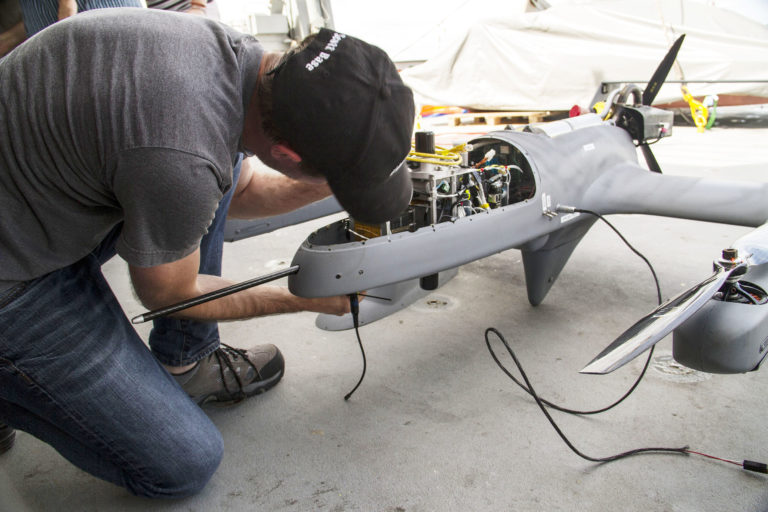
A fully autonomous plane-like drone (like the one pictured above) is attached to a tether and is flown in the wind like a kite:

3689707333?profile=original

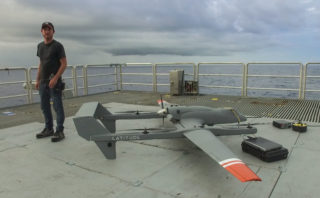
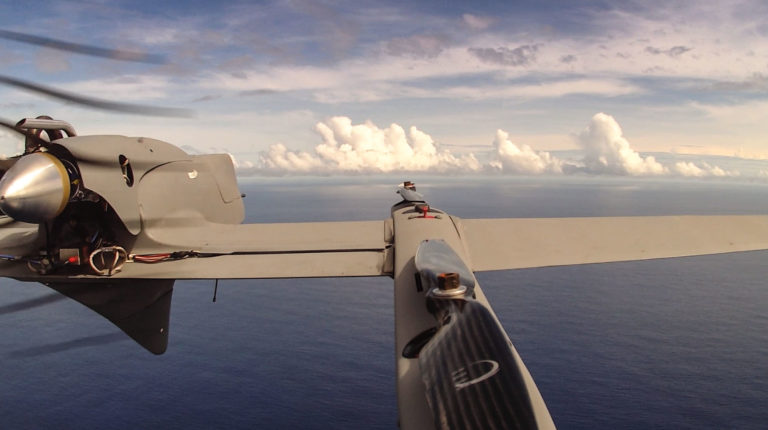
The drone produces wind energy either with mini-wind turbines mounted on the drone (first picture) or simply by pulling on the tether and turning a generator on the ground (pictures two and three). More details here.

The advantages of such Wind Drones over wind turbines? They can be built with only 10% of the material needed for a wind turbine. More importantly, Wind Drones can reach the much stronger and steadier high-altitude winds that are literally out of reach of wind turbines.

Wind Drones bring the digital revolution to the energy market, the largest market of the world.

The result could not only be a potential "magic solution" (Bill Gates) for our energy and climate problem. The result could be the commercially most important drone application, the "Trillion Dollar Drone".

Most companies in the field of Airborne Wind Energy build rather large prototypes with industry grade components. We at Daidalos Capital were in addition interested in rapid and cheap prototyping and supported University of Bonn in building a mini Wind Drone prototype out of a standard model plane, a Pixhawk and modifed ArduPlane software. 

The project was a success and we managed to prove controlled tethered flight with a prototype costing less than USD 1.000 in material costs.

3689707512?profile=original

More details on the ArduPlane project will be available soon. 

Learn more about Wind Drones and their advantages over wind turbines here: “Producing Energy with … Drones?!”.


Read more…

Disney Intel Drone Show and Hexacopter Rocket Rig

DIY, old tech meets new tech with radio rocket launcher. Ignited with a gear switch as far as your radio transmitter takes you and watch it first person view (FPV).Intel Shooting Star drone, a new type of unmanned aerial vehicle specifically designed for entertainment, air and light shows. "Starbright Holidays – An Intel Collaboration” marks the first time a show-drone performance of this scale has ever been performed in the USA. It features 300 Intel Shooting Star drones in a choreographed aerial performance set to holiday-themed music.A Happy New Year to everyone, from DM!Updates at https://www.youtube.com/dronemission
Read more…

3689707172?profile=original

At UAVenture we’ve been using the uLanding Lite from Aerotenna for a few months now as part of our crop spraying development work. The uLanding is a lightweight (60g), sealed radar based distance sensor with about 30m range and a fast 500Hz update rate making it ideal for low altitude terrain following and of course accurate autonomous landings.

Using a radar based distance sensor with a sealed case means that you will not be susceptible to bad distance readings caused by airborne mist from the spray system between the laser and the surface or, worse still, on the laser lenses.

The driver, written by Roman Bapst, has just been submitted to master on PX4‘s github repository and should make it into the next release.

More information: Driver details including setup and demo video

Read more…
3D Robotics

New ROS2 autopilot code for Dronecode/PX4

Great update from Victor Mayoral on ROS 2.0 progress and the further integration of the Dronecode/PX4 stack and ROS

ROS 2.0 native drone flight stack prototype

The video above provides a peek into a working prototype of the concept of a software autopilot for drones that speaks ROS 2.0 natively, that is, a modified version of the PX4 flight stack where all the barometer readings fetched from the corresponding sensor are published using ROS 2.0 and used by other modules through the subscription primitives of ROS 2.0.

This work aims to explore the potential of autopilots that interoperate natively with ROS and are able to extend their existing functionalities (attitude and altitude stabilization, basic flight modes, mission planning, etc.) with higher level behaviors common in robotics (obstacle avoidance, SLAM, fully autonomous navigation, etc.).

Code and instructions are available here.

Read more…

Drones for industrial apliacations

When we started to work on our gimbals we focused to create a solution for commercial and industrial applications. As a drone platform we always give preference to bigger drones with 6 or 8 motors, which have a few advantages comparing to their smaller «brothers».

First of all in most cases they can stay in the air for longer period of time, which may be critical for some tasks.

Secondly, they are more stable in different weather conditions and more reliable, even if one motor is failed there are pretty high chances to land the drone safely. I personally witnessed such situation.

And thirdly, they can lift heavier payloads, which allows to install dual sensor payloads. In our gimbals we install Full HD day-view camera with 30x optical zoom and thermal camera. Zoom feature allows drone operator to keep certain distance from the inspection target to keep operational risks at minimum. Dual sensor setup allows to collect more information during the flight and provides more footage to work with in the future.

In addition, our gimbals can be controlled from separate remote controls allowing drone operator and payload operator to focus on their tasks to ensure mission success. 

Read more…

How to Register Your Drone with the FAA

How to Register Your Drone or QuadcopterHow To Easily Register Your Drone or Quadcopter with the FAA

With new laws and restrictions hitting the airspace due to the spike in drone ownership, you are now required to “register” your aircraft. Don’t be intimidated. That word makes it seem so much worse than it is, but it’s actually very simple! As long as you’re just flying for fun (not for business purposes), then you only have to take a few simple steps and you’re on your way. We’ll show you how to register your drone or quadcopter in 15 minutes at most.

We did it and it only took about 5 minutes.  All you have to do is create an account and pay a $5 registration fee. To make life even easier, we’ve created a step by step guide to help you register your drone.

We want to ensure it’s as quick and painless as possible. Let’s get started, shall we?


How to Register Your Drone or Quadcopter


1.) Find out if you even need to register

At the bottom of this page we’ve provided a table of all the latest quadcopters on the market. There you can see whether your drone needs to be registered or not. Keep in mind, if you’re buying a tiny quad to fly in your house or around the office, odds are you will not need to go through the process. It all comes down to the weight of your quadcopter. If it weighs more than .55 lbs, then you are required to take these steps towards registration. Just review the additional requirements below and then we will get started!

Requirements for registering your drone or quadcopter:

  • Must be 13+ years old to register.
    • Younger than 13? Must have someone who is 13 years old or older register it for you.
  • Must be a U.S. citizen or legal permanent resident.
  • “Visiting foreign nationals must register their UAS upon arrival in the United States (online registration serves as a certificate of ownership).

2.) Visit the FAA’s website to register your drone

Go to resitermyuas.faa.gov to begin the process.


 3.) Create an account

How to Register Your Drone or Quadcopter

Once clicking through to the link provided above, select “register” and you’ll be taken to a form page. You’ll need to create an account using your email and a new password.


4.) Confirm your account

HHow to Register Your Drone or Quadcopter

Now go to your email inbox. You’ll receive an email from UASRegistration@faa.gov almost instantly. If nothing shows up after a few minutes, you can have the site resend a confirmation email. Once you’ve received your confirmation email, click on the blue url at the bottom to confirm and you’ll be brought back to the site.


5.) Agree to Registration Site System Use Notice

How To Register Your Quadcopter

When routed back to the site, the Terms and Conditions will pop up. Feel free to read through and click on the additional link to find out exactly what they’re using your information for. The most important portion to read and understand is found below:

“For any lawful Government purposes, such as identifying wrongful attempts to upload or change information in the system or otherwise cause damage to the web service, the Government may monitor and intercept information transiting or stored on the system. Use of this system constitutes consent to such monitoring or interception. Unauthorized or improper use of this information system may result in civil and criminal penalties.”

Seems fair, right? Remember, the information you provide is for Government-authorized use only. Once you’re done reviewing and don’t have a problem with anything you’ve read, select “I Agree.” You’ll be taken back to the login screen. Now that you’ve created and confirmed an account, you must log back in to finish up the final steps.


 6.) Select Model Aircraft

How to Register Your Drone or Quadcopter

Now that you’re logged in, make sure you select “Model Aircraft” on the left hand side . This is for pilots who are just flying as a hobby. If you’re planning on using it for commercial use, you’ll need to follow different steps. Please see this article if you plan on flying commercially.


7.) Pay Registration Fee

How to Register Your Drone or Quadcopter

In order to receive the registration code, you must pay a $5 fee. It’s unbelievably cheap. We would’ve guessed at least $20… But hey, we’re not complaining. Trust us when we say it’s worth it. If you avoid registration and end up receiving a ticket, you’ll be looking at a much larger fee. Now you’ll enter in your name, alternate email, physical address, and mailing address (if different than physical).  There are certain pieces that aren’t required such as your phone number and suffix.


 8.) Acknowledgement of Safety Guidance

How to Register Your Drone or Quadcopter

After you’re done filling out your account information, you must read through and accept the “Acknowledgment of Safety Guidance.” You’re agreeing that you’ll fly below 400 feet, the drone will be in your visual line of sight, and you’re aware of FAA airspace require (definitely give this a read), Also, you will not fly directly over people, stadiums, or sporting events, near aircraft (airports in general), under the influence of drugs or alcohol, or near emergency response efforts. There have been instances where pilots fly above forest fires… this can be extremely dangerous. After reviewing, check off “I have read and understand the safety guidance” and click “Next.”


9.) Pay the $5 Registration Fee

Enter in your payment information such as credit card number and billing address. Afterwards you will be taken to a review page. Make sure all of the information you provided is correct. Then confirm registration. You will then receive a unique registration number. It will apply to any and all quadcopters up to 3 years. After 3 years, you are required to register again.


10.) Label your UAS with the provided registration number

After entering in a method of payment, you’ll be taken to”Review and Pay,” hit next and confirm your registration. Immediately, a registration code will appear on a screen with listed requirements (below). Review the marking requirements and you can click “done.”

How to Register Your Drone or Quadcopter


Once you’ve  clicked through, you can manage your account, and email or print your “Small UAS Certification of Registration.” Take that back to the office and tell everyone you’re a pilot now. Hey, technically you’re certified by the FAA… ha!


How to Register Your Drone or Quadcopter


Remember, you must mark all aircraft with your registration code before operating. The number must be “visible without tools.” See below for more information. We’ve provided some instructions below, but for more information on tagging and other quires, please visit faa.gov.


How to Register Your Drone or Quadcopter


Now you’re free to move about the country! Looking for a drone that dosn't need to be registered? Most of these drones under $100 don't meet the weight requirements for needing to register with the FAA. See below for a list of specific drones and wether or not they need to be registered: 

Does your aircraft need to be registered?

UASNeed To Register?
3DR Iris+Yes
3DR Solo (with gimbal)Yes
3DR Solo (without gimbal)Yes
Air Hogs Millenium FalconNo
Blade 180 QX HDNo
Blade 200 QXNo
Blade 350 QX3Yes
Blade Chroma w/ 1080p cameraYes
Blade Chroma w/ 4K cameraYes
Blade Chroma w/ GoPro-ready gimbalYes
Blade Chroma w/ fixed GoPro mountYes
Blade Glimpse FPV HD cameraNo
Blade Inductrix QuadcopterNo
Blade Mach25 FPV RacerYes
Blade Nano QX 3DNo
Blade Nano QX FPV BNF w/out HeadsetNo
Blade Nano QX FPV RTFNo
Blade Nano QX RTFNo
Blade Pico QX RTFNo
Blade Vortex 250 ProYes
Cheerson CX-10C NanoNo
Cheerson CX_STARS MiniNo
DJI Inspire 1Yes
DJI Inspire ProYes
DJI Phantom 4Yes
DJI Phantom 3 AdvancedYes
DJI Phantom 3 ProfessionalYes
DJI Phantom 3 StandardYes
DJI Phantom 2 Vision+Yes
DJI Phantom 2Yes
DJI Phantom 1Yes
DJI Spreading Wings S900Yes
DJI Spreading Wings S1000Yes
Extreme Filers Micro Drone 2.0No
Helimax 1SQNo
Helimax 1SQ V-camNo
Halimax 1Si (with camera)No
Helimax 230Si (with camera)No
Helimax FORM500Yes
Helimax Voltage 500 – 3DYes
Hubsan x4 (H107L)No
Hubsan x4 FPVYes
Hubsan x4 NanoNo
Hubsan x4 ProYes
Hubsan x4 cameraNo
Parrot AR.Drone 2.0 (Elite Edition)Yes
Parrot Airborne Cargo minidroneNo
Parrot Airborne Night minidroneNo
Parrot BebopYes
Parrot Becop 2Yes
Parrot Rolling Spider minidroneNo
Quanum NovaYes
Sky Viper m200 NanoNo
Sky Viper s670 Stunt DroneNo
Sky Viper v950 HDNo
Syma X5No
Syma X5CNo
SymaX8Yes
Syma X12No
Tayzu Titan X8Yes
UDI U818A HDYes
UDI U818A-1 Discovery (HD model, not lighter, WiFi model)Yes
UDI U842 FalconYes
Walkera Furious 320Yes
Walkera QR X350 PROYes
Walkera QR X350 PremiumYes
Walkera QR X900Yes
Walkera Runner 250Yes
Walkera Scout X4Yes
Walkera Tall H500Yes
Walkera Voyager 3Yes
Walkera Voyager 3 GoProYes
Yuneec Typhoon GYes
Yuneec Typhoon Q500 4KYes
Yuneec Typhoon Q500+Yes
Yuneec Tornado H920Yes


Read more…

In Guyana, where forests cover over 80 percent of the country, the threat of illegal logging is ever present. A lot of the time, it’s hard to even know if it’s happening. That’s in part because the country’s population is so small, just 735,000 people to keep watch on 83,000 square miles of country. 

But around 9,000 of those residents are Wapichan, an indigenous community living the country’s southern region, where forests are repeatedly threatened. Wapichan community members had long sought ways to fight the loggers, who were threatening their homes, but, according to Quartz, found it hard to persuade the government to intervene, in part because they couldn’t always prove illegal logging was happening. 

That’s where drones come in. Or, specifically, one drone, a fixed-wing model that tribe members built, incredibly, by watching DIY videos on YouTube. A camera mounted on the drone captures images of the logging, evidence the Wapichan community can then take to the Guyanese government. 

The drone has now been documenting the forests for months, and the Wapichan’s struggle with combating the loggers continues. According to Quartz, they are optimistic that the country’s new president, elected last year, will work with them. 

“We are the guardians of the forest,” Nicolas Fredericks, a Wapichan leader, told Quartz. “We will not stand for [its] destruction in the name of development.”

link: http://www.atlasobscura.com/articles/how-a-tribe-is-fighting-off-loggers-with-a-drone-they-built-watching-youtube

Merry Christmas to the hole Diydrones community by the way! :D

Cheers Greg

Read more…

3689707263?profile=originalHey i'm back, some good news!  After many years of community development, searching and building most efficient UAV for eco mission with less money to spent finally months of testing and much witnessed by our FPV and UAV community a new era of super portable size autonomous drone was born.  Its last flight was covering at 72.6km in 90 minutes in stormy wet weather. The mini Wing Wing Z-84 (845mm) that was marketed as park flyer and surfing toy around beaches have found its new purpose.  Flown multiples of flights, distances, various weather condition and also spawn many variant for various mission this tiny Z-84  UAV proven that smaller fixed wing perform better, lighter and far more efficient both cost and mission task for less than USD$300 budget.  It has indirectly promoted and inspired home based drone builder community to jump into micro autonomous flight bandwagon and learn few things about robotic flights.  So far  community participation into building small sized UAV have been very positive and many people have already successfully flown their wings. 

3689707157?profile=originalThe use of autonomous flight controller such as APM/PX4 has risen.   Most people interested building this wonderful arm sized wing not because its cheap and tiny but also more simple to build as UAV than traditional FPV setup.   Plus the use of unconventional battery such as mythical Li-on battery have now widely use among commoner, breaking myth about its capability among fixed wing flyer thus the demand of Li-on battery on fixed wing now rises too.  This proven once again that small and cheap things matters.  It seems that more and more manufacturer started build delta wings to cater this latest trends among forumers online especially budget builders and budget aerial mapping capabilities.

3689707280?profile=original

For those interested to build their own mini size UAV (Z-84) you can start reading some blog setup here.
Build links: http://www.supermotoxl.com/fpvuav-models-builds-and-flight-reviews/589-uav-wing-wing-z-84-845mm

Also you can join community of open builder for discussion, sharing and guides. 
Forum groups: https://www.rcgroups.com/forums/showthread.php?2725674-Wing-Wing-Z-84-%28845mm%29-72-6km-long-range-90-minutes-stormy-rain-flight

Other than for leisure flight, more people start to build it for portable long range aerial surveillance, forest conservation monitoring, ecology task, humanitarian works, wild life protection, off-shore piracy patrol and other mission that was once dominated by bigger and expensive UAV now been replace with more affordable and portable long range drone.  Ok thats all for my latest news this month.  We are right now working on our latest super light new fixed UAV project and classes for our young generation of UAV enthusiast.  So stay tuned for my latest updates and don't forget to join our communities of UAV builder at our forum.  Cheers.

3689707209?profile=original

Read more…
3D Robotics

Big new APM:Rover release

3689707125?profile=original Great news from the APM:Rover team. That's the code we use for our autonomous go-kart (above)

APM:Rover Release 3.1.0, 22 December 2016

The ArduPilot development team is proud to announce the release of version 3.1.0 of APM:Rover. This is a major release with a lot of changes so please read the notes carefully!

A huge thanks to ALL the ArduPilot developers. The Rover code benefits tremendously from all the hard work that goes into the Copter and Plane vehicle code. Most of the code changes in this release were not specifically for Rover however because of the fantastic architecture of the ArduPilot code Rover automatically gets those enhancements anyway.

Note that the documentation hasn't yet caught up with all the changes in this release. We are still working on that, but meanwhile if you see a feature that interests you and it isn't documented yet then please ask.

The Release Photo Above:
This is a 300 m wide lake. 
The water temperature was 55 C
The pH was 0.5 - the same as battery acid
There were a lot of phreatic explosions in the middle of the lake. 
The yellow rafters are sulfur. 
Gasmasks were necessary because of the very high SO2 concentration. 
It was also very hot.
The boat is designed for mapping an acid lake. That's why no prop in the water and nearly no metal parts.
And the AutoPilot - ArduPilot of course - no other AutoPilot will do.
http://discuss.ardupilot.org/t/sonar-air-boat-working-fine/9912

Release Information

The PX4-v2 build has had CANBUS support removed due to firmware size issues. If Rover users want CANBUS support you will need to install the PX4-v3 build located in the firmware folder here:
http://firmware.ap.ardupilot.org/Rover/stable/PX4/

EKF1 has been removed as EKF2 has been the long term default and is working extremely well and this has allowed room for EKF3.

EKF3 is included in this release but it is not the default. Should you want to experiment with it set the following parameters:
AHRS_EKF_TYPE=3
EK3_ENABLE=1
but note it is still experimental and you must fully understand the implications.

New GUIDED Command

Rover now accepts a new message MAV_CMD_NAV_SET_YAW_SPEED which has an angle in centidegrees and a speed scale and the rover will drive based on these inputs.

The ArduPilot team would like to thank EnRoute for the sponsoring of this feature
http://enroute.co.jp/

COMMAND_INT and ROI Commands

COMMAND_INT support has been added to Rover. This has allowed the implementation of SET_POSITION_TARGET_GLOBAL_INT, 
SET_POSITION_TARGET_LOCAL_NED and DO_SET_ROI as a COMMAND_INT

The ArduPilot team would like to thank EnRoute for the sponsoring of this feature
http://enroute.co.jp/

Reverse

Its now possible in a mission to tell the rover to drive in Reverse. If using Mission Planner insert a new Waypoint using "Add Below" button on the Flight Plan screen and select from the Command drop down list you will see a new command "DO_SET_REVERSE". It takes 1 parameter - 0 for forward, 1 for reverse. It's that simple. Please give it a try and report back any success or issues found or any questions as well.

The ArduPilot team would like to thank the Institute for Intelligent Systems Research at Deakin University
(http://www.deakin.edu.au/research/iisri) for the sponsoring of the reverse functionality.

Loiter

This changes brings the LOITER commands in line with other ArduPilot vehicles so both NAV_LOITER_UNLIM and NAV_LOITER_TIME are supported and are actively loitering. This means for instance if you have set a boat to loiter at a particular position and the water current pushes the boat off that position once the boat has drifted further then the WP_RADIUS parameter distance setting from the position the motor(s) will be engaged and the boat will return to the loiter position.

The ArduPilot team would like to thanko MarineTech for sponsoring this enhancement.
http://www.marinetech.fr1

Note: if you currently use Param1 of a NAV_WAYPOINT to loiter at a waypoint this functionality has not changed and is NOT actively loitering.

Crash Check

Rover can now detect a crash in most circumstances - thanks Pierre Kancir. It is enabled by default and will change the vehicle into HOLD mode if a crash is detected. FS_CRASH_CHECK is the parameter used to control what action to take on a crash detection and it supports 0:Disabled, 1:HOLD, 2:HoldAndDisarm

Pixhawk2 heated IMU support

This release adds support for the IMU heater in the Pixhawk2, allowing for more stable IMU temperatures. The Pixhawk2 is automatically detected and the heater enabled at boot, with the target IMU temperature controllable via BRD_IMU_TARGTEMP. Using an IMU heater should improve IMU stability in environments with significant temperature changes.

PH2SLIM Support

This release adds support for the PH2SLIM variant of the Pixhawk2, which is a Pixhawk2 cube without the isolated sensor top board. This makes for a very compact autopilot for small aircraft. To enable PH2SLIM support set the BRD_TYPE parameter to 6 using a GCS connected on USB.

AP_Module Support

This is the first release of ArduPilot with loadable module support for Linux based boards. The AP_Module system allows for externally compiled modules to access sensor data from ArduPilot controlled sensors. The initial AP_Module support is aimed at vendors integrating high-rate digital image stabilisation using IMU data, but it is expected this will be expanded to other use cases in future releases.

Major VRBrain Support Update

This release includes a major merge of support for the VRBrain family of autopilots. Many thanks to the great work by Luke Mike in putting together this merge!

Much Faster Boot Time

Boot times on Pixhawk are now much faster due to a restructuring of the driver startup code, with slow starting drivers not started unless they are enabled with the appropriate parameters. The restructuring also allows for support of a wide variety of board types, including the PH2SLIM above.

This release includes many other updates right across the flight stack, including several new features. Some of the changes include:

  • log all rally points on startup
  • the armed state is now logged
  • support added for MAV_CMD_ACCELCAL_VEHICLE_POS
  • support MAVLink based external GPS device
  • support LED_CONTROL MAVLink message
  • support PLAY_TUNE MAVLink message
  • added AP_Button support for remote button input reporting
  • support 16 channel SERVO_OUTPUT_RAW in MAVLink2
  • added MAVLink reporting of logging subsystem health
  • added BRD_SAFETY_MASK to allow for channel movement for selected channels with safety on
  • lots of HAL_Linux improvements to bus and thread handling
  • added IMU heater support on Pixhawk2
  • allow for faster accel bias learning in EKF2
  • added AP_Module support for loadable modules
  • merged support for wide range of VRBrain boards
  • added support for PH2SLIM and PHMINI boards with BRD_TYPE
  • greatly reduced boot time on Pixhawk and similar boards
  • fixed magic check for signing key in MAVLink2
  • fixed averaging of gyros for EKF2 gyro bias estimate
  • added support for ParametersG2
  • support added for the GPS_INPUT mavlink message
Read more…

Hi there, 

Check out our custom Solo with integrated thermal camera based on Flir Lepton sensor. The output is a split screen with thermal image on the left and RGB on the right. You can record the video on your mobile device that you using as a screen on the remote. 

It is available for purchase on our website. 

This is the same camera we developed for our project in cooperation with Mouser and Intel that I posted about earlier. 

3689707146?profile=original

Let me know if you have any questions!


Best, 

Easy Aerial Team

Read more…

3689707107?profile=original

The Amazon is home to thousands of local indigenous communities spread across very remote areas. As a result, these sparsely populated peoples rarely have reliable access to essential medicines and public health services. Local doctors in the region report an average of 45 snakebites per month and no rapid access to anti-venom meds, for example. We recently traveled to the rainforest to learn more about these challenges and to explore whether cargo drones could realistically be used to overcome some of these challenges in a sustainable manner. We’re excited to share that our cargo drone flights in the Amazon rainforest were a big success! Learn more here.

Read more…

couv-facebook.jpg?width=730

Let’s try Christmas luck, YOU HAVE A CHANCE TO WIN amazing gifts in Dronestagram photo contest!
Yuneec drones Breeze4K or Typhoon, Lowepro bags or Zeinberg prints!
There is: Popular prize of the most liked picture, Santa Claus prize of random draw and Jury prize! Submit your pictures at www.dronestagr.am/christmas-photo-contest/!

Dear Dronists,

Dronestagram’s Santa Claus is very generous this year, WIN great presents!

On this special occasion, we invite you to publish on Dronestagram your best shots showing the magic of Christmas: Christmas tree, lights, family portrait, dronies, your house, igloo or decorated neighborhood …Anything related to the Christmas spirit!

TO ENTER:
Take a Christmas picture with your drone & p
ublish the pic on Dronestagram in the «Christmas photo Contest» category.

JOIN the CHRISTMAS PHOTO CONTEST from 14-31 December.
Be creative, be punchy, be bold! 
Come on folks, it’s time to celebrate this wonderful time with a bird’s eye view.

We would like to extend a special thanks to our contest sponsors YUNEEC, Lowepro & Zeinberg for generously offering amazing gifts!

Christmas photo contest

POPULAR PRIZE:
Author of the most liked picture.

1x Typhoon H with RealSense + 1x Skyview FPV headset offered by Yuneec

Christmas photo contest

JURY PRIZE:
Most creative picture (jury composed of Dronestagram team, Yuneec and Lowepro).

1x Breeze 4K + 1x Breeze FPV & Controller Kit

Christmas photo contest

SANTA CLAUS PRIZES:
Random draw

1 x DroneGuard BP 450 AW offered by Lowepro
1 x DroneGuard CS 200 offered by Lowepro
1 x Print Plexi offered by Zeinberg

Christmas photo contest

BANDEAU-ZEINBERG-1.jpg?width=608

DETAILS & RULES

Entry Frequency: No limit
Submissions Start: December 14th, 2016 02:00PM GMT
Submissions End: December 31th, 2016 02:00PM GMT
Award Announcements: January 3rd, 2017
Eligibility: Open Wordwide.

Have fun and good luck!
MERRY CHRISTMAS!

Sni%CC%81mka-obrazovky-2016-12-13-o-19.29.31-150x150.png?width=150
Read more…

Skywalker X2 950mm Cross-over Aircraft

   The Skywalker X2 is 2016 new conception aircraft from Skywalker Technology CO.,Ltd. Combined with aerodynamics, it has two kinds of configuration that achieved higher and steady speed. It is suitable to practice crossing over and takes you to experience an interesting flying.

3689707006?profile=original

   Adopted imported EPO materials, it is strong and durable to fly and module installation that makes flying easier, more convenient and faster. It has equipment slot, micro camera on the top, image transmission to satisfy hobbyists's DIY need.

3689706859?profile=original

    Then, I will tell you characteristics and specification of Skywalker X2.

3689706970?profile=original

Characteristics

  • Adopted EPO material, light and sturdy.
  • Large capacity cabin, reasonable area distribution,such as layment plywood. 
  • Stable and flexible flying.
  • Module design, disassemble and assemble easily and conveniently.
  • Install simple and fast, small resistance, long range, precise operation.

3689706871?profile=original3689707034?profile=original3689706987?profile=original

Specifications

  • Wingspan:950mm
  • Fuselage length:650mm
  • Wing area:39.4dm2
  • Flying weight:920-1200g


Recommended Cofiguration

  • Motor:2216KV1400
  • ESC:30A
  • Servo:12g*2pcs
  • Propeller:7*6/8*6F
  • Battery:3-4S 3000-3300mah
  • Radio:3CH

If you are interested in Skywalker X2, you can contact with me. 

Welcome to your review !!! I will reply to your question a.s.a.p. 

Thank you!

Read more…
3D Robotics

3689706926?profile=original90,000 lines of code in one month! From the PX4 blog:

We have upgraded today to NuttX 7.18 on PX4/master. This is a major upgrade from NuttX 6, which we had been using for several years almost unchanged. PX4 did grow exponentially in 2016, adding significant resources to our ability to drive the software development and flight testing. This allowed to take on the monumental task of re-validating the operating system. NuttX has evolved significantly in the last years, offering fixes, new functionality and support for new hardware like the STM32F7.

We always saw the technical strengths of NuttX and its interesting to note that a major company like Sony adopts it for products and talks about it at ARM Tech con. Every Pixhawk is flying the PX4 middleware and NuttX and so it might still be amongst the most widely adopted products running it.

The team has been very active the past month, leading to a record contribution level. Although note that this is a very incomplete way to look at PX4 - you also need to factor in PX4/ecl, PX4/matrix, PX4/DriverFramework, etc, to get the full picture. This one repository is just the "glue" that brings it all together.

Cortex M7 vs. Parrot Bebop 2.

It is interesting to note that the CPU load running flight control on the STM32F7 on a single core is comparable to the CPU load  on a much faster single core of a Parrot Bebop 2:

Below is the load on Bebop (percentage in the list is a single core)

  • Mem: 66516K used, 230236K free, 0K shrd, 15268K buff, 22992K cached
  • CPU: 10.3% usr 21.7% sys 0.0% nic 67.4% idle 0.0% io 0.0% irq 0.5% sirq
  • Load average: 1.53 0.80 0.32 3/113 1221 PID PPID USER STAT VSZ %VSZ CPU %CPU COMMAND 1200 1187 root S 36468 12.2 0 26.1 px4 /home/root/ /home/root/px4.config

And here is the load on a Cortex M7 (STM32F7, complete system load)

  • Processes: 21 total, 4 running, 17 sleeping
  • CPU usage: 31.33% tasks, 1.39% sched, 67.28% idle
  • DMA Memory: 5120 total, 1536 used 1536 peak
  • Uptime: 91.005s total, 61.744s idle

The similar number despite of the advantage of the Parrot Bebop 2 in clock speed makes sense: Flight control consists of many short interleaving tasks and sensor driver access for which Linux is not designed specifically, while the NuttX RTOS is. It also sheds a light on why prosumer drone manufacturers like DJI and Yuneec as well as Intel have retained an independent microcontroller for flight control in their models. Qualcomm is offering a smart hybrid approach by running PX4 on the DSP of the Snapdragon SoC, leaving Linux to run computer vision.

Read more…
3D Robotics

Scott Brown, Physicist and Engineer, incorporates a hemispheric radiometer inside an Unmanned Aerial Vehicle. It took almost three years for these instruments to be customized so they could fit and function properly inside the aircrafts.Love these updates from the crack Schmidt team

“It took half an hour to drill those three holes” sighs Scott Brown, Physicist and Electronic Engineer, looking at the tiny penetrations on top of the UAV. Fiber optic cables now poke out, ready to measure sunlight and send the information to the payload (scientific package) inside the aircraft to be recorded.

It has been almost three years since the process to design the instruments began. It was one process making sensors, software, cameras and GPS work, and another entirely to make them fit into the limited space provided by the aircraft. Brown’s team had to customize every component, and today the effort is paying off. “The instruments behaved how they were supposed to,” says Chris Zappa, Oceanographer and head of Brown’s engineering team. “We have gathered some very interesting data in high resolution, and now we can shift the focus back to science.”

Getting the instruments to fit, working inside the aircraft was not the only aspect that required great amounts of time and patience. Organizing an interdisciplinary research cruise such as this one was no easy feat, but its purpose is nearly complete and tomorrow will bring the final station.

Scott Brown, Physicist and Engineer, incorporates a hemispheric radiometer inside an Unmanned Aerial Vehicle. It took almost three years for these instruments to be customized so they could fit and function properly inside the aircrafts.SOI/ Mónika Naranjo González

Practical and Holistic

Each team will now bring the data and samples collected back to their home labs, then begin the long job of processing them. They will then crosscheck their findings with those of the other working groups, when the true value of this collaborative effort will become clear.

Ground truth measurements for ocean color satellites is one interesting application. While the UAV flies over the ocean, away from the effects of ships or clouds, cameras will be recording the different colors of the water in high wavelength resolution. Regular cameras record images in three wavelengths: red, green and blue. Zappa’s instruments are capable of continuously recording 322 different wavelengths.

Hyper spectral cameras scan the ocean's surface and record 322 colour wavelengths that can linked to different biochemical processes in seawater.Hyper spectral cameras scan the ocean’s surface and record 322 color wavelengths that can link to different biochemical processes in seawater.SOI/ Chris Zappa
Scott Brown, Physicist and Engineer, stands next to one of the HQ-60B drones to scan the sea surface. The drone had just completed another successful mission and was being disarmed on Falkor's flight deck.Scott Brown, Physicist and Engineer, stands next to one of the HQ-60B drones to scan the sea surface. The drone had just completed another successful mission and was being disarmed on Falkor’s flight deck.SOI/ Mónika Naranjo González


By correlating the colors picked up by the cameras with the chemical and biological composition of the samples processed by other working groups, this team will be able to link oceanic processes with color spectrum of seawater. This information will be used to calibrate satellite observations of ocean color and link them to the biochemical processes determined by the other scientific working groups onboard.

Looking Forward

Today, Brown’s instruments have improved enormously since the first time he tested them. They can take part in longer flights, be deployed more often, the data downloaded faster, and the instruments inside the UAV can be swapped out quickly. They also require less power from the aircraft, and are thoroughly balanced and weighted so they don’t affect the flight characteristics in any way. He is confident the payload will gather trustworthy data. His mission has been a success, as has been the mission of every scientist onboard.

Now the next stage of the process begins: understanding the stories that every sample can tell, in order to integrate them in the computer models and other forms of analysis that will lead to a better understanding of biochemical processes of the oceans.

An HQ-60B drone flies over the Pacific Ocean, away from the effects that Falkor or clouds could have over data being collected. The aircraft flies an average of two hours in each mission carrying a payload of radiation, hyperspectral or infrared cameras.An HQ-60B drone flies over the Pacific Ocean, away from the effects that Falkor or clouds could have over data being collected. The aircraft flies an average of two hours in each mission carrying a payload of radiation, hyperspectral or infrared cameras.SOI/ Josef Wischler

Read more…

Commercial Drone Markets: 2016 Year in Review

3689706845?profile=original

Last year at this time, I reflected back on the news and trends of the commercial drone markets of 2015 and wrote about the mixed state of affairs in the U.S.  Back then we saw only 2,500 Section 333 grants for commercial activity, and the press’s narrative that ‘drones are cool’ turned to ‘drones are a privacy invasion headache.’ This was tempered by a proliferation of the drone conferences that had both exhibitors and vendors scrambling to attend. We also saw the outcome of the UAS Registration Task Force Aviation Rulemaking Committee and the FAA’s rapid implementation to put hobby drone registration in place.

In January 2016, I wrote a piece titled Six Trends Driving the Commercial Drone Market in 2016 and Beyond, which articulated that, while making predictions is not an exacting science, six trends would provide key opportunities and challenge for the industry:

  1. Competition
  2. Fidelity
  3. Sensors
  4. Mobility
  5. China Incorporated
  6. Virtual and Augmented Reality

In this post, I’ll review those trends as well as other significant news for drone manufacturers, service providers, and investors in 2016.

What rang true?

  1. Competition

The biggest news all year was that the FAA Part 107 regulations are now in place. And they’re not as onerous as they could have been. Hurray! We (at least in the U.S.) have the basis for an industry and a firm regulatory framework upon which to grow.  And that’s what I saw and heard from so many companies that want to use drones for their businesses at the major drone shows.  So many were sitting on the sidelines waiting for regulations to be clear.

Several weeks ago, Patrick Egan of sUAS News wrote a piece called “Part 107 Your Golden Ticket” that sums my feelings and it’s this: There has been some grousing about what’s not in the rule. But there is plenty of work that can be done under this rule. The 10 years of uncertainty is over, and people can begin to offer services—from the real estate agent who wants aerial photos to the cellular company that wants tower inspection, to the insurance company that wants proper damage assessments, to the first responder who wants a better view of an incident. I think that’s exciting.

And so is having competition.  Many think it’s a race to the bottom on prices for drone-based business services–and that’s true in part–but the other side of the coin is there is healthy competition, which delivers customer benefits. Because everyone is working harder to produce a better product.

  1. Fidelity

Continue reading here:  http://droneanalyst.com/2016/12/19/commercial-drone-markets-2016-year-in-review/

Read more…