All Posts (11086)

Sort by
Moderator

Santa Claus announced today that he will be delivering presents this Xmas using electronic reindeers.  Whilst many people thought Amazon's plans to deliver parcels by drones by 2015 was ambitious; Santa has a proven track record of delivering presents all over the world.


With only a few more sleeps until Christmas, we'll just have to wait and see if Santa is able to pull this off.

Read more…
3D Robotics

The latest work from the star ETH team shows how a quadcopter can recover from a prop loss. Excerpt from a Fast Company article:

Today, the software controlling most quadcopters is designed to have all four propellers functional at the same time. As ETH Zurich doctoral student (and key researcher on this algorithm) Mark Müllerexplains, drone software doesn't do a good job accounting for emergency scenarios.

“During normal flight, a quadcopter can produce three independent torques to control its attitude: ‘roll,’ 'pitch,' and ‘yaw,’” says Müller. “If a propeller fails, this is no longer possible--the strategy for our algorithm is to give up the yaw torque, and let the machine spin uncontrolled about this axis. We then use the remaining propellers to tilt this axis of rotation, allowing the machine to move around.”

...

“The hardest part of the work was the initial mathematics,” says Müller. “How [do you] describe the system in a way that captures the relevant dynamics, but is still simple enough for us to analyze and manipulate? We started with Euler's law--a set of three differential equations that describe the rotation of a body as a function of the torques applied to that body. These equations are a gold mine of unexpected and surprising results, and trying to wrap our heads around this was probably the biggest challenge.”

If the initial mathematics proved a steep learning curve, however, what surprised Müller about the eventual algorithm was its conceptual simplicity. “The derivation is quite complex, and required a lot of time,” he continues. “The implementation on a quadcopter was relatively simple. The control law that we use (the set of equations that calculate the required motor forces) ends up being very concise: To calculate the motor forces only requires a handful of multiplications and additions.”

...

What makes the ETH Zurich algorithm different to previous attempted solutions is that it is entirely software-based--requiring no added hardware whatsoever. Previous solutions were mainly centered on physical additions to the quadcopter concept--often proposing hexa- and even octocopters, equipped with six or eight motors/propellers.

While these may have improved safety, they would also have done away with many of the plus-sides of quadcopters--since the augmentations would make the machines heavier, more complex, less maneuverable, and more expensive to manufacture.

By creating an entirely software-based solution, the ETH Zurich team have not only found a way past these issues, but have also come up with a concept that could easily be applied to a large batch of existing quadcopters.

“[In this way] our work is not focused on quadcopters as such, but rather on algorithms and mathematics that allow us to fully explore and exploit the capabilities of dynamic machines,” Müller says. “As such we do a lot of work on mathematical modeling and abstraction, allowing us to control complicated systems, and getting them to do interesting things.”

Currently the ETH Zurich team has a patent pending on their algorithm, while a paper detailing the invention will be published in 2014.


Read more…

Tweaked standard 3DR quad

3689562994?profile=original

overall top view

3689562945?profile=original

gopro mount instead of battery holder

3689563213?profile=original

arms are sealed with (color matched) tape, one motor mount hole is used for positional lights

3689563162?profile=original

escs, homemade pdb and power module are hidden between center plates. rear standoffs together with power, light and pwm cables are covered with heatshrink tube .

3689563129?profile=original

top view, on the left side is the light controller

3689563179?profile=original

all electronics are affixed to a plate, damped and covered with a cd case

3689563147?profile=original

battery power connector fixed to arm with doublesided tape and ziptie

Read more…
3D Robotics

From The Register:

In what is described as "a breakthrough moment for humanity", a British bloke has constructed a tricopter designed to remotely deliver a full English breakfast of bacon, egg, sausage, mushroom and tomato ketchup.

Joel Veitch's Bacon Drone

Joel Veitch's cutting-edge design of "sticks and tape and coat hangars" is controlled by a 3D Robotics ArduPilot Mega 2.5, with an onboard camera and transmitter providing First Person View (FPV) to a set of googles.

The breakfast ingredients are packed into a length of 32mm plumbing tube, plugged at one end. A servo-activated R/C car glow plug and flash cotton at the capped end project nosh at the hungry recipient at the required moment, although Veitch's video demonstrates just how much breakfast they get is a hit-and-miss affair.

Read more…

3689562926?profile=original

First soft landing on the moon in 37 years.  Exciting stuff!

Excerpt from abc.net.au

A space module carrying China's first lunar rover has landed on the moon, marking a major step for the country's ambitious space program.

Scientists burst into applause as a computer-generated image representing the spacecraft was seen landing on the moon's surface via screens at a Beijing control centre, state broadcaster China Central Television (CCTV) showed.

Hours later the rover was deployed, with China's Aerospace Control Centre saying it had "touched the lunar surface".

The rover will spend about three months exploring the moon and looking for natural resources.

3689563096?profile=original

abc.net.au Article (initial report of landing)

news.com.au Article (Video animation and further coverage)

abc.net.au Article (Discussion on next planned rover landing - Chang'e-4)

space.com Article (More images and detail)

*Images: FPV view tweeted by CCTV, Artist's impression from wikipedia

Read more…
3D Robotics

First Annual Quadcopter Destruction Competition

3689563050?profile=original

Sounds like fun! (these are toy quadcopters and the main task is to cut the paper streamers of your competitors)
On December 21st, at 6pm, LVL1 is hosting its first ever Quadcopter Destruction Competition!  Test your aerial skills in the ring of battle in this single-elimination tournament of destruction! For $40, you get a quadcopter, and entry into this one-of-a-kind competition.
Here’s how it works: On December 14th, you’ll receive your Quadcopter (A Syma X1Model).  You have 7 days to train up and modify your drone however you see fit. On the day of the competition, all competitors will be placed in a single elimination tournament. Before each round, a 3 foot crepe-paper streamer will be attached to your drone.  The match begins by a signal from the event organizer, and ends when one competitor’s quadcopter can no longer take flight, OR one competitor’s quadcopter runs out of battery power. If one quadcopter is rendered unable to take to the skies, the remaining quadcopter is the winner.  if both survive, the winner is the quadcopter with the longest streamer remaining.
Contest Rules:
1. The event organizers may disqualify any quadcopter at any time for any reason.
2. Any modifications applied to the quadcopter must pass the following test: “You must be willing to remain in the same room as the quadcopter if the controls are given to a psychopathic 12 year old.”
Q/A:

Q: May I use a controller other than the one that comes with the quadcopter?
A: Yes

Q: May I use a quadcopter other than the one provided?
A: No

Q: May weapons be ground based?
A: All weapons must be physically tether to the quadcopter.

Q: Will extra batteries be provided?
A: Extra batteries will be provided to those moving past the first round. You may keep the extra batteries provided to you.

Q: Do I get to keep the quadcopter?
A: Yes, or what remains of it.

Q: Can I change out motors/batteries/etc?
A: Yes, provided the entire assembly is under 100 grams (this is the total lifting capability of the original quad)

Q: Is this a competition of battery life?
A: No. Batteries dying only signal the end of the round, not who wins.

Q: If I crash, am I out?
A: No. If your quadcopter is still capable of flight, you may retrieve it and relaunch.

Q: If I toss a net over the opponent, do I win?
A: Only if they can’t untangle the net before your batteries run out.

Q: May I bring tools into the battlefield?
A: No.

Q: May I use a controller other than the one that comes with the quadcopter?

A: Yes
(Via Hackaday)
Read more…
3D Robotics

From Mashable. I'd say that this artist, as talented as he is, is a pretty good candidate for a FAA cease-and-desist. I see no "liberal interpretation of FAA regulations" what would have made these flights permitted. Excerpt:

The three-minute video above is called Our Drone Future, by designer and musician Alex Cornell. It was filmed on a GoPro attached to a DJI Phantom and flown around San Francisco landmarks; Cornell says he shot it with "a liberal interpretation of FAA regulations."

The genius is in what Cornell layers on top of that footage: a conversation between an intelligent drone known only as 212 and her unseen Homeland Security operator, Ethan. The conversation is as mundane as air traffic control, but hints of menace start to poke through.

We learn that the drone can scan for malicious intent; it can detect stress levels across an entire neighborhood and make a crime prediction a la Minority Report. She casually reveals herself to be weaponized. And in a twist ending, we learn that San Francisco "civilians" are also armed and starting to fight back against the drones.

"Our Drone Future explores the technology, capability, and purpose of drones, as their presence becomes an increasingly pervasive reality in the skies of tomorrow," writes Cornell. He doesn't explicitly identify the drones as belonging to Homeland Security — but the HSA logo is right there on the drone control screen.

Read more…
3D Robotics

Hollywood aerial camera operators vs. the FAA

6aa304c5-4a96-49b5-b4ce-fd6109cab70d_image002.jpg?width=400

From Reuters, a sobering story of the FAA's shutdown of companies providing commercial aerial video services for Hollywood. Excerpt:

The fortunes of Flying-Cam, the aerial filming company that worked on "Skyfall" and worked on movies including the "Harry Potter" and "Mission Impossible" franchises, illustrate the difficulty of fostering a commercial drone industry in the U.S. Flying-Cam, which has offices in Los Angeles, Brussels and Hong Kong, began using small remote-controlled aircraft outfitted with cameras in the 1980s. Such innovations earned company founder Emanuel Previnaire an Academy Award for technical achievement in 1995. But in 2011 Flying-Cam’s U.S. business was effectively grounded when the FAA notified the film industry that flying unmanned aerial systems (UAS) for commercial use was illegal until regulations were finalized.

In 2007 the FAA had quietly clarified its position on what constitutes an aircraft, as non-military UAS were morphing from recreational playthings into genuine aircraft able to fly hundreds of miles, reach elevations above 10,000 feet and carry a sizable payload. This was a de facto ban on the commercial use of drones until the FAA came up with formal rules governing their use. Since many companies were unaware of the change, the FAA began to tell industry officials that the use of drones was not yet legal as it became aware they were using them.

Virtually overnight, Flying-Cam and other companies in the same business were grounded in the U.S. “Everything has been shut down until they regulate it,” says Haik Gazarian, director of operations for Flying-Cam. “The most tragic part is, an industry that was shining in many ways has been reduced. We’re not able to do these sequences in the U.S. We have to take the whole thing outside.”

Flying-Cam laid off more than 30 workers and other companies doing the same type of work have gone bust. Flying-Cam is picking up more overseas business, meanwhile, largely because regulators in countries such as England, France and China have developed new rules that allow and even encourage the commercial use of drones. Flying-Cam recently shot aerial scenes for the forthcoming films "Transformers: Age of Extinction" in Hong Kong and "Smurfs II" in Paris, for instance. And the production for a Sony PlayStation advertisement was recently moved from L.A. to Budapest so the director could include such aerial shots.

Read more…
Developer

GPS Glitch detection in AC3.1

3689562960?profile=originalAC3.1 is going out very soon and includes a new safety feature called GPS glitch detection.  There's a wiki page about it but I'd like to highlight how it works because it's near the top of the list of safety issues.  The method itself comes from Craig who apparently used something similar on undersea robots.  The way it works is:

    Step 0: the very first GPS position received is simply "accepted"

    Step 1: when we receive a new message from the GPS we first calculate a "projected position" based on the previously accepted position and velocity assuming that the copter had just flown straight ahead.

    Step 2: we compare the new position to this projected position and if it's within 2m (configurable with the GPSGLITCH_RADIUS parameter) then we 'accept' the new position and we move back to Step #1 and wait for the next update.

    Step 3: if it's outside 2m then we calculate another circle of acceptability which is an estimate of how far the vehicle could have travelled since that last accepted position.  We assume the vehicle can accelerate at 10m/s/s in any direction (value held in the GPSGLITCH_ACCEL param).  So for example if it's been 1sec since the last accepted position, the radius would be 1/2 * 10m/s/s * 1s * 1s = 5m.  This radius starts out small but grows quickly so after 5sec it's 125m, after 10seconds it's 500m.  If the new position still isn't within this radius then we're officially "glitching".  We throw away the GPS position (so we rely only on the inertial nav estimate), we display "Bad GPS Position" on the Mission Planner's HUD and then go back to Step #1 and hope the next sample is better.

     Now after 5 seconds of not having an acceptable GPS position the GPS Failsafe kicks in and the copter Lands or switches to Alt Hold (user configurable using the FS_GPS_ENABLE parameter).

     If on the other hand the GPS position corrects itself (i.e. comes back within the radius) we instantly reset the inertial nav position to this new GPS position.  This reset is important because it saves the inertial nav filter from getting confused about it's velocity and acceleration due to the jump which would lead to the copter flying wonkily even after the glitch has cleared.

     This doesn't mean that GPS glitches are a thing of the past, we still need to get these two parameters (GPSGLITCH_RADIUS and ACCEL) set so they catch most glitches without causing too many false positives but hopefully it's save some copters and this may grow into better algorithsm.

     By the way, before implementating this glitch detection we tried to use the GPSs HDOP values (the GPS's measure of how accurate it's position is) but we found the number trails the actual glitch by up to 2 seconds so by the time the GPS tells you, things have already gone horribly wrong.

3689563012?profile=originalAll feedback welcome, you can see the code here and a simulated video here which simulates an actual event reported by Garrick Merrill (gps location changed to protect the innocent).  Here's a video showing how quickly the inertial nav position drifts without the GPS.

Read more…

Some FPV (Cockpit View)

!

This is just run of the mill FPV flying, but I enjoy reviewing the fight for more than the visual perspective. Re-living the altitude, the roll and pitch, the rate of ascent and decent, the airspeed during the flight and the battery condition gives me a much fuller context than just viewing the HD video I was recording using my GoPro H3 Black.  Here is simple flyover of ready to be developed property!

Read more…

Our Holden Drone has been finished for some for some time now but I have not had time to edit and upload any video until now.

During these two merged flights we were testing most of the Arduplane modes including some tight figure 8 waypoint routes around the field. RTL, circle and FBW all worked well. This was all done line of sight with no FPV equipment.

The current wing is rather heavy so we will make another with 3D printed ribs over a square section carbon spar. This will save about 1Kg. We will probably also add flaps as its glides rather too well when trying to land.

3689562779?profile=original3689488542?profile=original

I am currently working on a narrow gopro gimbal for fitting in the nose which will also fit in our H quad fuselage.

The full build blog is HERE

Read more…

What If They Try to Hack Amazon's Drones?

Parrot AR.Drone Quadricopter
Not everyone is thrilled with the rise of civilian drones in American skies. Last week, after Amazon hyped its plan to deliver packages in half an hour via UAV (unmanned aerial vehicle), we wondered about the drone backlash happening in many part of the U.S. And while an angry few threatened to shoot down these delivery drones, a more pressing concern seems to be: What if people try to hack them?

Just last week, security researcher Samy Kamkar made news after announcing he had modified his Parrot AR.Drone quadcopter to hunt and hijack other drones. Employing simple hardware including a Raspberry Pi computer and a wireless transmitter, plus software tools such as aircrack-ng and Kamkar's own Skyjack, the pirate drone scans for nearby Parrot IP addresses. If it locates one, the drone will then hack the unencrypted Wi-Fi controls of its target and place the bot under Kamkar's control.

Kamkar says he designed Skyjack to "get people to pay a little attention to the potential security implications of drones flying around and becoming more ubiquitous in daily use."

Patrick Egan, drone advocate and editor of sUAS News, is not especially worried about Skyjack. Hackers can target Parrot drones, yes, but that's because those French recreational quadcopters run on Wi-Fi, not on radio frequencies. "The Parrot is something a father and [child] would play with in the yard."

Kamkar readily admits that there are limits to his hack. The Skyjack drone can stay in the air for only 10 minutes. Its strike range extends as far as its own Wi-Fi network, and it detects only those IP addresses associated with Parrot. But that's not the point. The drones that would be used for package delivery or other commercial uses in the future would be much harder to bring down, he says. But it's not impossible—and that's his point.

For example, high-tech pirates could target the unmanned aerial vehicle's GPS navigation system by jamming weak satellite signals, says Todd Humphreys, an aerospace engineering professor at University of Texas at Austin. "You can just get on the Internet and buy a so-called personal privacy device, and you can jam GPS receivers from about 10 meters to up to a mile away," Humphreys says. The more heavy-duty jammers cost only a few hundred dollars.

A drone with disrupted GPS navigation would be in trouble. In the best-case scenario, the vehicle could limp home by relying on its inertial measurement unit to provide a basic dead reckoning. A human operator could also help by remotely steering the drone with visual cues coming from onboard cameras.

But things get really dicey if an attacker jammed the communication link with the ground operator. Indeed, some of the "personal privacy devices" Humphreys mentions sport multiple antennas and are powerful enough to disrupt cellphone signals—which is what an Amazon drone probably would use for flying beyond line of sight, he says.

Even more insidious is spoofing GPS coordinates, whereby the drone is tricked into landing at (or crashing into) a location chosen by the attacker. "It is orders of magnitude more sophisticated, more complicated than jamming," Humphreys says, "but it has a bigger payoff in that the attack can go undetected."

The threat is not theoretical. In June 2012, Todd Humphreys and his research team spoofed and grounded an $80,000 drone during a demonstration for the Department of Homeland Security.

For now, the threats are being addressed incrementally. Georgia Tech, for example, has been conducting studies into autonomous vision-based navigation, while the Los Alamos National Laboratory wants to make robot movement less predictable.

"The advantage of acting unpredictably is that people who might want to exploit the robot cannot as easily anticipate where the robot might go next," says Los Alamos National Laboratory research engineer David Mascarenas.

Still, Humphreys is concerned about the proliferation of software-defined radios. Whereas GPS spoofing is still the purview of highly skilled ham radio operators, these new devices give computer hackers easy entrance into the field. One day, will teen hackers be able to just download a GPS spoofing program and hijack a drone as they would a computer?

"That's my worst fear," he says

Read more: What If They Try to Hack Amazon's Drones? - Popular Mechanics
Follow us: @PopMech on Twitter | popularmechanics on Facebook
Visit us at PopularMechanics.com
Read more…

1386773955_667188_1386774356_noticia_normal.jpg

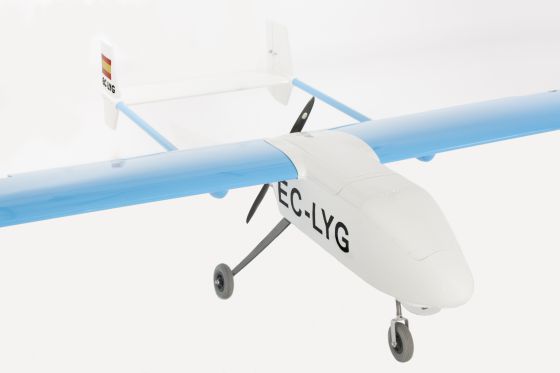
An entrepreneur specializing in media and amateur pilot, tired of seeing news of fires during the summers of 2006, decided to mount Flightech Systems, the first Spanish company that manufactured a drone to monitor such emergencies.

Original Spanish article is given below.

http://tecnologia.elpais.com/tecnologia/2013/12/11/actualidad/1386773955_667188.html

The second media in the original article is video done by some professional ad guys.

English translation is here.

English  web ver is here

Read more…

I wolud like to share with you, two talks that I have made this year in two national security congresses.

The first one was in RootedCON 2013 in Madrid, Spain[Spanish]:

David Meléndez Cano - Trash Robotic Router Platform (TRRP) [Rooted CON 2013] from rootedcon on Vimeo.

In both talks I present a Router based ROV [Texas Ranger] and a Fonera quadcopter [Atropos] also posted here time ago http://diydrones.com/profiles/blogs/atropos-fonera-based-quadrocopter 

The first one was in RootedCON 2013 in Madrid, Spain[Spanish]


And the second one has been las month, in NavajaNegra, Albacete, Spain[Spanish]


Pretty much of my knowledge comes from this site forum, specially  PID implementation and tuning, so thank you guys!

Read more…
300km

Anatomy of a 100km attempt

I'd like to fly my plane 100km. Partly to earn the cool badge, but mostly to see if I can.

The airframe is a Bormatec Maja airframe which is made from EPP, has a wingspan of 2.2m and an empty weight of 2kg.

3689562685?profile=original

I've been tuning it over the last several months to get the best efficiency I can. I've tested dozens of different setups such as props, motors, PID settings, C of G positions etc by flying a circuit in auto mode. By post-analyzing the telemetry data in Excel I can look at the wattage (and speed, pitch etc) for each lap to see what effect the particular setup had on efficiency. I found the AVERAGEIFS function invaluable to pull data from the telemetry csv file and calculate the average values per lap.

3689562765?profile=original

The two biggest breakthroughs were finding the best C of G (20% improvement) and best motor and prop combo (50% improvement in several steps, thanks to Reto Buettner and his expertise for helping achieve the last 20%).

3689562852?profile=original

Some of the smaller details I've been working on include:

  • Fairings (seen below in front and behind the wing mount).
  • Swapping the protruding telemetry antenna for a smaller monopole one (rfdesign.com.au ).
  • Filling gaps, like the hole left by removing the antenna, the flaps hinge gap, around the aileron servos etc.

3689562817?profile=original

To calculate the maximum range I used a formula that calculates how adding weight affects speed, drag and power consumption. The manufacturer says the Maja can carry a payload of 1.5kg which allows me 4 x 5000 mAh (1.6kg of batteries, AUW of 3.6kg). I calculated a maximum range of 85 km if I run the batteries down to 20% reserve. (I don't want to wreck my batteries but the range becomes 102km if I run them down to 10%.)

I've done one round of flight testing with 4 x 5000 mAh on board and the results were slightly better than my calculations. At an airspeed of 13 m/s it consumed 89 W (8.2 A @ 10.9 V). Extrapolating that out gives a maximum range of 89km. Just short of the ton, but still worth a crack.

Both the manufacturer and another experienced Maja pilot expressed concern about making it any heavier, but I'm tempted because my calculation for 5 batteries (AUW 4.0kg) is a range of 103km. My experience with 4 batteries was good so 5 doesn't seem out of the question. I’m still undecided whether I should go for 5 or look for further improvements with 4.

I've got three more small things to try.

  • The EPP surface isn't very smooth so I want to cover the wings (I've got some CP Laminating Film - 1.7 Mil on the way).
  • Doing something about the white plastic rods used to hold the wings on. They're very convenient, but I'll find something that doesn't stick up like that. I'm not sure that I'm brave enough to trim the coroplast trim to the wing.
  • Moving the Pitot tube to the wing so the tubes and brackets don't cause drag.

I think I’ll make an attempt with 4 batteries anyway. I'll happily land with 20% reserve if it looks like my 89km calculation is correct. But if conditions are very good I might get lucky.

Any other suggestions for how to improve the range appreciated.

3689562873?profile=original

Read more…
3D Robotics

From the video description

In search and rescue missions, Micro Air Vehicles (MAV's) can assist rescuers to faster locate victims inside a large search area and to coordinate their efforts. Acoustic signals play an important role in outdoor rescue operations. Emergency whistles, as found on most aircraft life vests, are commonly carried by people engaging in outdoor activities, and are also used by rescue teams, as they allow to signal reliably over long distances and far beyond visibility. For a MAV involved in such missions, the ability to locate the source of a distress sound signal, such as an emergency whistle blown by a person in need of help, is therefore significantly important and would allow the localization of victims and rescuers during night time, through foliage and in adverse conditions such as dust, fog and smoke.
In this work we present a sound source localization system for a MAV to locate narrow-band sound sources on the ground, such as the sound of a whistle or personal alarm.


Basiri, M., Schill, F., Lima, P. U., & Floreano, D. (2012, October). Robust acoustic source localization of emergency signals from Micro Air Vehicles. In Intelligent Robots and Systems (IROS), 2012 IEEE/RSJ International Conference on (pp. 4737-4742). IEEE.

(Via Robots Dreams)

Read more…
Moderator

Pixhawk Mass Model

3689562717?profile=original
I asked my girlfriend what she wants for the holidays. She smiled, saying she wants something sexy, colorful, that comes in a small box, something the perfect size and shape. Naturally, I fired up a 3D editor, warmed up my awesome PolyPrinter and made a …  3DR Pixhawk mass model!

My girl is very smart, and when she figured out what I was up to, she was curious about why I'd make a mass model for her. I admitted that, of course, I have a few Pixhawk autopilots on order, but the printed mass model was something we…. errr… she could use right now. 3689562666?profile=originalI guess she could see how excited I am about the Pixhawk because she told me I could keep it!

Which is really fortunate, since I suspect that I have the greater need for a mass model of the Pixhawk. I've got a new plane, not yet trimmed,  Given that the new autopilot release is expected very soon, I figured I would go ahead and layout the plane with the Pixhawk in mind. After all, I don't want to risk the real gear on my dodgy piloting skills in an unbalanced plane. I also don't want to complicate PID tuning with balancing and trimming at the same time. Besides using the mass model as an aide to help balance my new plane, I am already using it to help outfit and test other vehicles, including a boat, some of my new multicopter designs (strictly physical layout and balance right now) and for a rover project.

My girlfriend asked how things might unfold if I had correctly figured out what she wanted for the holidays. I reassured her by admitting that if she had really wanted the Pixhawk mass model, I probably would have simply printed another one for me. If you don't already have a 3D printer (and even if you already do) I recommend checking with the guys over at PolyPrinter. They are fellow makers, and regulars with the Dallas Makerspace, where a PolyPrinter has been precisely and quickly laying down plastic (and evolving) almost non-stop for at least long as I've been a member. 

A few minor disclosures:

- This model is based on publicly available specs and art. I don't have a Pixhawk yet, and that is another reason I made the model. When I get my hands on the actual gear, I'll update the mass model because it is still very useful for designing and testing, even when I have the real thing. 

- I'm not affiliated with 3DR, other than as a customer. So this model is not "official." I just like to share.

- I'm not affiliated with PolyPrinter, other than as a customer. I have experience with other 3D printers, and this is simply the happiest-making printer I've ever used. No DIYer or self-respecting prototyped should be without a good 3D printer, and the PolyPrinter is a great printer. 

In the spirit of sharing, I'm posting the Sketchup and STL files for this (draft) Pixhawk mass model. I recommend slicing with wall thickness of 2.5mm, 33.3% infill, circular. This produces a model that is around 40.5g. I printed at the lowest quality, but I think it still came out looking very nice. Please ignore the rough spots in the photo, even at the lowest quality, those are actually from me messing about with a dremel tool, and are not from the printer.

3689562493?profile=original

Once the model was printed, I shaved a bit of the plastic off to bring it down to about 39 grams. The spec reports 38 grams, but I'm going to leave it a bit heavy until I can measure it myself, with SD card and extra connectors. The servo, USB, reset, and SD slots are great places to drill out excess plastic to get the weight exactly right. I added a bit of color by hot flowing some crayon to meet the girlfriend's original requirements, and I think it really helps to bring detail for this photo.

I have the best girlfriend. And soon, I'll be swapping out my PX4s for 3DR Pixhawks, and more safely thanks to this model. Here's wishing you get a Pixhawk or two in your stockings this season!

STL Model: PixHawk-MM.stl

Google Sketchup: PixHawk-MM.skp
Read more…