All Posts (11086)

Sort by
3D Robotics

ROS support for Swiftnav Piksi RTK GPS

3689673335?profile=original

From the ROS blog:

I'm pleased to announce the release of ROS documentation and source code for the swiftnav_piksi package. 

This package is a ROS release of a driver for Swift Navigation's Piksi RTK GPS receiver module. A pair of Piksi modules connected by a wireless link provides the location of each receiver relative to the other with accuracy as good as a couple of centimetres when there's a clear view of the sky. In addition, each Piksi module provides its location with typical GPS accuracy (about 3 meters). Often, one module is a stationary base station, which may optionally be located at a surveyed point, while the other is mounted on a rover and provides ROS navigation software with a highly accurate position relative to the base station.

RTK GPS has been around for a long time, however the Piksi devices hit a new low price point at under $1000/pair.

The documentation is at http://wiki.ros.org/swiftnav_piksi, and source and the standard github bug lists etc are athttps://github.com/PaulBouchier/swiftnav_piksi.
Read more…
3D Robotics

Drone claw project on Kickstarter

Okay, despite my Kickstarter scepticism, I'm totally backing this one: 

Mantis is a beautifully engineered lightweight accessory which allows your quad or drone to automatically grab and lift small objects. Use it to salvage lost or hard-to-reach items, or simply when your TV remote is all the way over at the other side of the room! The design requires no power source or actuators and grabs automatically when lowered onto an object, simply by virtue of an elegant mechanism. Five talons move independently to accommodate objects of many different shapes and profiles.

 Three different models of the claw are available:

Ultra-light: Lightweight, high strength aluminium alloy components with self-lubricating polymer joints, and a tough Kevlar chord. Weighing in at under 20 grams. Can lift up to a kilogram (IF YOUR DRONE IS UP TO IT).

Hardcore SS: Only the best. Same beautifully lightened structure but made from shiny Sheffield Stainless with classic brass joints and a practically unbreakable Kevlar cord. Flameproof, chemical proof, water proof and rust proof. If for any reason you ever needed to use a drone to pick up a 2kg burning hot coal, covered in acid, in a toil of ocean spray; with this you could. Weighs in at around 70 grams.

The Sheffield Star: Beautifully hand crafted by the inventor himself. Only the finest quality Sheffield Stainless components, hand assembled and finished with gleaming sterling silver plate. Complete with display cabinet and letter of appraisal. Don't use it. It's too pretty.

Read more…

Naze32 and Paparazzi UAV

3689673314?profile=original

Paparazzi UAV, an open-source uav platform, is breathing new life, so to speak, into 20K RAM Naze32 and CC3D autopilots. That's great news for anyone that might already own these class of autopilots and would like to use Paparazzi UAV on them(link to GitHub). Of course, there is a limit to the number of modules/features you can have active at any given time due to the RAM restrictions. That being said, you can still do a lot of interesting flight scenarios within the confines of 20K. Check out the Paparazzi GitHub pull request for Naze32 support details. Enjoy!

Read more…
Moderator

Well done Ardupilot!

3689673176?profile=original

I spoke at a the Global Forum for Innovations in Agriculture, Durban yesterday and 3 out of 4 projects presented, from South Africa, Kenya and Namibia used Ardupilot and either Pixhawks or APM.

The only project that didn't was funded by Bill and Melinda Gates. There were zero white multirotors involved in the making of the presentations.

The ability to flight plan and ease of use of Mission Planner was evident as images of it kept popping up in slides. I should not be but still am astounded that folks only fly auto missions and cannot fly manually. 

I made sure to mention DIYD of course when it was my turn and let the audience know where to come to roll their own platforms. Sadly I drew the short straw and was talking regs so could not show the cool stuff.

So well done development team, I felt almost parent like pride whilst doing none of the hard work!

The efforts of people writing code all over the world are making a difference to food production and research in Africa. I was most struck with the pride of one group who have even 3D printed a frame and are able to mass produce airframes for their needs. Empowered if you will by the opensource community at large.

We sort of operate in a bubble here not seeing enough of the end product. People rush in get their help when required and rush off again. If you are doing something cool with Ardupilot, do us a favour and write a few lines on DIYD and tell us!

It feels like a long way from 2007, what ifs and could we now seem to be reality.

In the image Etienne Labuschagne of ESRI and I are sharing crash videos ;-) While Luke and Chris from a local survey company watch on.

Read more…

Google Cloud Vision API Free Trial

To show a simple example of the Vision API, we have built a fun Raspberry Pi based platform with just a few hundreds of lines of Python code, calling the Vision API. Our demo robot can roam and identify objects, including smiling faces. This is just one simple example of what can be done with Cloud Vision API:

http://googlecloudplatform.blogspot.co.uk/2015/12/Google-Cloud-Vision-API-changes-the-way-applications-understand-images.html

Read more…

Flip32 talking to PX4Flow over I^2

3689673241?profile=originalI added a few lines of code to the Baseflight firmware to get optical-flow velocities and sonar altitude from a PX4Flow unit connected to a Flip32 flight controller over I^2C.  In the video you can see the readout on the laptop showing the computed X/Y flow velocities (meters per second) and distance (meters), multiplied by 1000.

Read more…

Open Airspace Manifesto & Call for projects

3689673216?profile=original

After the release of the new Amazon prototype of drone delivery, looks like everyone is happy to have Amazon drones in our skies. But some people are concerned about open the door of privatization of our public airspace. Companies and individuals should have the same rights to skyline access. We should understand airspace as an immaterial common good.

Airspace is Public Space. We launch an Open Airspace Manifesto for keep the neutrality and openness of airspace, with some ideas inherited from Internet principles, because Airspace is the new Internet.

airspaceispublicspace.io

With this in mind we create a international call for drone-based projects, for use airspace as a common good. After three years showing and improving our Open Source Quadcopter Flone, we create a cheap, modular, easy-to-learn, easy-to-build and easy-to-repair laser-cut quadcopter, we will offer three Drone Starting Kit to the best projects that use airspace as a common good.

3689673276?profile=original

Deadline of projects is 20 January, 0.00h.

(English)

http://airspaceispublicspace.io

(Spanish)

http://airspaceispublicspace.io/es.html

Read more…

8zClTZm.png

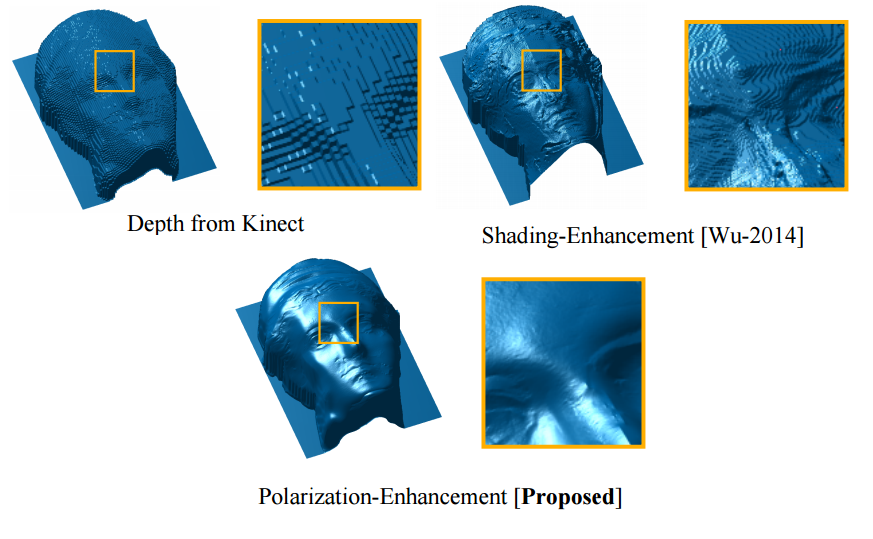
The challenge for the next five years for drones is environment awareness. Drones have been doing quite well in the lab because they have precise positioning systems. Outside, drones have to rely on SLAM, which traditionally uses heavy, expensive laser depth sensors. This is why any development of low cost depth sensors will have a big impact on the future of drones.

From MIT News:

MIT researchers have shown that by exploiting the polarization of light — the physical phenomenon behind polarized sunglasses and most 3-D movie systems — they can increase the resolution of conventional 3-D imaging devices as much as 1,000 times.

The technique could lead to high-quality 3-D cameras built into cellphones, and perhaps to the ability to snap a photo of an object and then use a 3-D printer to produce a replica.

Further out, the work could also abet the development of driverless cars.

“Today, they can miniaturize 3-D cameras to fit on cellphones,” says Achuta Kadambi, a PhD student in the MIT Media Lab and one of the system’s developers. “But they make compromises to the 3-D sensing, leading to very coarse recovery of geometry. That’s a natural application for polarization, because you can still use a low-quality sensor, and adding a polarizing filter gives you something that’s better than many machine-shop laser scanners.”

The researchers describe the new system, which they call Polarized 3D, in a paper they’re presenting at the International Conference on Computer Vision in December. Kadambi is the first author, and he’s joined by his thesis advisor, Ramesh Raskar, associate professor of media arts and sciences in the MIT Media Lab; Boxin Shi, who was a postdoc in Raskar’s group and is now a research fellow at the Rapid-Rich Object Search Lab; and Vage Taamazyan, a master’s student at the Skolkovo Institute of Science and Technology in Russia, which MIT helped found in 2011.

Read more…

wide

I got to try the skyzone 3d fpv goggles after making my own wide 3D camera for my plane, and get to see 3D at a longer distance than normal. It's kind of cool :)
Too bad the skyzone goggles can only record 2D :-/ (so I have no cool 3D video to share).

Anyway, this is my review of the Skyzone SKY02 V3 AIO 3D FPV Goggles, which I got to supplement my Skyzone Dual Antenna FPV Goggle V2 on my blog: http://marc.merlins.org/perso/rc/post_2015-12-01_Flying-3D-FPV-with-Skyzone-3D-FPV-Goggles.html

install before flying

2 video transmitters, 600mW with LHCP antenna, and 2W with RHCP in the back

Read more…
Moderator

T3 the Vertical Horizontal one

3689673120?profile=original

This one should be easy if you have any of the current crop of Kickstarter VTOL airframes, of course I will award less points so you might not win.

The task is simple.... (not)

Auto take off

Autonomous hover for at least 1 minute after take off

Transition to winged flight and fly no higher than 120m

Then circle radius 80m for as long as you can. (This makes the circle 500m a turn)

This of course points to the current delivery drone mania. To get noticed by Amazon try for greater than 24km about the distance their machine can deliver (apparently)

We will make this a six month contest as its hard. On the plus side its building time in the Northern Hemisphere.

For extra points some sort of silly cargo that makes me smile. Super bonus points added for an autonomous vertical landing as well. (All landings to be vertical)

If you can make a multirotor fly that far then all well and good, but I will be looking for the least amount of power used in event of a draw. 

The longest distance wins.

Good luck, I look forward to May 2nd 2016 and the fruit of your labors.

Glittering prizes TBA

Let the pointing out of my Swiss cheese thinking commence...

Read more…

OneDrone.ONE - Modular Drone System

I'm happy to present a project which occupied quite a lot of our time in the last year. We didn't plan to go public yet, but after I saw couple of days ago that colleagues from BoxBotix are working on pretty similar concept, we decided to present some initial info to diydrones community.

3689673020?profile=original

OneDrone.ONE is modular system, which fills the gap in the segment of advanced hobby and professional use - with focus on geosurvey, crop monitoring, search&rescue and similar applications. We like ArduPilot platform very much and we use Pixhawk in majority of our current range of dedicated copters for geosurvey and crop monitoring ... but we are confident that our new system . OneDrone.ONE will bring user experience to new level and bring the most from Pixhawk.

OneDrone.com sports all the experience we at OneDrone.com gathered in past years, combined with clean and efficient design from Andrej Stanta (Provoco), creator of shayton.eu

For now ... presentation movie and some photos. Website with all the info will be launched in one month.


3689673075?profile=original3689672961?profile=original3689673092?profile=original3689673103?profile=original3689672979?profile=original

Read more…

3689672800?profile=original

Since first introduction of the BBBMINI and then BBBMINI-PCB beginning of the year, there are a lot of improvements and test flights done. As the result we get a low-priced, reliable and up-to-date DIY Linux Autopilot runs ArduPilot software.

With the merge of EKF2 (Extended Kalman Filter) in ArduPilot master, you can add easily a second IMU as its own instance to the BBBMINI. I tried that and attached a second MPU-9250 (GY-9250 breakout board, about 6$) to the unused BBBMINI SPI0 pin header. With a small patch I get the second IMU (and compass) up and running. After changing the ArduPilot configuration, both IMUs appears at the GSC and in the log files. Finally I have to do a compass and accel calibration.

After some “flight” checks with dismounted propellers my “250 BBBMINI Indoor Test Quad” was ready for the first dual IMU flight.  

The Quadcopter is not yet tuned, but it fly much better than expected. I flew indoor 7 minutes in Alt-Hold and the Quadcopter only moves about +/- 50cm in height, I only did some small pitch and roll commands to keep the Quadcopter in position. I am happy with EKF2 dual IMU and I am looking forward to test it outside (with GPS) when the weather conditions allow it.

The film below shows what happens when you unplugged one IMU “in flight”, the Quadcopter should be still flyable, but that is not tested ;-)

https://youtu.be/MDNFQ95zwZg

Best regards

Mirko

Read more…

ROSimple: Programming APMrover through blocks

3689672891?profile=original

Continuing our work in simplifying the use of drones and robots for any public, we are delighted to announce that we have started adding support for APM based vehicles in ROSimple. Due to the simplicity that APMrover offers comparing to the other vehicles, we have started adding blocks for programming it.

In order to command the drone, ROSimple uses MAVROS to comunicate with APM. ROSimple generates a Python script to execute the different commands that the users wants to do. Here you have a small example of how it works:

Read more…

prime-air_04.jpg?w=1344

Amazon delivered a lovely update on its ‘Prime Air’ project today — almost exactly two years after it showed the first iteration of its drone. You know, the flying delivery dronethat some thought was a massive joke meant for April 1st. Included are some high-res shots and two new videos.The video, moderated by ex-Top Gear host Jeremy Clarkson (who is now working on a new series for Amazon), talks about the design and your experience as a recipient:

As you can see, Amazon has now moved to a hybrid design. It looks much bigger than in previous renderings. Imagine that thing flying towards the neighbor’s house. Get ready for reports of aliens rising if this thing ever comes to fruition.

The new Prime Air drone isn’t just a quadcopter anymore. It still takes off and lands vertically, but then it switches to a regular horizontal flight mode, which is far more efficient. It’s basically part helicopter, part airplane. With this new design, the drone can cover over 15 miles and fly over 55 mph, Amazon says. In the video, Clarkson says Amazon is working on a family of drones for different environments and purposes.

The new drones feature at least some degree of sense-and-avoid technology and once it arrives at its intended location, it’ll scan the area and look for a landing spot. Right now, it looks like users will be able to mark this spot in their yard, for example, with an Amazon logo. The drone then lands, drops off the package and takes off again.

“This design enables it to fly long distances efficiently and go straight up and down in a safe, agile way. It is one of many prototype vehicles we have developed,” an Amazon spokesperson told us. “One day, seeing Prime Air vehicles will be as normal as seeing mail trucks on the road.”

Obviously, Amazon still has a few hurdles to climb, even with this new design. Chances are, we won’t see these new drones deliver packages in a city anytime soon. The new design, however, should work really well in a more rural and suburban area (and yes, feel free to leave us a comment about how you would shoot it down if it flew over your house).

If Amazon can solve some of the harder sense-and-avoid issues (like small power lines), then maybe Prime Air will take off sooner than many of use expected (assuming Amazon manages to work within the FAA’s upcoming regulations for commercial drones).

source & more: http://techcrunch.com/2015/11/29/amazon-shows-off-new-prime-air-drone-with-hybrid-design/?ncid=pushup

Read more…

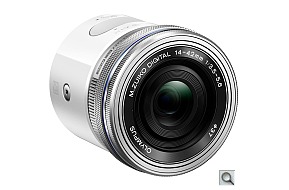
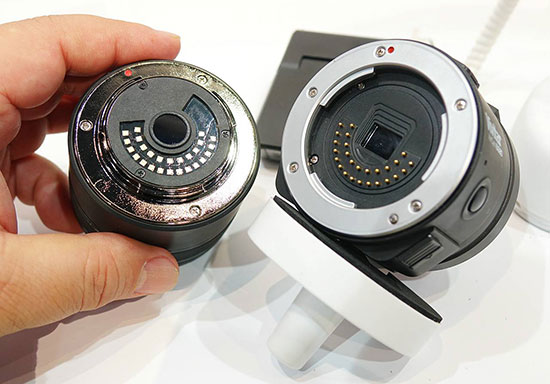
image of Olympus AIR A01

The latest trend in camera products - modular cameras - is good news for us as drone users.

With Sony releasing products such as the QX100 and QX1 it seemed like high quality alternatives to the gopro we're becoming available.

Now with Olympus and soon Vivitar being the latest companies to add their own modular camera to the list, it looks like 2016 will be an interesting year for modular camera technology.

Here is a shot of the new AIR A01

4484-thumb.jpg

And the yet to be released Vivitar IU680 Model

Vivitar-IU680-interchangeable-lens-camera-module-for-smart-phones-2.jpg

Unfortunately two key requirements have still not been met from what information we have available.

1 - The ability to record 4k video

2 - A simple Analogue Video OUT for FPV

In addition it seems there are very few reliable options for stable camera gimbals that have been designed for these cameras.

Hopefully the options will get better in the very near future.

Read more…

3689672490?profile=original

We are glad to announce that DJI Phantom 3 and Inspire 1 are now supported in UgCS desktop mission planning software. This works through our Android app UgCS for DJI available now on Google Play. The app connects to DJI Phantom 3 or Inspire 1 remote the same way DJI native app does. What is different is that, once your laptop and Android device are connected to the same network, your drone is automatically recognized in UgCS desktop mission planning software.

This enables you to use UgCS desktop mission planning functionality to its full extent on your Phantom 3 or Inspire 1.

This allows you to pre-plan automated missions from the comfort of your office without the need to even turn the vehicle on. Then, once you are out in the field, simply turn on the vehicle, upload the pre-made mission and fly. This saves you battery time and the hassle of setting everything up in the field.

UgCS works on Windows, Mac OS X and Ubuntu.

For more information and downloads visit www.ugcs.com

Read more…

thumb1024_103_Brotronics_Broversity_RX_.jpg?width=640

If you're doing long range, and you're using ardupilot, you probably are using or want to be using the open source OpenLRSng.

The most interesting OpenLRSng receiver I found was the "Brotronics Broversity RX", but its documentation was minimal, so I wrote some and made a demo video:

http://marc.merlins.org/perso/rc/post_2015-11-14_Brotronics-Broversity-RX_-the-Missing-Manual.html

thumb1024_104_Brotronics_Broversity_RX_.jpg?width=640

Read more…

Biomechanical simulation of dung beetles

I design it to carry Relief goods to disaster city while hurtling the desert for long periods.

« explanation »
 - Fore legs decide traveling direction.
 - Mid legs which is most close to the centroid take most traction and load.
 - Hind legs are auxiliary legs for moving the left and right legs alternately and if they do not function, proceeds as butterfly stroke.

Read more…

Elle0 and Paparazzi UAV

3689672603?profile=original

Today marks the release of the Elle0 autopilot. The folks over atbv1bitsquared have been working long and hard on this new Paparazzi autopilot. It was their goal to make it as affordable as possible without compromising on the power and memory needed to run Paparazzi.
Elle0 features a very powerful 32bit ARM Cortex M4 micro processor, and is still backwards compatible to the Lisa/M and Lisa/MX you know and love. The footprint of the board is a standard 30.5mm x 30.5mm that was made popular by the nano racer quad community. This makes it easy to replace the autopilot on your racer quad and benefit from the features and stability of the Paparazzi UAV framework.
They are still working on documentation but for now you can take a look at the Pre-Order page for details. Elle0 will start shipping early 2016.
Read more…